HAIR, PAPER, WATER…
In conversation with Nicolas Graux & Truong Minh Quy
(Interview) Katerína Papanikolopoulos
(Images) Courtesy Graux and Minh Quy
In the lexicon of images, a silence grows that submerges one frame into the other. Athens Design Forum presents an interview with directors Nicolas Graux and Truong Minh Quy of Hair, Paper, Water…, after the London premiere of the film at the Institute of Contemporary Arts. Saigon’s labyrinthine system of buildings and infrastructure evokes a mediated artifice to the protagonist Cao Thi Hau’s known world, born in a cave within the Ruc community of Vietnam. The film’s structure of reference becomes the Ruc language, a ‘spine’ to elementally build associations. A sonic axis creates an integral emotional continuity to soften the ephemerality of a Bolex camera’s vocal remoteness. As Truong Minh denotes, “The form of the film is partly what is not named. For me, a film is also what is absent.” Disappearance is rendered immovable as the natural world is encountered through words (mother’s milk, fire, cave, water…) – surmounting a vocabulary of recognition that is as percussive yet fragile as the ecosystem of the human condition.
Hair, Paper, Water..., Directed by Nicolas Graux and Truong Minh Quy, Belgium/France/Vietnam. 2025, 71 min., Ruc, Vietnamese with English subtitles.
Shot on lush 16mm and attuned to the forest’s hush, this evocative film tenderly traces the life of Cao Thi Hau, a homeopath, farmer and great-grandmother. Alone in the mountains, where she communes with the soil and tends to her grandchildren, Cao’s wisdom becomes a beacon in a world adrift from its roots. Guided by Trương (Viet and Nam) and Graux’s (Century of Smoke) poetic precision, the film gently dissolves the boundary between fiction and documentary.
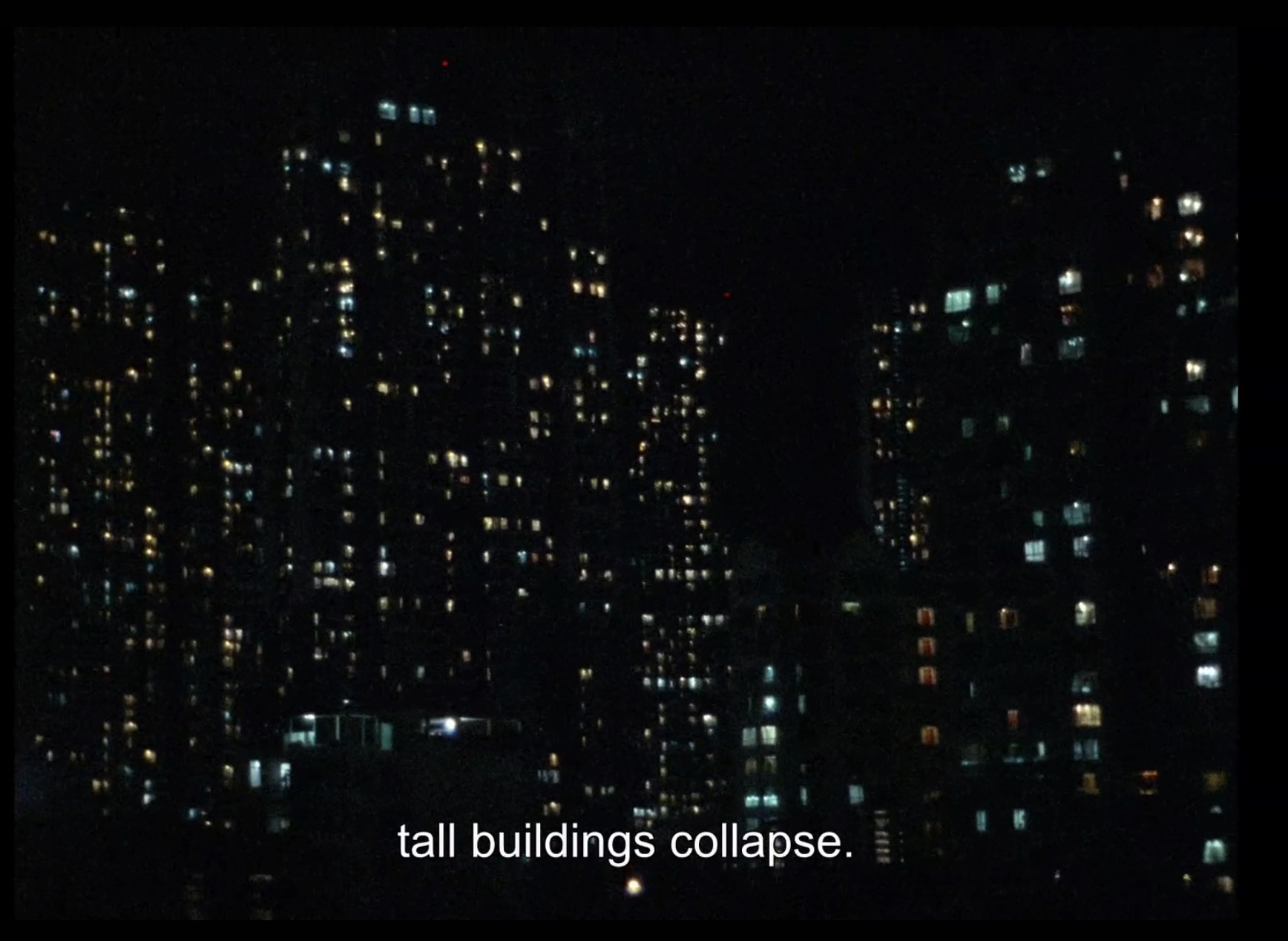
ATHENS DESIGN FORUM, KATERINA PAPNIKOLOPOULOS: Cao Thi Hau’s visit to Saigon was unplanned, unprecedented. The return to the cave then took on a heightened value, with the city as a sort of artifice. This moment crystallized a great juxtaposition to forms of experienced life. What did it represent to you?
“Oh heavens, I’m this old, and it’s my first time in Saigon…. What kind of place is this, so packed with people? Don’t know which way to go… These houses are all piled up—nothing like a cave. The houses here look like they’re full of holes, so many holes. The cave feels more solid. These houses hang in the air, built so high they touch the sky.” – Cao Thi Hau
TRUONG MINH: The first day she arrived in Saigon, when we were in the taxi, she commented on the buildings. That was the first moment I realized that what is normal for me is strange for her. For me as the editor, this monologue — or dialogue — is in the form of an interview, but the question we asked her was very simple: “How do you feel here?” It made clear the difference between modern and countryside life. We wondered if it was too naïve to put this in the film. We decided to keep it, because this was genuinely what she felt: the film had to share her feelings, not create the distinction artificially. Of course, there are differences, but the theme is not about that.
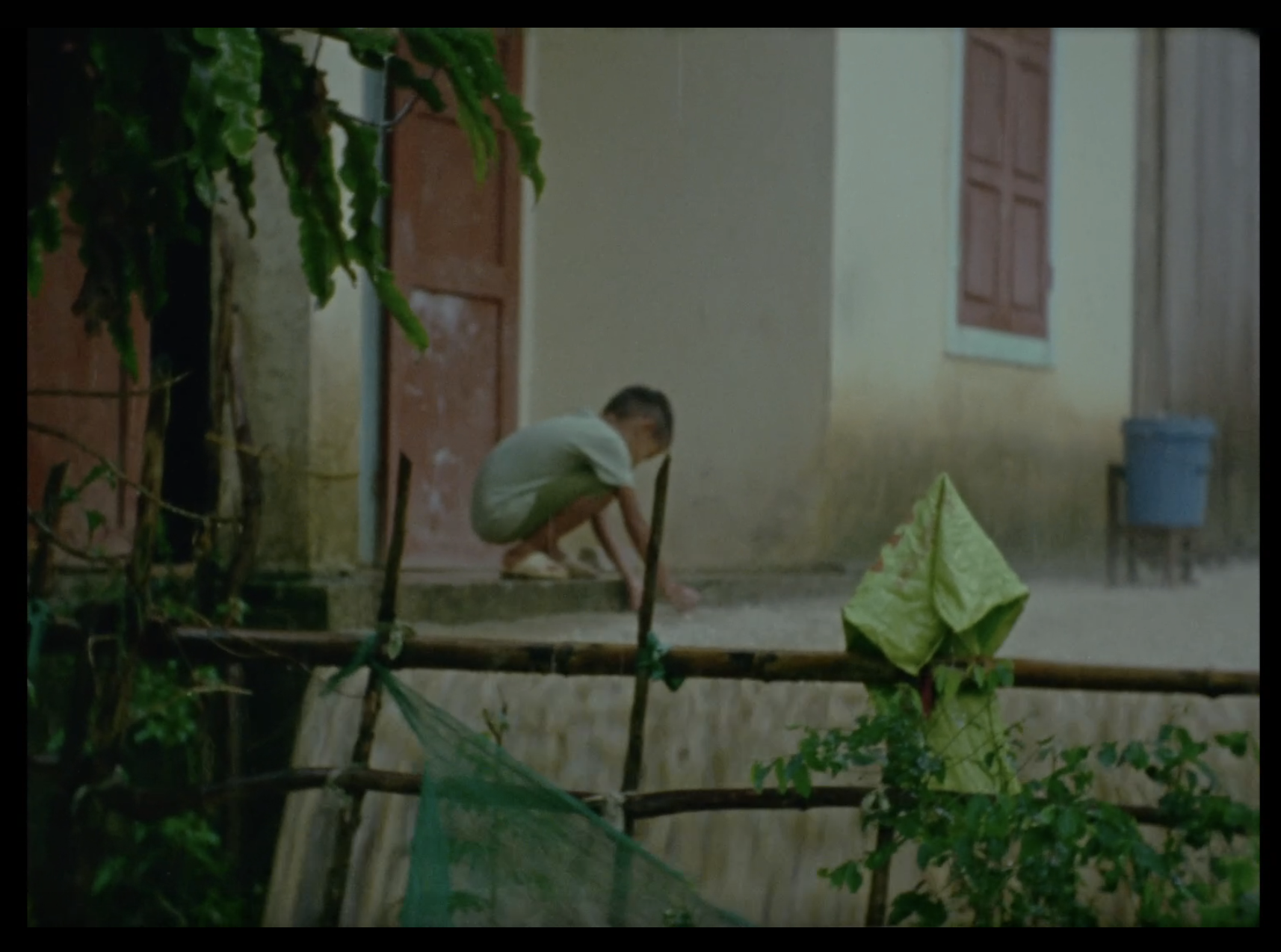
GRAUX: The timeline and space are mixed in the edit — city, nature, and hometown. Two years later when the boy grew up, the film still doesn’t make a contrast of “modern life is bad, traditional life is good”. For us, these things just coexist. They don’t clash. The part in Saigon is not opposed to the village. And the village is no paradise either. Life there is full of fear and brutal realities — alcoholism, hardship. We don’t treat them as contrasts.
By making this film, we built a kind of home — with a roof, doors, and windows — to host memories: a small house, a space to keep or to shelter something.
TRUONG MINH: We will never fully understand what it is like to live in a cave with your family. We may imagine it, but only she lived it. A cave is not a normal home — it doesn’t depend on you. When you abandon a house, it changes, it may turn to ruins. A cave remains.
GRAUX: When she speaks of buildings, she says, ‘our cave is more solid’. Buildings collapse; caves endure. We believed in the truth we saw — simple, bare, free from preconceptions.
TRUONG MINH: You do not own a cave. You seek shelter. Home is something you build because it is possible. “Home is where you sleep well, and keep fire all night for fear of tigers.” It is a life of fire and fear.

ADF: How did you immerse yourselves deeply into the life of the protagonist and local community ?
TRUONG MINH: I’ve known about the Ruc people since 2017, when I was searching for a documentary subject. I had read about them — this group who used to live in caves, on the border of Laos and Vietnam. They were often described as “mystified,” known mainly through accounts by the border police who had “discovered” them. The Ruc were now living in villages, but their history and transitions felt essential, maybe even metaphysical — an important part of the film. So I went to that province in central Vietnam. I travelled around searching for somebody. In the beginning, you just want to meet someone, to see someone connected to that story. I arrived in a village — not the protagonist’s original village — and met Cao Thi Hau, who was married to a man from another tribe.
We talked a bit. Then she told me about her original village. She asked, “Do you want to go there now?” It was about thirty minutes by motorbike. She just jumped on my bike. From the very first moment, the relationship was defined. Even now, when I call her on the phone, and she says “hello,” you hear the strength and health in her voice. The Ruc community in general feels more reserved. Language differences create a natural distance. She lived in another village nearer to the main road, which made many things easier. Working conditions and daily life are not separate. If we work together alongside Nicolas, we become engaged with something beyond our control and ego. A lot of this was simply luck — the kind of luck that happens because of the “frame” Nicolas and I set for ourselves in making this film. When such events occur, they bring a huge dimension to the film.
GRAUX: Exactly. Taking care of the baby, seeing the boy grow up, the space of the film — these things came about because we set our own frame: a light, flexible way of working, deciding not to necessarily know in advance what we were going to film day by day. When unexpected things happened through her, we were ready and spacious enough to embrace them.
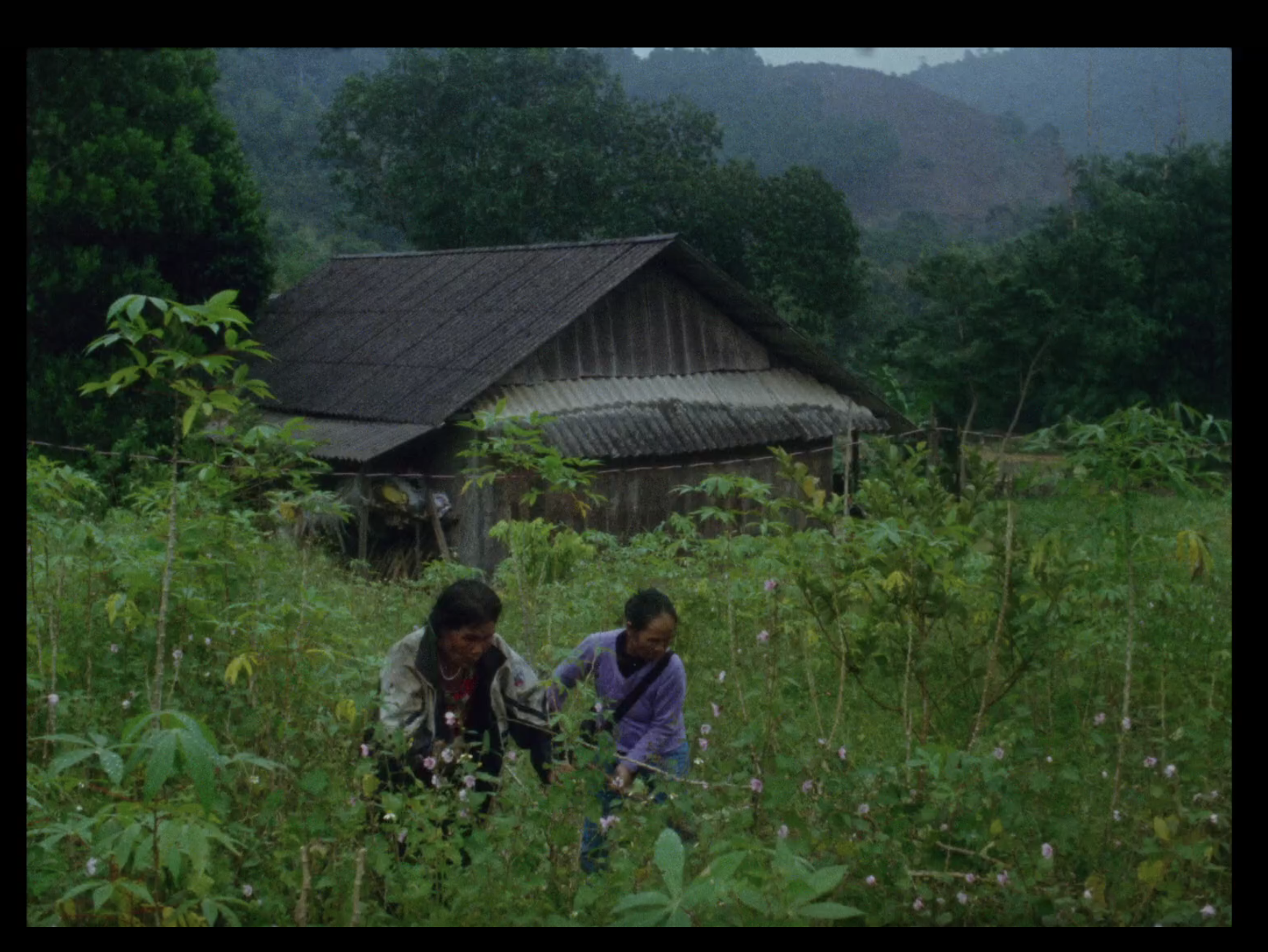
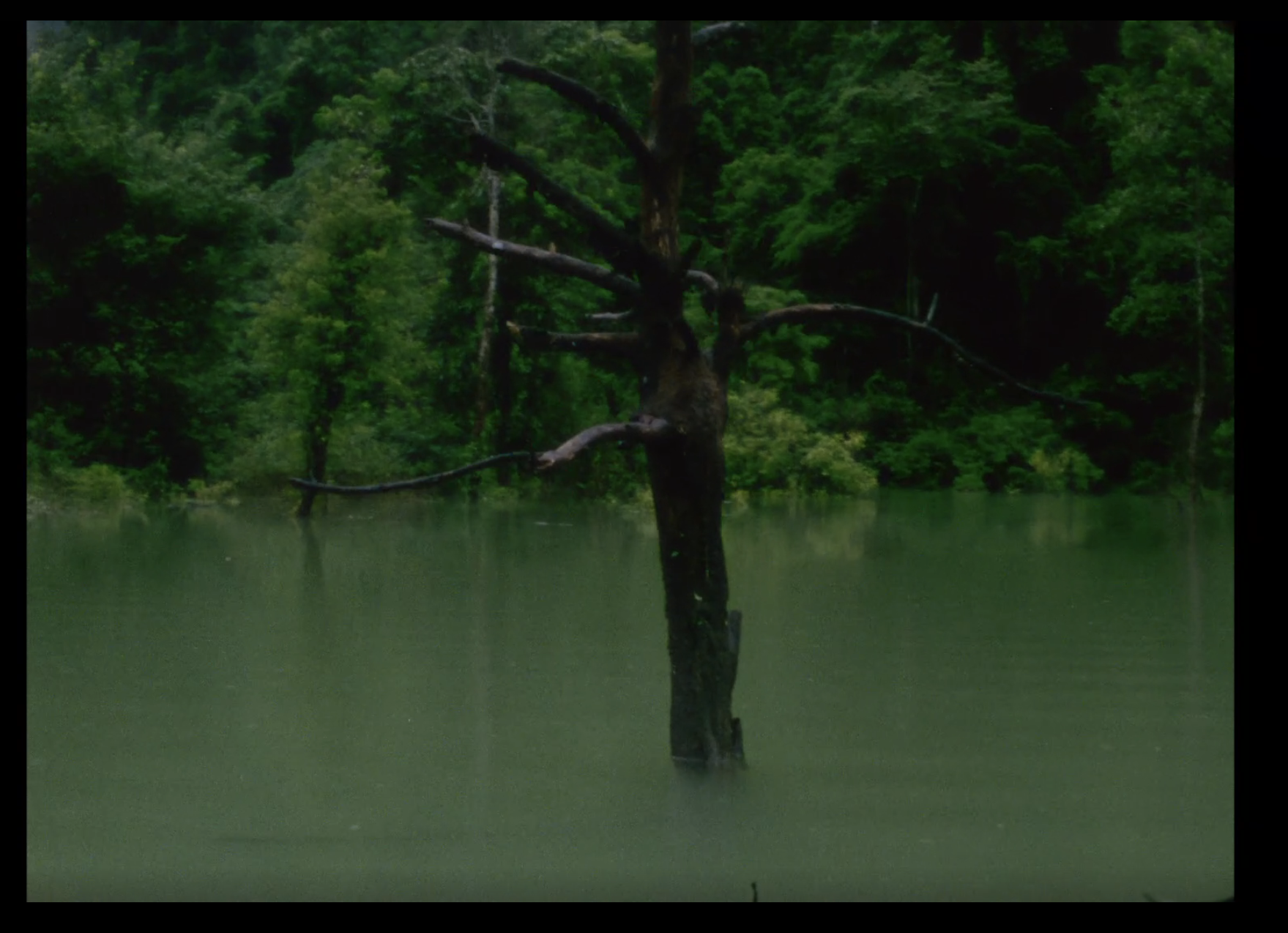
{The Frame}
GRAUX: The frame was in many ways practical. We wanted to keep the scale of production light. We didn’t want too much money, as it brings pressure. Just enough to work without a schedule. We didn’t know there would be two shooting periods. We simply felt a desire to go back. The frame was also very technical: the old Bolex camera, which imposed limitations that actually gave us freedom. It helped us approach the film in a way that conventional shooting wouldn’t allow. A typical documentary crew shooting on digital with a defined agenda would not need to invent a new language. So: a technical frame, a production frame, and a collaborative frame. We had intentions at the beginning about what we wanted in the film, but we discarded many of them along the way, or they transformed as something more interesting emerged from her real life. Her visit to Saigon was not in our plan, as well as her dream of her mother calling her back to the cave, but those elements became crucial as they all connected to childhood, home, birth... The frame allowed us to welcome all of these.
{Sonic Elements}
ADF: The sonic elements catapult you within the frame: sounds of life, of children, of youth, and elemental components providing depth to the scenes, otherwise silent due to the technical limitations of shooting with a 16mm Bolex camera (which doesn’t allow for recording sync sound). How did you approach this tactility of sound?
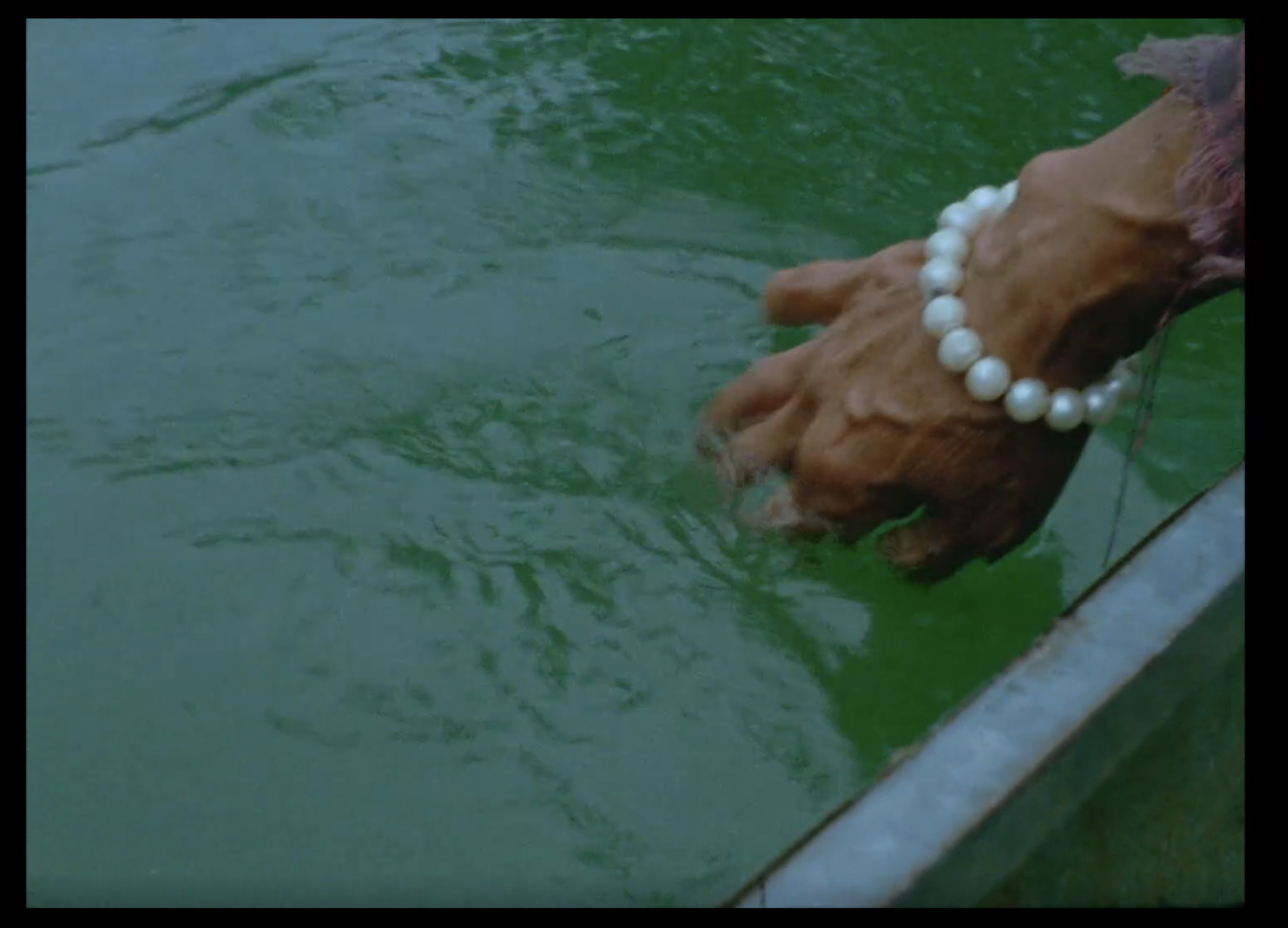
GRAUX: This “lacunar” aspect of sound, this incompleteness, was something we were interested in before we even found the Bolex camera, because it reflects something about memory. Early on, we imagined a long, continuous drifting shot on water. We wanted a different approach to sound, though we didn’t yet know how. When we found the Bolex and realized the sound would be asynchronous, it forced us to think freely about image-sound dynamics and what they can create in terms of sensations. We relied on her voice-over for the narration, but then, the soundscape and sonic elements had to flow like water, weaving a continuity through the fragmented mosaïc of images, sometimes independently from what appears on the screen, because sound has its own life and rhythm. During shooting, we worked rather conventionally: three sound engineers over different periods recorded ambiences, gestures, sound effects, like when she cooks herbal leaves.
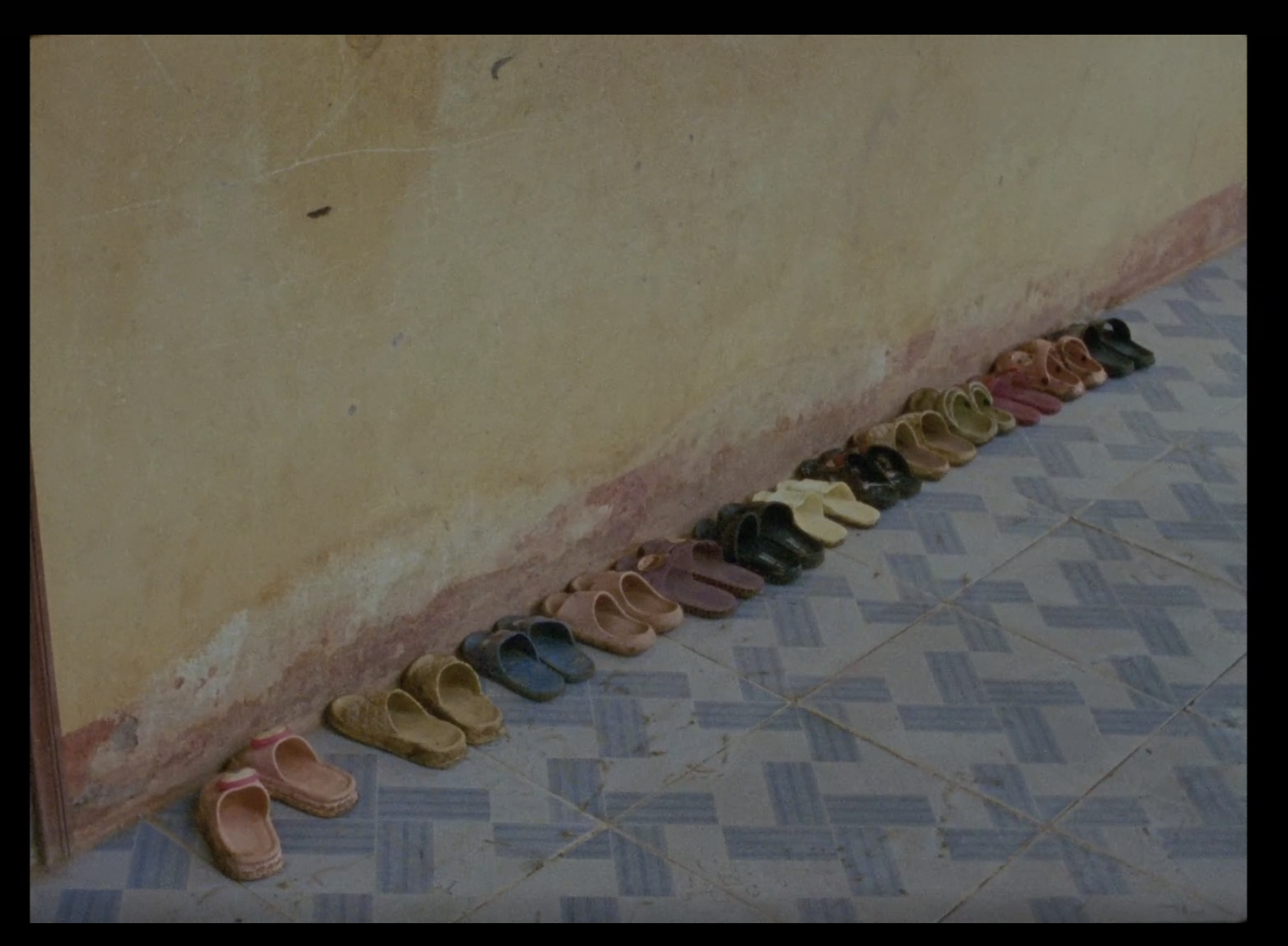
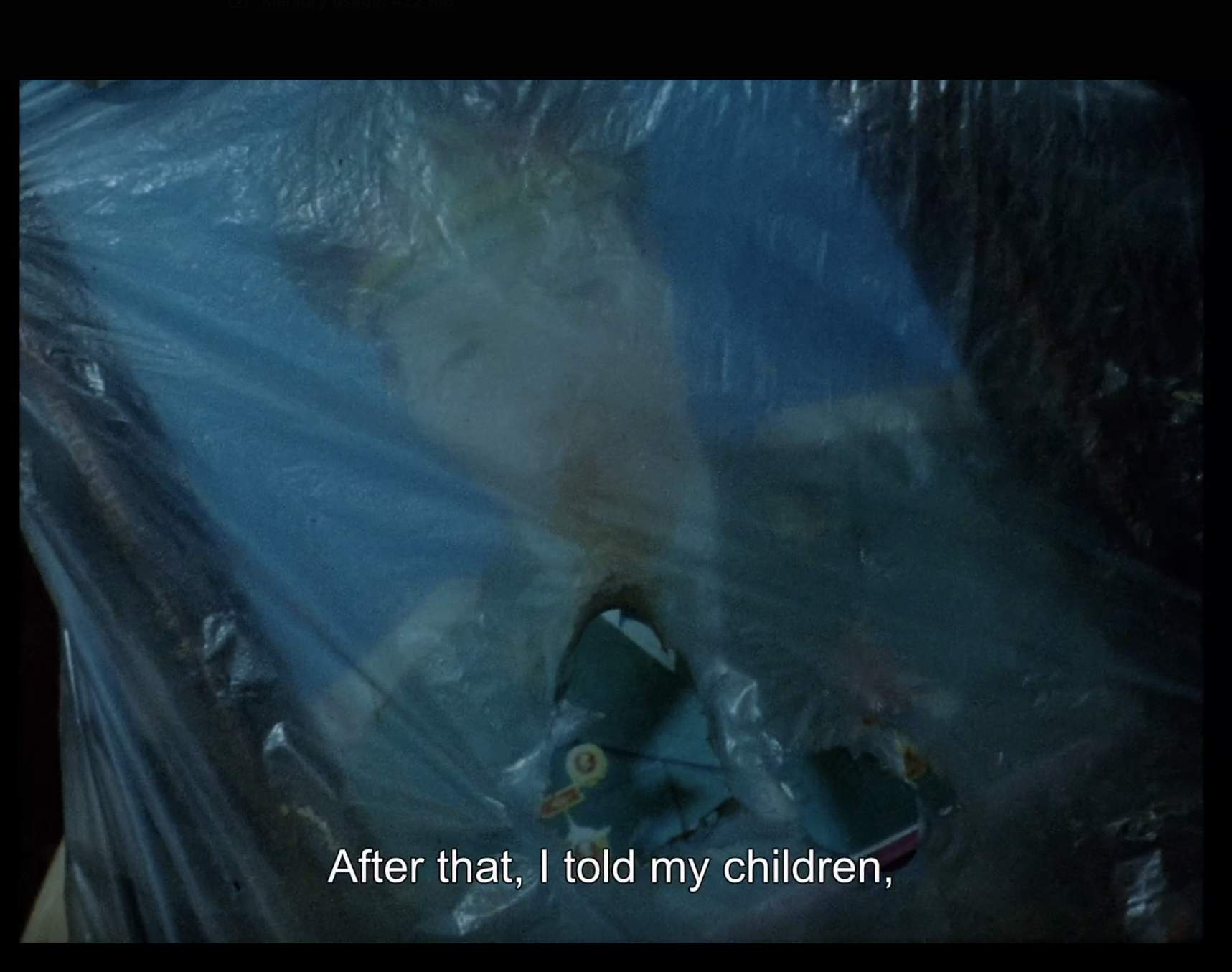
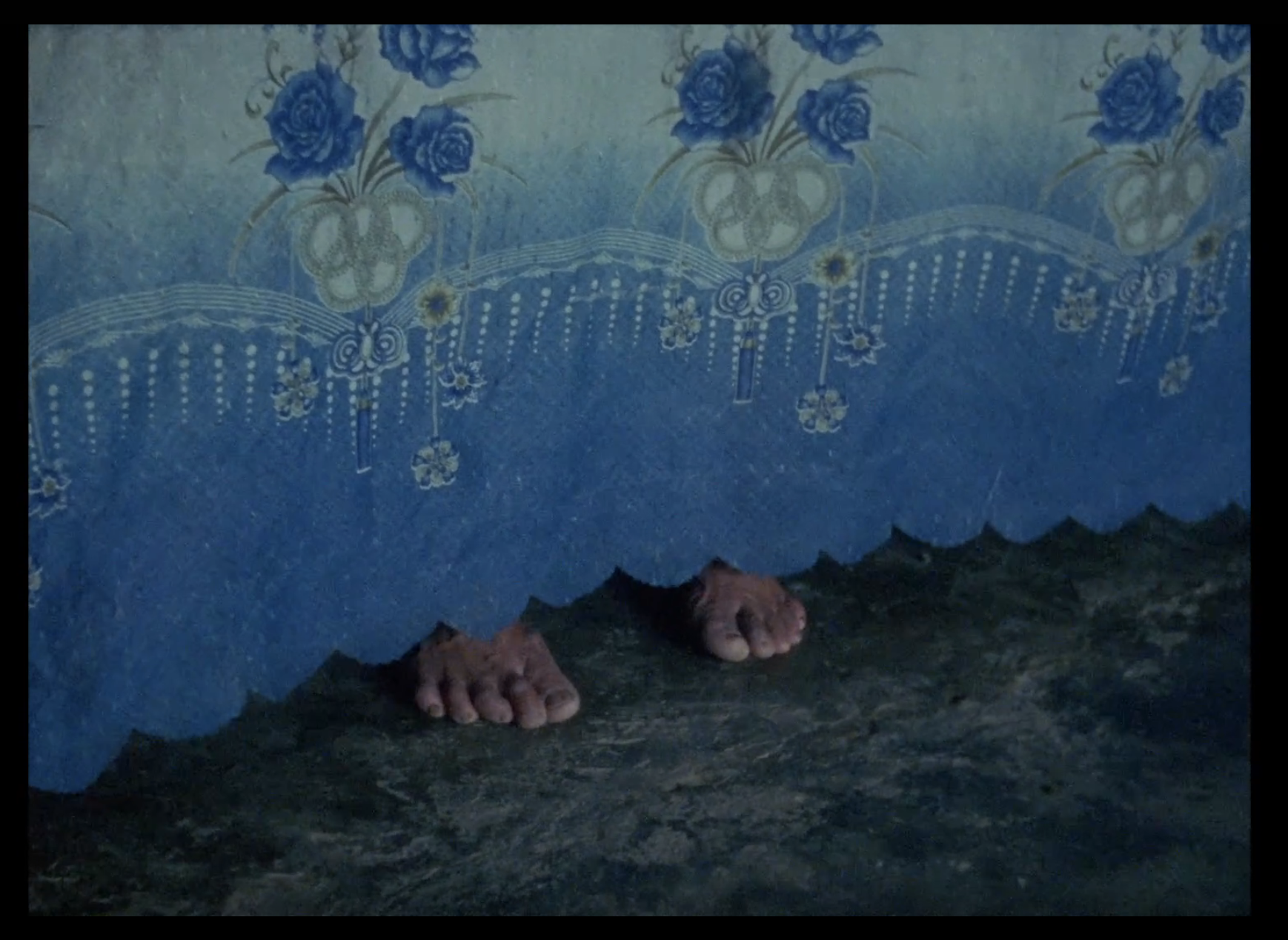
We filmed with the Bolex, then immediately re-did the same action to record “clean” sound separately. Sometimes we recorded long ambiance for an hour or more. The film mixes spaces, associates images that don’t belong to the same time and space: the feet under the curtain in the village, then the fan in the baby’s room in Saigon. In such moments, the emotional continuity is created by sound — especially the fan, which we keep hearing over a string of discontinuous images. It echoes the narration about her dream of returning home, which in turn becomes the spine that binds the cave, train, village, city…
TRUONG MINH: Because of the wind from the fan, the natural wind in the curtain, the sound, the light — these associations link the elements. The “spine” also becomes the Ruc language.
{Language & Absence}
ADF: Language in all its forms and capacities penetrates deeply into the structure of the film. (Night, Water, Cave, Ruc…). What was left out within the final edits?
GRAUX: The film is like an image-book, with words and images for learning a language. Between us, we never formulated in words what the film was going to be. We avoided conceptualizing or rationalizing while making it. We worked with material things, day by day — bats, caves, gestures. If we needed bats, we went to the cave.
TRUONG MINH: When we knew the structure, we filmed images according to the language. It is a mutual counter-action — back and forth. Many words, such as hands and body parts, were also removed, even though they are very present in the image. The form of the film is partly what is not named. For me, a film is also what is absent. If you try to squeeze too much vocabulary into one film, it fails. The words we use are just an introduction — like reading the first pages of a dictionary.
GRAUX: It is child-friendly — we start with what is around us. Making sense of the world elementally.
{The Assembly of Images & Testimonies of Extraction}
ADF: What role does extraction play in these communities, and even the forced extraction of people due to labor migration?
TRUONG MINH: The sad reality — alcoholism, hardship — appears within beautiful nature. It must be seen. It is common. For instance, leaving the village for the city is common. Elders encourage young people to go for a better life. The Acacia forests as seen everywhere in rural areas are not natural but artificial plantations. They grow quickly and are harvested for seasonal wages. The ones we see in the film were used partly for export to Europe for energy, high demand, and good prices.
GRAUX: We saw workers tearing the bark — the light, the wind, the sound. It attracted us. Then it occurred to us that it linked naturally to paper, writing. These connections were there around us all the time during filming, and we were simply trying to reveal them, a process that continued during editing.
TRUONG MINH: Everything connects in a film like this. The elements are already present — acacia, paper, her stories, the dream. The challenge is how to assemble them.
{Dimension of Time}
GRAUX: When we returned for the second shoot, we wanted to capture time. The rough cut was beautiful but missing that dimension. Everyday gestures in the village — cooking vegetables, herbal medicine, washing laundry, the boy growing up — added time, expanded the film.
TRUONG MINH: Without the second shoot, the film might still have worked, but it would rely too much on cinematic tricks. The added images gave the film independence — a life of its own, without forced editing or manipulation.
{Conventions of Naming}
GRAUX: The three dots in the title allude to what is not there — something forgotten, or something that is yet to come, or simply nothing. The French title uses a different set of words for the sake of sound and orality but keeps the three-word structure. “Papier” stayed in the middle. It was between the French production and us — a continuity of rhythm and word-use.
TRUONG MINH: For the ending scene, we tried not to be too intentional. The order of the words still had to feel random. “Fire” after “fear” because in Ruc the pronunciation is very similar — only the stress differs. Similar sounds belong together.
The last word, “Mother’s milk” completes a circle. It is emotional — maybe too emotional — but sincere. We asked ourselves: is this too much? But it felt right. It carries memory.
GRAUX: “Mother’s milk” also works structurally: she mentions it earlier, and because it is part of the story of how she was born in the cave, it echoes naturally.
TRUONG MINH: The cave contains many meanings. We cannot avoid them. The cave-womb parallel is unavoidable. We start the film in darkness, with dripping water — the river running inside the cave. The ending image was built later, after we made a rough cut. We felt the need for an image gliding from the sky into the cave.
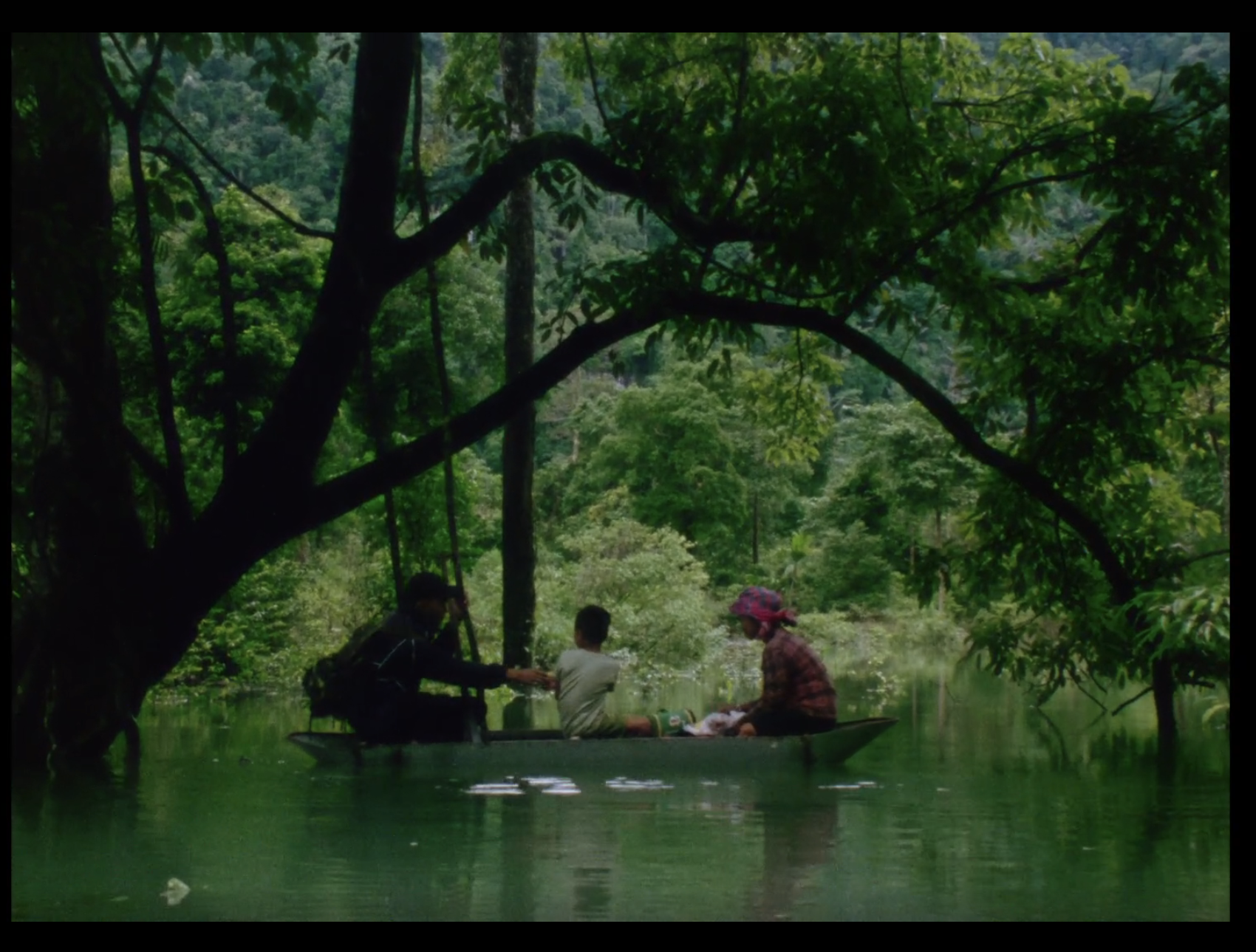
GRAUX: Originally, we imagined her on a boat rowing back into the cave — an echo of an earlier image. The last time we see them, they are sleeping on the boat. The sound continues, so perhaps nobody is seeing — or it is a dream.
TRUONG MINH: The continuous sound carries the emotion while the images fragment. The final shot — camera going through trees — was from the first period. I knew immediately it would be the last shot. Some images simply carry their own time.