JACK WHITTEN
Music of the Spheres (Agia Galini)
On the occasion of The Numinous at Hauser & Wirth Los Angeles, Athens Design Forum presents the movement of a psyche: Jack Whitten’s orientation of Greece. This is a history built from fragments, foregrounding a harmonic overture into the life of a monumental figure with the continuum of people and environments that shaped his cosmology.
The unpublished photographic record of the late artist is joined by interviews and newly commissioned portraits of Whitten Acres in Agia Galini, Crete, coalescing a polyphonic reading of how his identity was articulated across geographies. Before Whitten became an artist, he was a musician – transcending rhythmic gestures that were then shared in his language of sculpture. His initial journey towards Crete became a new orientation: “My first time in blue water with no horizon; I realized that I was in the center of a circle...a vast, unbelievable void of a circle” (Jack Whitten: Notes from the Woodshed, 2015). The metaphysical properties of the region cannot be reduced to the periphery; Agia Galini’s name means a refuge of spirit, known for its ‘serenity’ that encompasses release from a turbulent sea. An origin of the encounter may be described as signal flares, bright red fires into the horizon of sky that marked years of creative expression – a release from the compression of time and social paradigms of inequality experienced in the United States. A freedom that would be webbed knot by knot. It is as Mirsini Amidon, his daughter, suggested: “the landscape of Crete became embedded within the values of our family.”
In early September, when the winds began to ripen, Athens Design Forum began a cyclical foray to find the solitary house in Agia Galini, allowing for transcontinental encounters with his family and friends to construct an image of life beyond what was known. Whitten’s occupation was received in obscurity upon his arrival in 1969, (he was commissioned to paint signs for a local hotel) as the trade of an artist was obliquely defined. It would deepen through the words of his trusted friend, Captain Yannis Kanaris, (at sea from the age of five) who deduced – “everything holds and requires an art”.
In 2017, Jack Whitten’s correspondence with Jarret Earnest for the Brooklyn Rail probed on the density of light, and the sound within – “it agrees with what the ancient philosophers refer to as ‘the music of the spheres,’” he would contend. Crete would provide the necessary movement and sharp quality of light due to the boreas (a strong cold, north wind that reduces humidity, aiding clarity). Mantinades, the region’s improvised songs, sporadic in form, had a vocalized constellation in relationship to land, estrangement, exile, and the topographic integrity of the landscape from which they stemmed.
The analytical dimension and photographic representation we have composed of Whitten Acres, as it survives, is therefore a testimony to how an artist’s field of expression manifests through shared terms of living – of assigning perspectives, of thresholds, and the shout towards a decisive homecoming. The rapture of a fisherman’s net unravels, torn from each new harvest, and is knotted anew, betrothed to another sea.
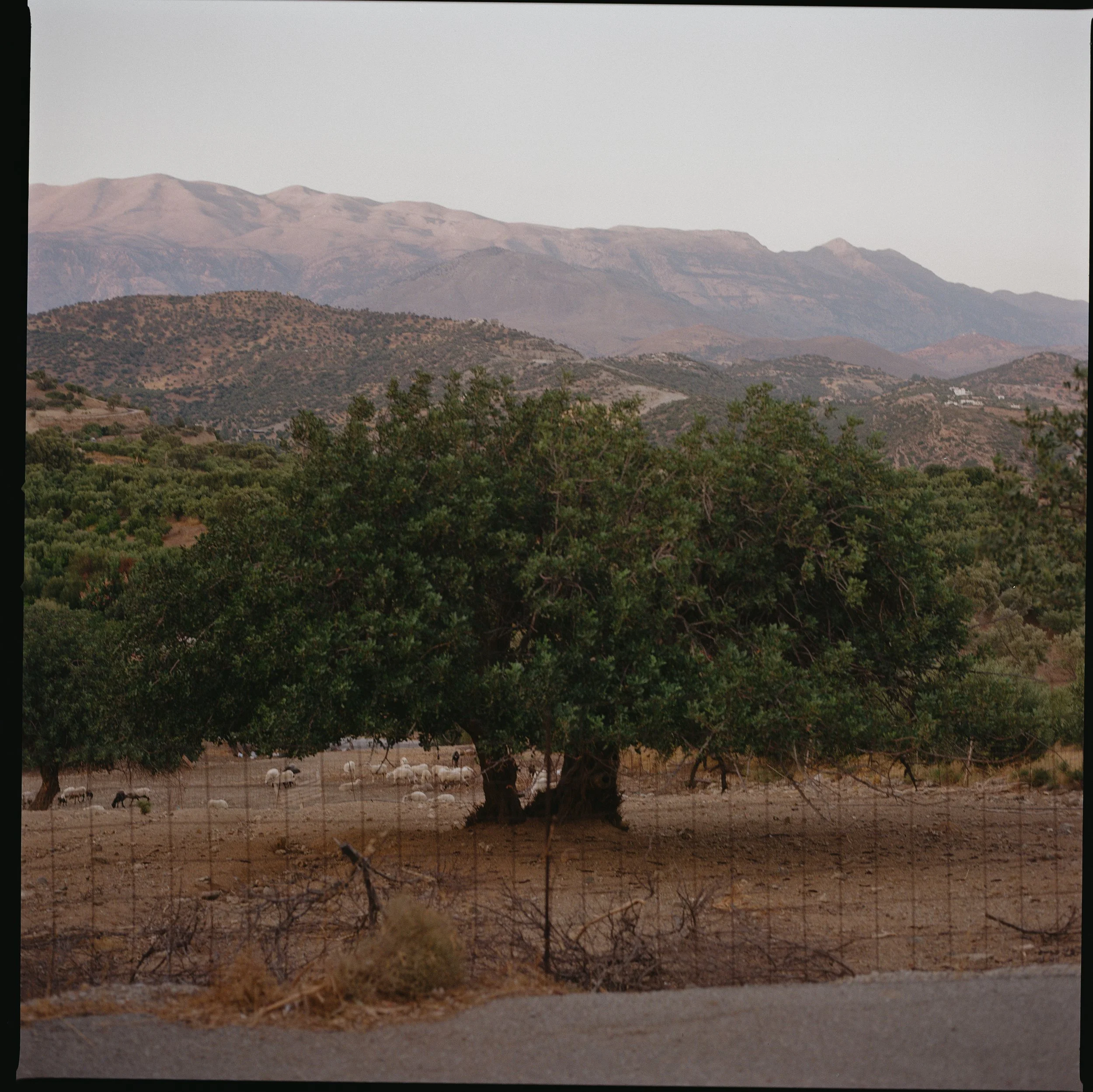
At the base of Whitten Acres, two carob trees become the primary image of a phenomenon. Forceful winds caused them to bend inwards, seemingly reaching for each other. Their distinct bodies, visibly transfigured to an anthropomorphic embrace, become materially connected without effacing their autonomy. It speaks in reverence to Whitten’s journey, from his birth in Bessemer, Alabama—a steel-mill town entrenched in brutal racial segregation—to how the conditions were retained in the body of his work developed in Agia Galini from 1969. The title of the home, “Whitten Acres” is in reference to ‘40 acres and a mule' – a post-Civil War mandate of land redistribution to freed Black families that was later revoked during the Reconstruction era. The home, once shared with his wife, an artist of Greek descent, Mary, and their daughter Mirsini until his death, became a site of convergence. Of private origin, and once placed within the interior of Whitten Acres, sculptural works such as Lichnos (2008), The Death of Fishing (2007), and The Guardian I, for Mary (1983), re-positioned within the context of their creation, absorb a new specificity to their materiality of mulberry, carob wood, Cretan walnut, wild cypress, and marble. Crete offered Whitten a way to recognize and materialize a language that had already existed within him and an immutable desire to apprehend even the intangible. His physical labour in the fields and the transformation of decaying wood and ephemera into new matter allowed these values to be enacted through the landscape itself. As a familial act, Whitten Acres provided the foundation to discern a novel voice of reason into the creative process.
The first dream that guided him and his wife to Greece, became an omen:
“I saw a tree standing in a clearing. . . heavily pruned with bare limbs. The dream was a command: Somewhere in Greece you are to find this tree and carve it into a totem.”
(Jack Whitten: Notes from the Woodshed, 2015).
The face of a fisherman, sculpted by Whitten, still stares out to sea – with an octopus wrapping its tentacles around the trunk. The interdependent association of man, fish, and sea, would shape years of experimentation, harvesting his ambitions within a shed under the prophylaxis of a wide fig tree in the courtyard of Whitten Acres.
Sites of accumulated materials, graveyards in essence, were also identified in his works such as The Death of Fishing, and an amalgamation of fish heads, mountainous now, preserved in his Queen’s studio. This form of re-orienting materials would follow him in New York, collecting extant material that then would be stored to one day be retrieved in his studio in Crete – amassed in a new form. The transatlantic referendum pays reverence to his ‘southern sensibility’ where he described how his uncle would build a car, instead of buying the car. Mary Whitten described: “You have to build from what you have around you, and you mend, and you repair, and you recycle. He had this his entire life. He grew up in that worldview in the countryside of Alabama… it was a way of homecoming for him to be in Crete.” Upon the family’s return to New York, the placarded walls of the Queens Studio would pay reverence to Psarandonis, a musician of Crete who infused jazz principles. Bread dipped in Whitten's own olive oil would welcome guests (as observed by Kenneth Goldsmith), and the charismatic blown-glass of Nikos Haritakis lined the kitchen’s shelves. A friend of Whitten’s, Haritakis shared an exhibit with him in the Cave of Daedalus – a conversation between wood sculpture and glass. I originally journeyed to Agia Galini years prior to find Haritakis’ studio, who is a descendant from the literary-rich and artistic culture of Melambes.
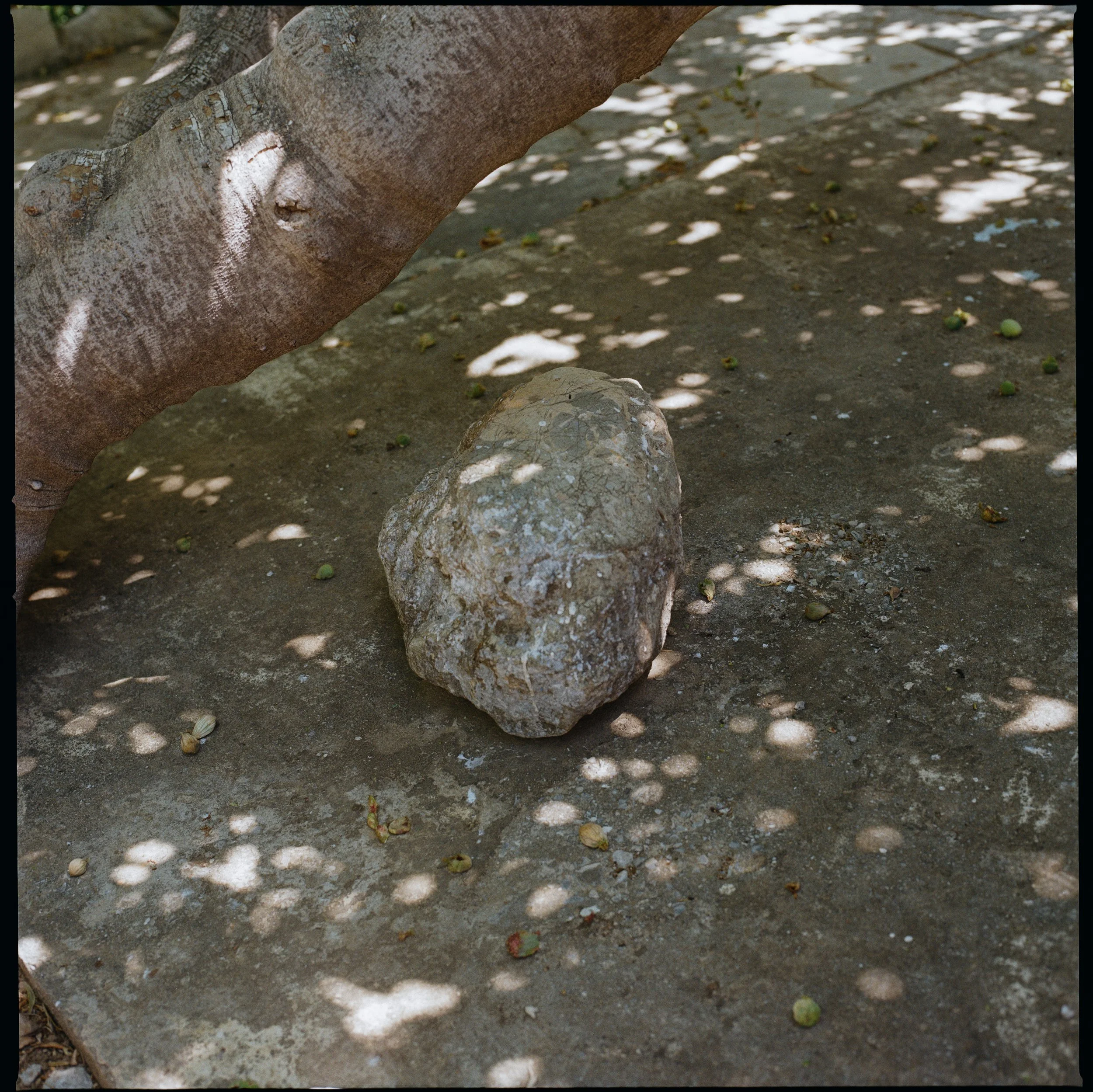
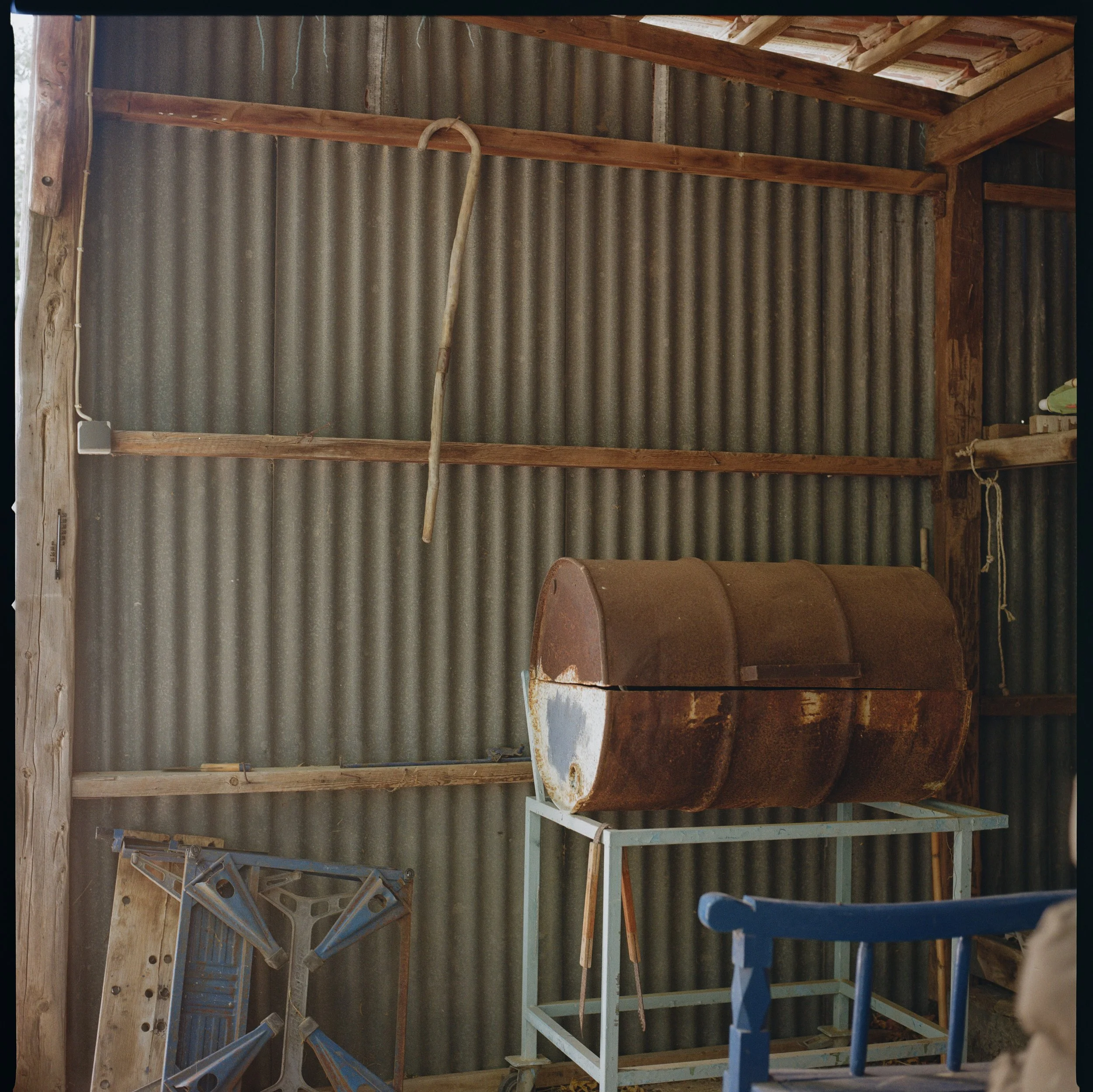
The prophylaxis of a wide fig tree provided shade, encompassing the site with its scent. Remaining stone found near the former studio (a converted shed) © Yannis Drakoulidis for Athens Design Forum
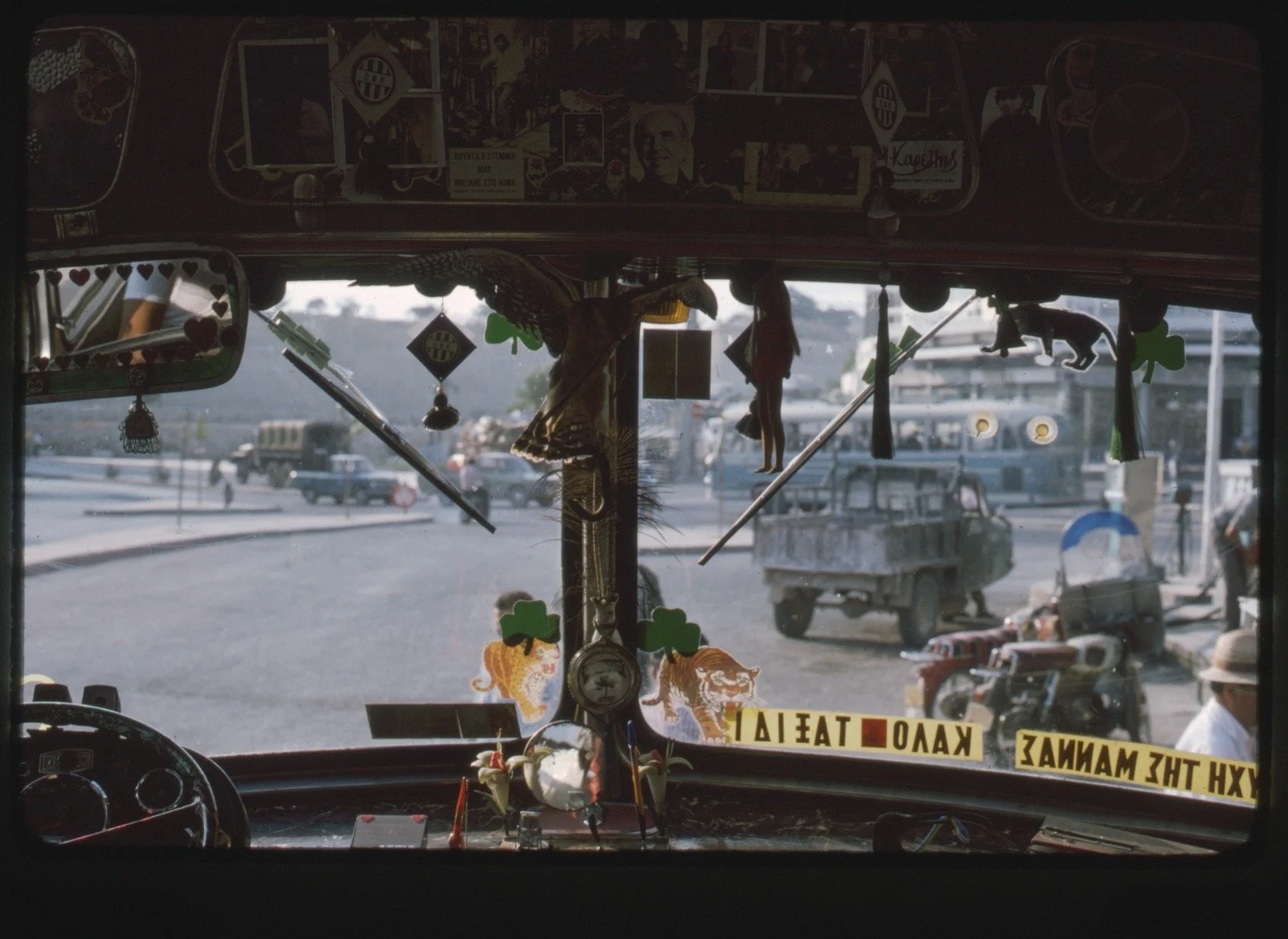
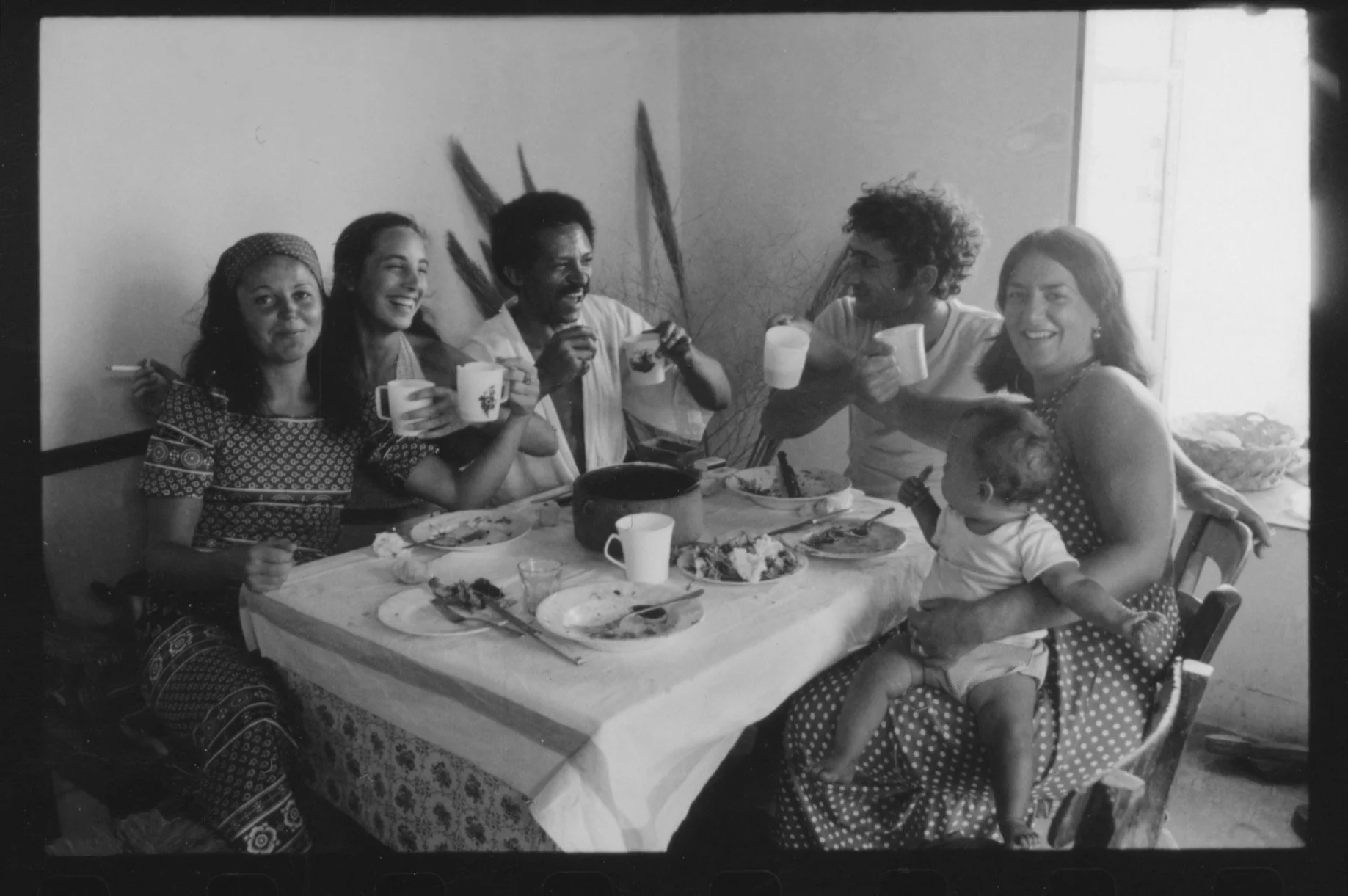
KTEL bus interior, 1975; Jack Whitten encircled by friends and family, Agia Galini, 1973. © The Jack Whitten Estate
“After so many years, I came to the realization that the Mediterranean is dead. There’s no more fish. The fishermen have been reduced to subsistence living. So that’s what that piece is about. It’s carved as a hanging piece, an effigy, like a lynching, really. Open body carved out, a lot of fishing paraphernalia from the sea, fishing nets, lures, hooks, a lot of bones from a lot of different fish. All hand carved. You don’t know what you’re looking at. Mixed metaphor: boat, body, some sort of ancient artifact. Often in sculpture, I do things that deal with inside-outside. How the outside affects the inside and vice versa.”
– Jack Whitten on The Death of Fishing (2007). From audio files of interpretation from the BMA exhibition, Odyssey: Jack Whitten Sculpture.
The stoic harbor brought Jack and Mary to various outposts from 1969 – the first proved only a solitary nail for hanging clothes. It would become the late 1980’s when the first sketch of a formal home was drafted by master builder, Yiannis Zeakis (Mary specified: “on a bed of thorns”) in an expansive olive field. Composing a house of their own dimensions in 1988 brought the scope of multidimensional space on a macroscale. Zeakis was a Cretan man ‘feared and respected’ as Mary would recall, of precise measurements – recognized to have tailored pants, custom-made in the village of Melambes.
The strata of language and metaphor survives in communion with divine forces that obscure the ordinary. The seasonal return towards Agia Galini was heralded by a broad shout of joy. As Mary Whitten would recall, she would play “Ballads” by John Coltrane as Jack would return to their garden, pulling all the dead matter of winter into a spare tire. Reverberations across the valley were joined by sounds of sheep and the rare entry of noise that would soar from the village below (brought by the right wind).
My meeting with Captain Yannis Kanaris, who sold his boat many years ago, on the shores of the harbour was mediated by remembrance. The photographs that remain aboard his boat – Mary seen in turquoise beads, Kanaris young and strong – foretell lineages of journeys that would remain continuous throughout the summers. Kanaris would guide Whitten to the island of Gavdos known for its shallow waters in the Libyan Sea. Recalling fondly: “Whitten is still remembered as the man who secretly transformed the death of a turtle by a fisherman’s net into a ‘kokkinisto’ stew for many of the village.” The fondness each shared for each other, even without common language (Mary would routinely translate) was replaced by a fascination with the sea. An understanding of how the fisherman was a custodian of a whole ecosystem, even as their trade neared disintegration.
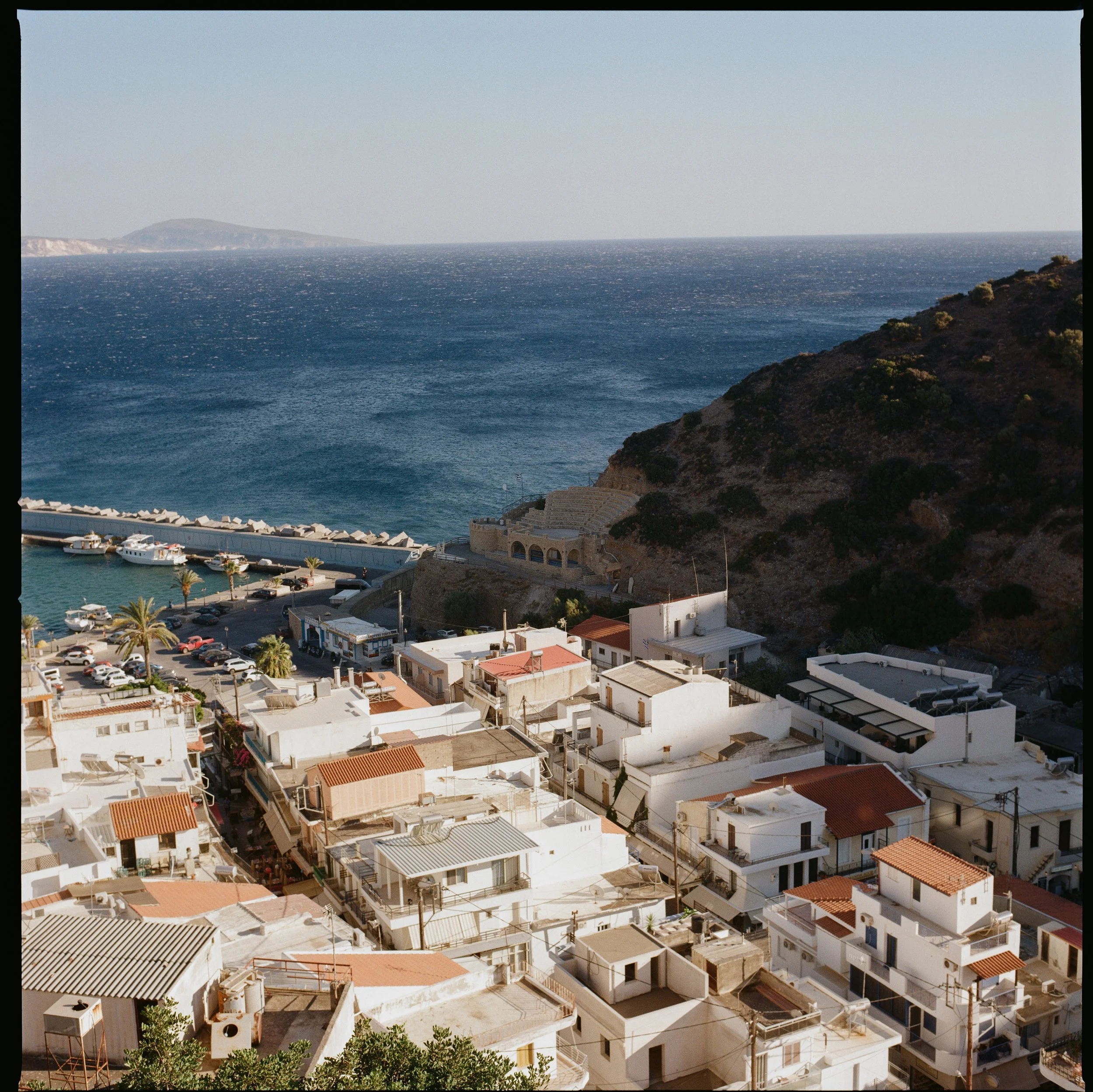
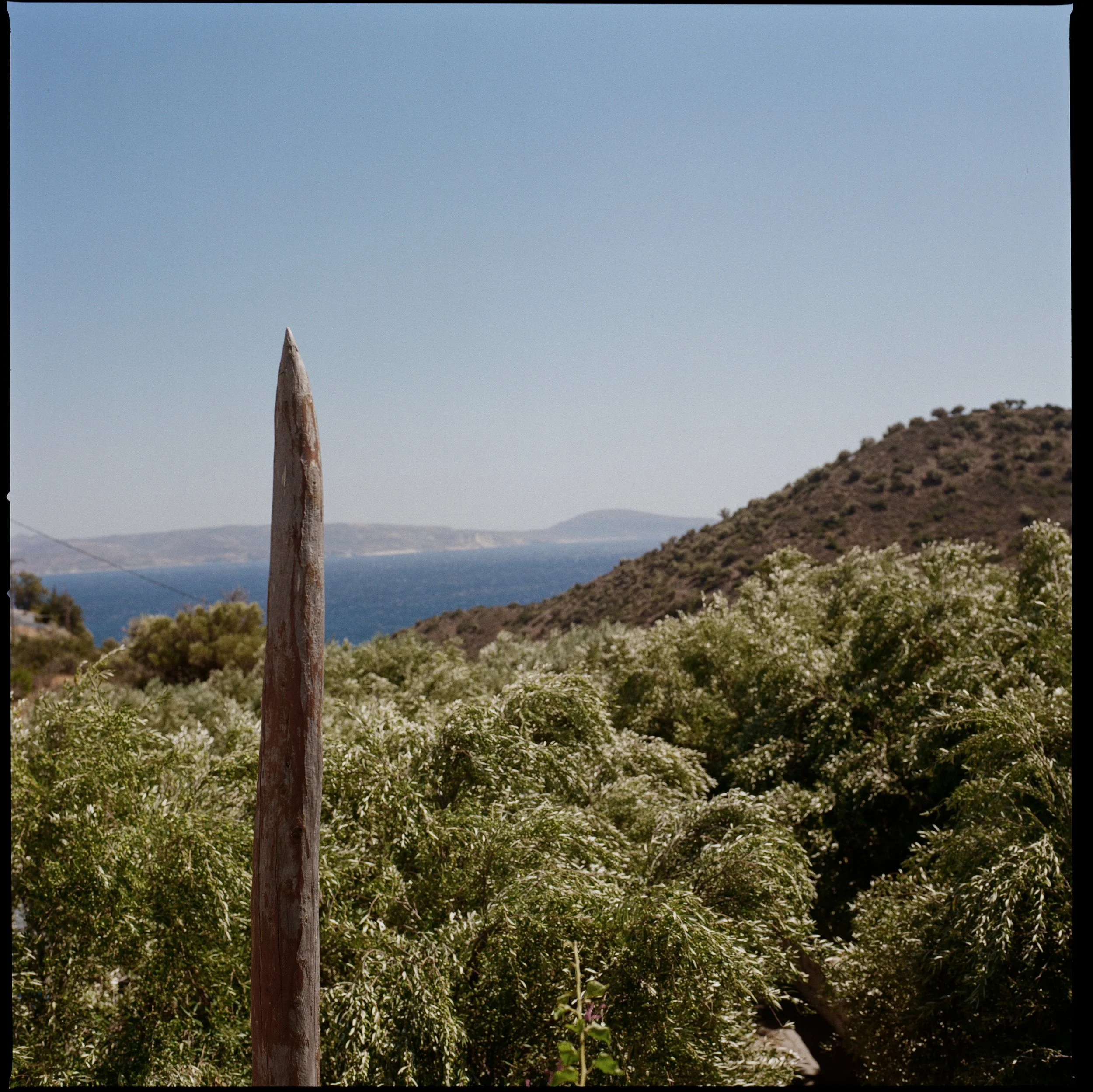
Agia Galini Harbour, viewpoint from the home of Ioanna and Jan, dear friends of the Whitten Family. Their son, Omiros, and his wife Emma, are the custodians of Whitten Acres. © Yannis Drakoulidis for Athens Design Forum
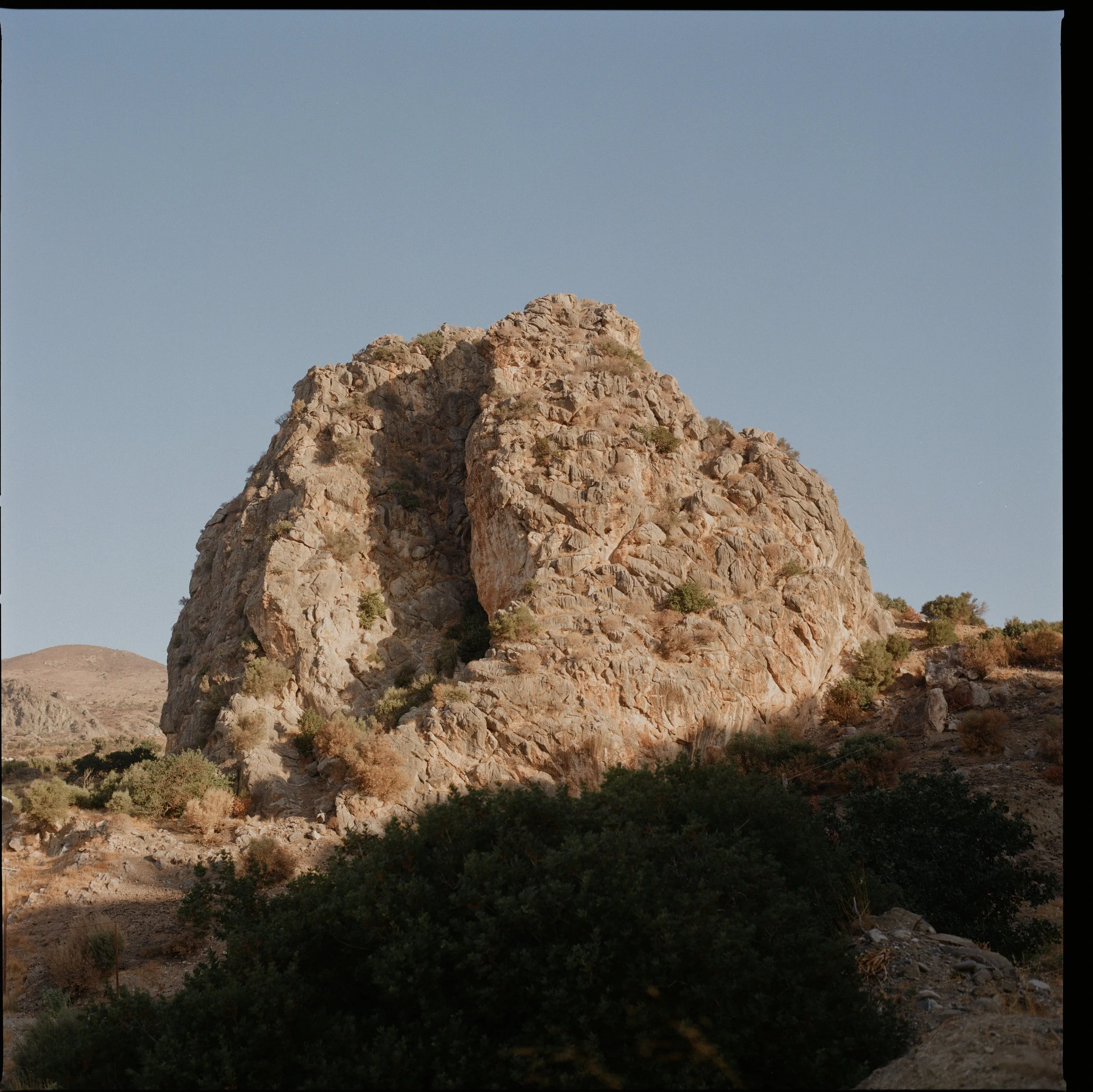
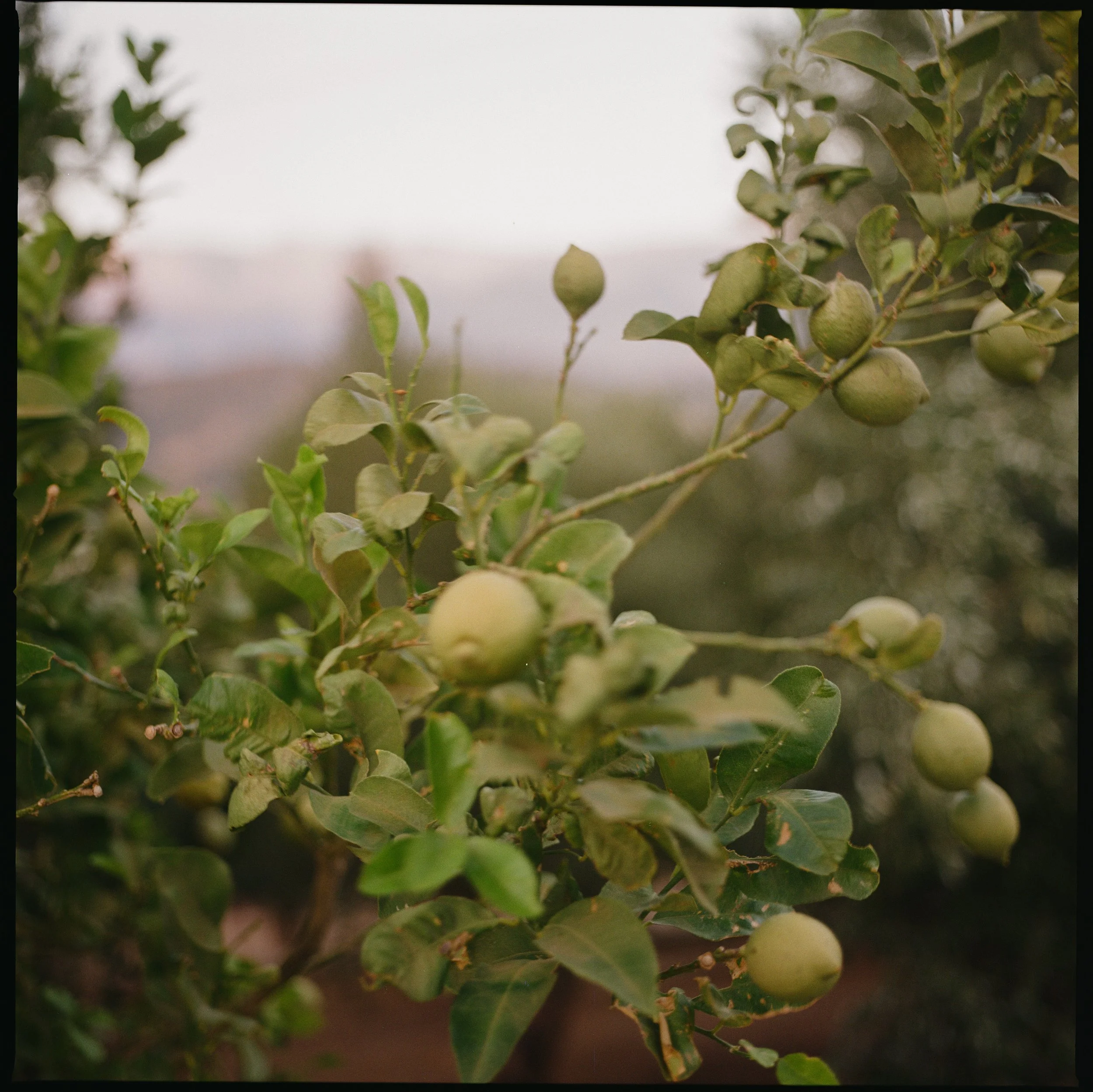
Agia Galini embodies mythology’s deeper cisterns.
It would be the painting of his mother’s first husband, a waterfall, that would premeditate Whitten’s association with water:
“Now I know that we carry ancient information in our head, in association to water. The first time we saw ourselves, the first image we saw of ourselves, was leaning over to have a drink of water. And we have carried that with us. So even today, water is an archetypal image. We carry a certain information about fluidity, translucency, transparency.”
— “Jack Whitten by Kenneth Goldsmith”, BOMB Magazine, 1994
Whitten’s encounter with the topography of the sea was guided by the ritual of ‘octopus hunting’: a mediated interface between making legible the ‘architecture’ of octopus’ homes. He would contend: “Parson’s Branch in Bessemer, Alabama, did not have octopus, but I did learn to catch snapping turtles by hand. I grew up with a bamboo fishing pole in one hand and a .22 caliber rifle in the other.” He defines the characteristics of “octopus architecture” seen in the depths of Agia Galini: “...unique, constructed with stones, shells, wood, bits of sea glass or anything available for building a nest. And of course, they prefer white stones. The nest is always semicircular and built at the base of a large rock, which serves as an anchor.” (“Hunting Octopus in the Libyan Sea” by Jack Whitten, Courtesy Art Lies)
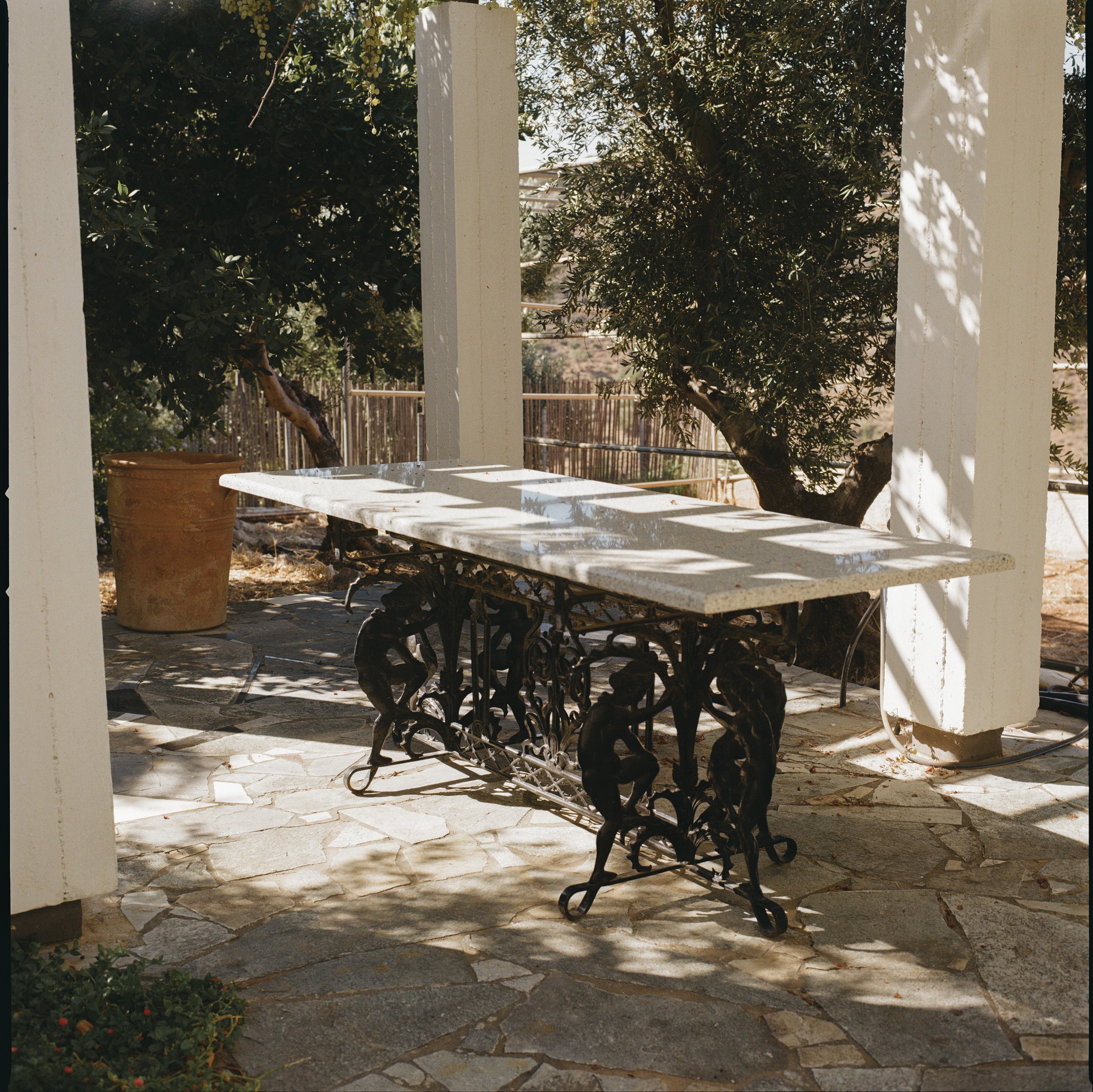
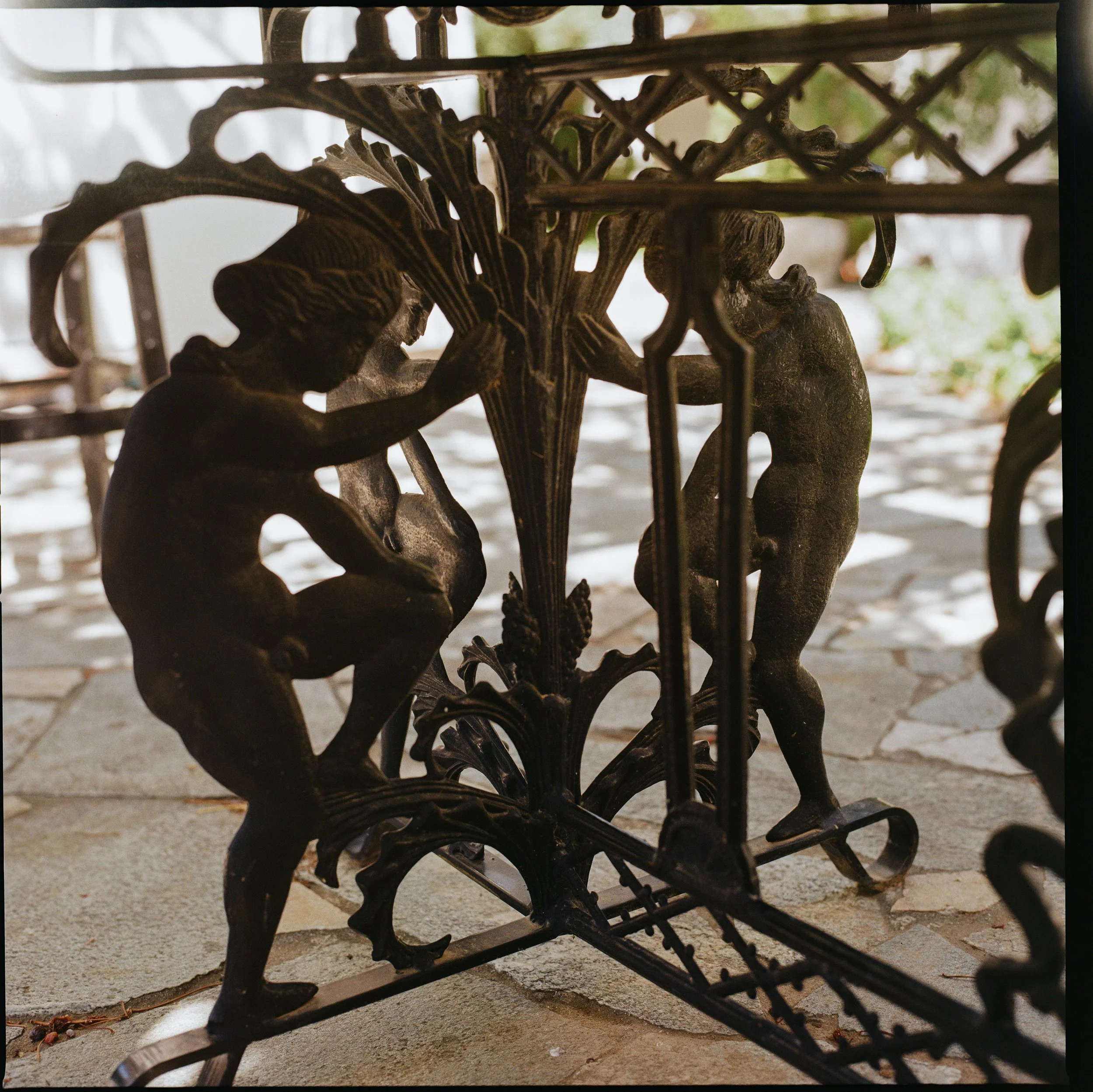
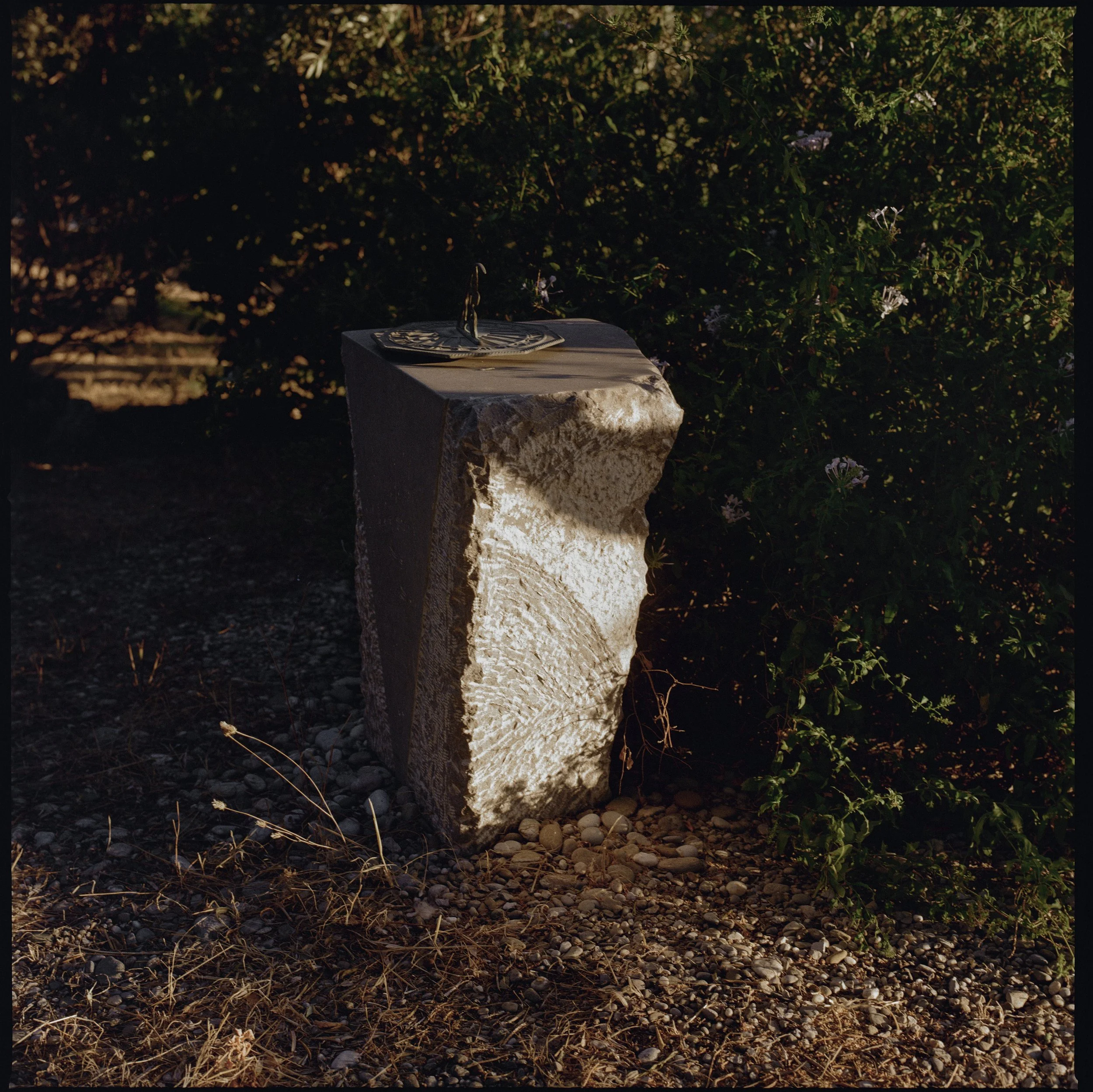
Detail of table sourced from the periphery of Rethymno, with marble counter (originally used as a dining table); Sun-dial with carved, grey marble base – later, the same stone was used as plinths for sculptural works. © Yannis Drakoulidis for Athens Design Forum
WHITTEN ACRES
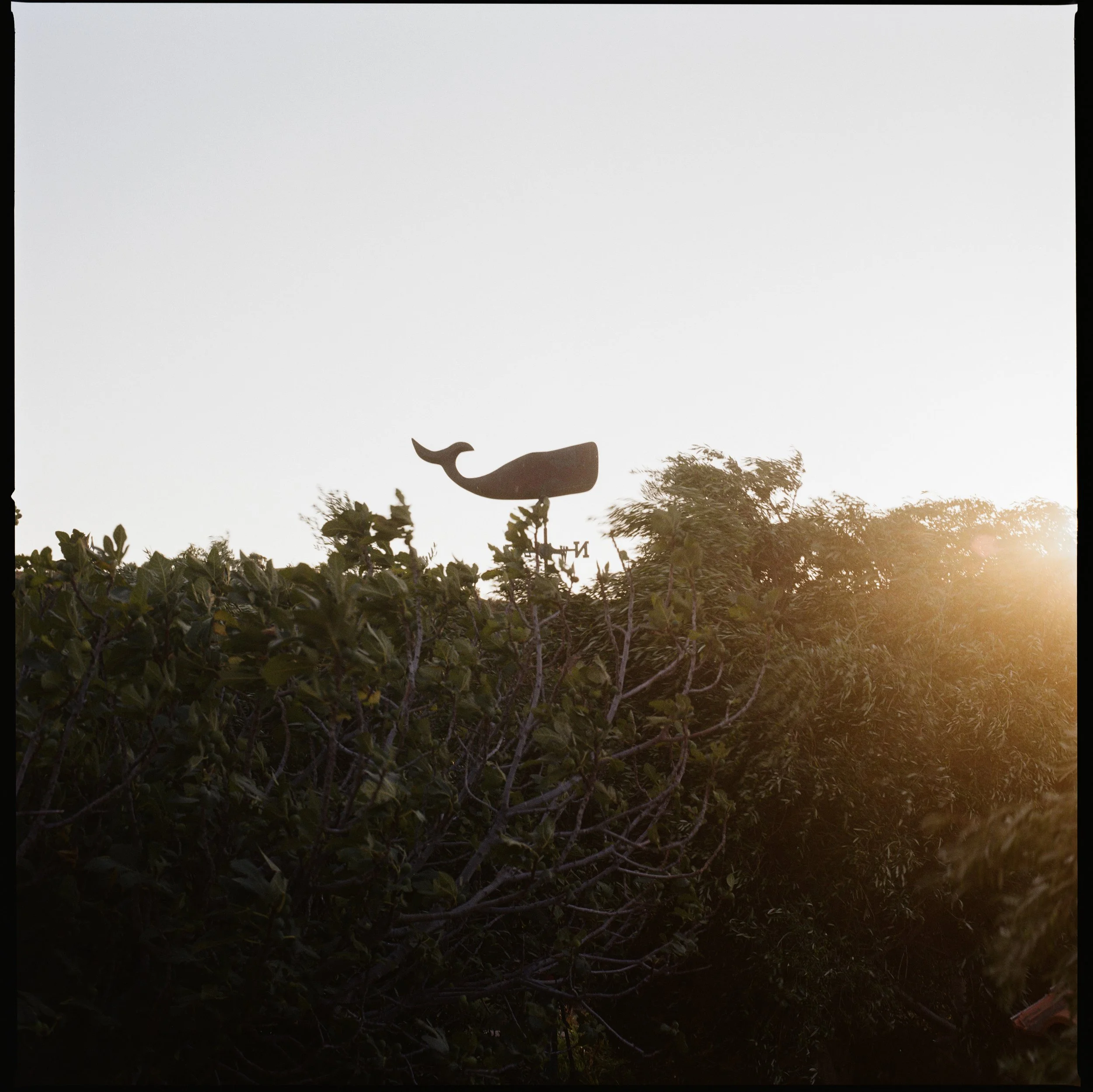
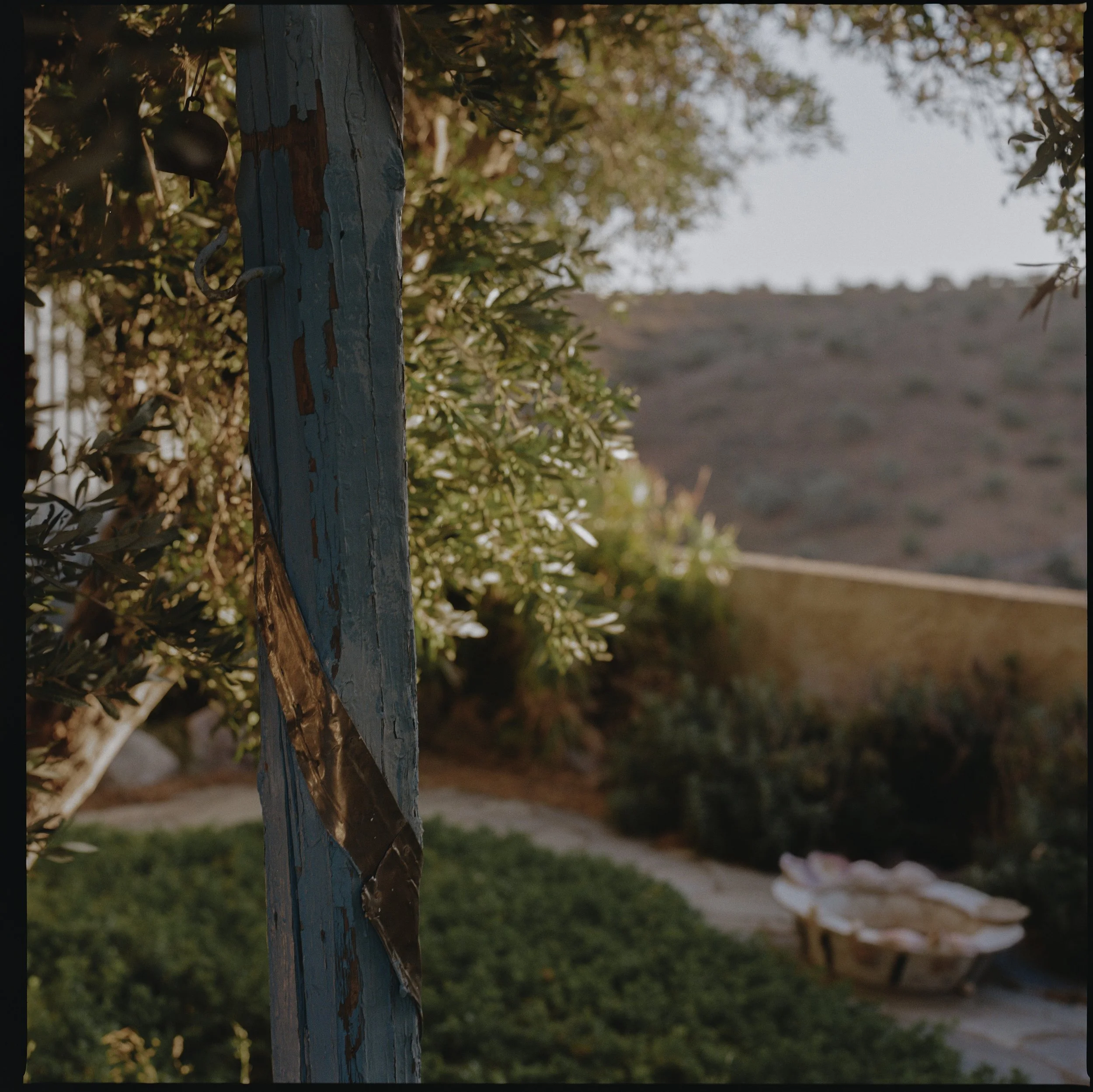
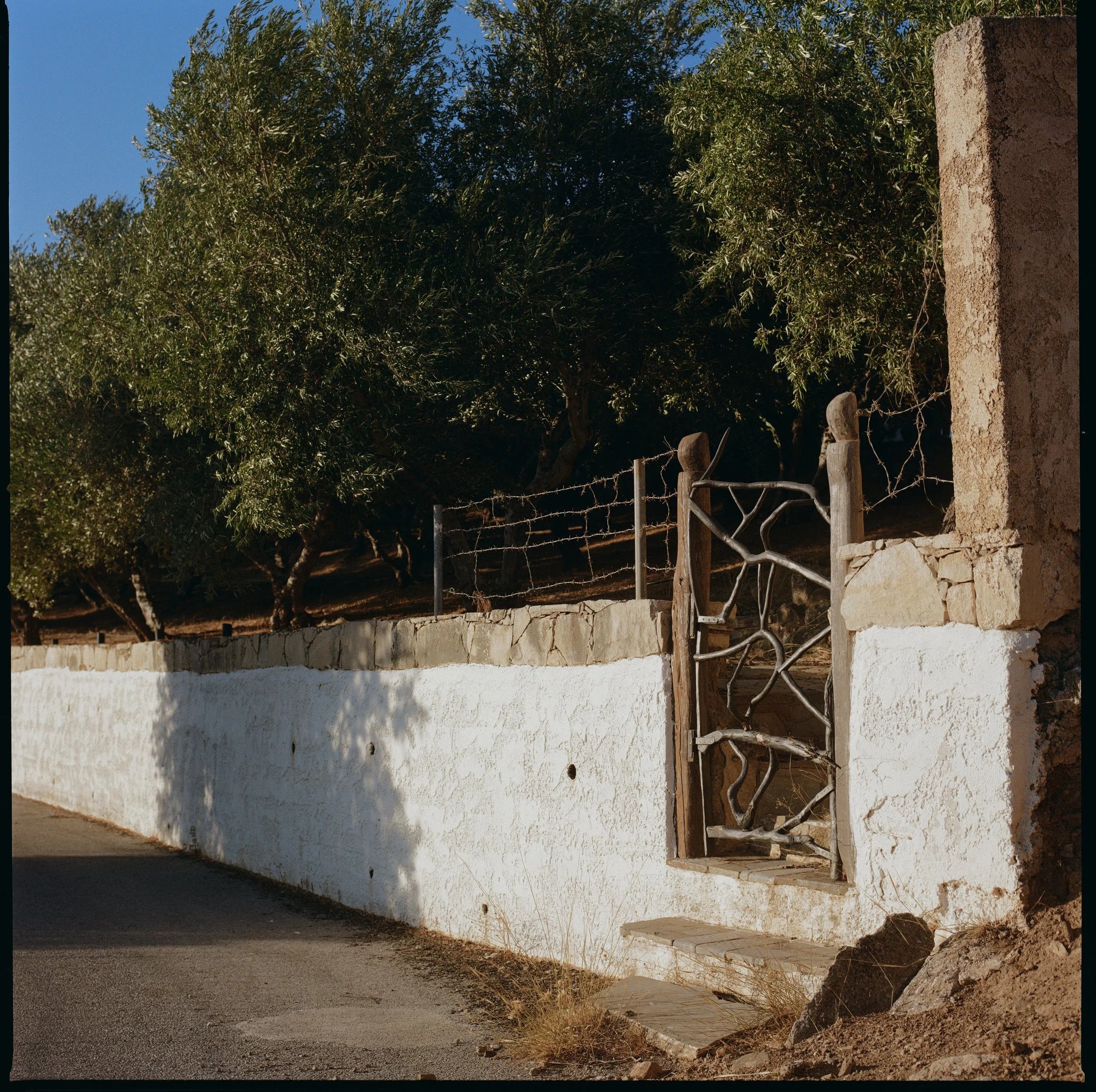
The precision of the sea creature’s nest is also made visible in his own construction of Whitten Acres, alongside his wife, Mary. The gates were made of wild olive wood, sinuous and forged into a protective plane of margin horizontally, with sculpted, carved totemic poles as the vertical axis. Near the interior gates, a small marble basin was used as a wash-fountain when returning from the olive fields. A weathervane of a whale would become the central paradigm of the upper balcony framing Whitten Acres, situated in a plateau above Agia Galini harbour – a totemic reading into the shifting wind patterns. Bought from Massachusetts, it rose above the paved garden into the sky, its tail never caught in the oscillating olive trees. A repurposed wooden pole was topped with the evasive figure of the sea creature, with the vertical body painted blue, wrapped in metal sheets, and outfitted with a sheep-bell.
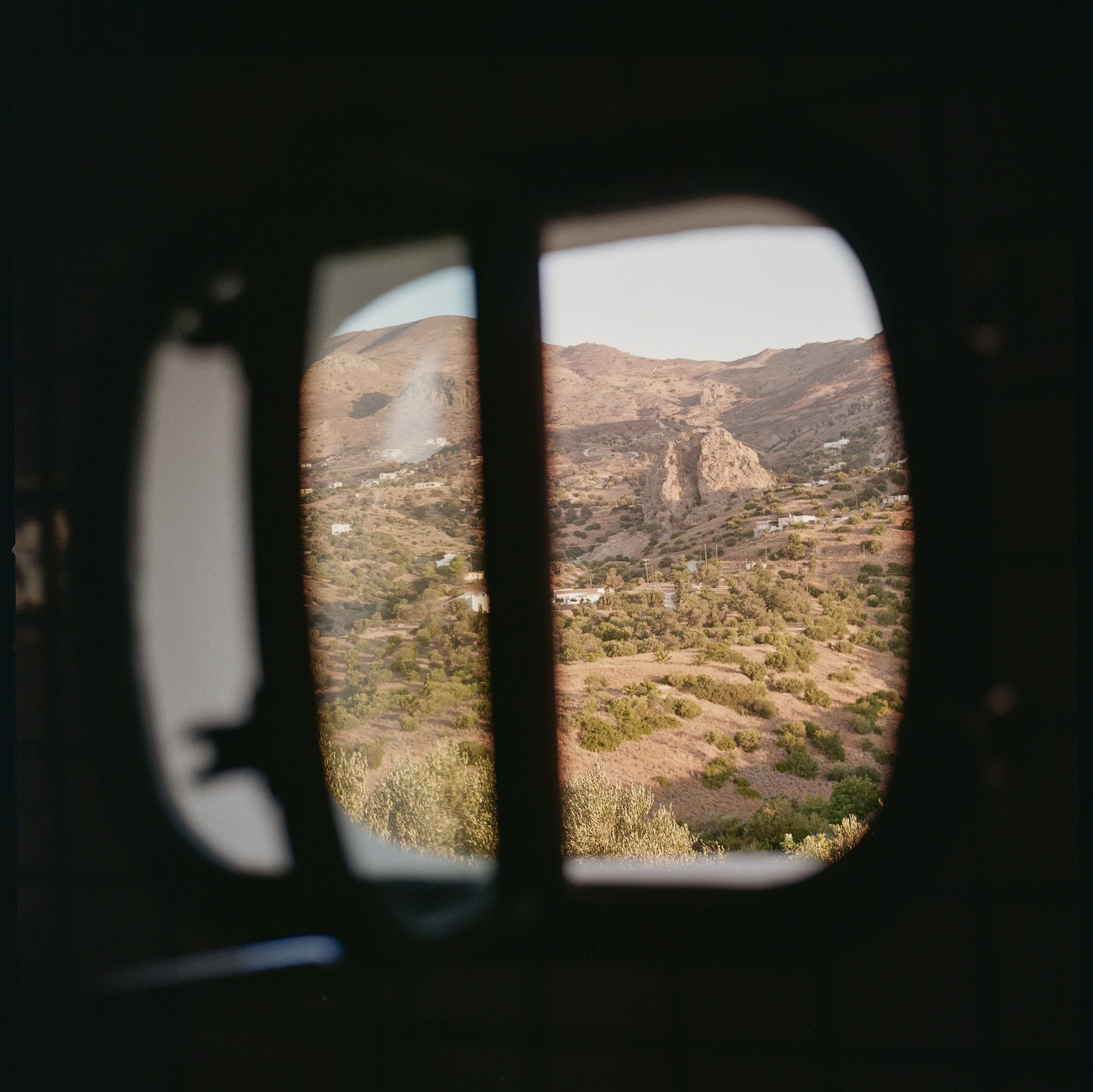
Wind became the compass for movement. Whitten’s daughter, Mirsini, would recall how in the evening, accompanying raki, the wake of bats would welcome dusk. Monolithic ship windows, sourced from Piraeus, were kept in storage until placed over the central kitchen sinks – framing Charakas mountain (the family’s friend, Ioanna, told us the rare occurrence of how Saffron flowers blossom in late autumn). Whitten Acres was populated with antique Cretan chairs from Melambes (some painted by Jack with a veneer of silver) and collaborations with a local carpenter saw custom-made furniture. There was a simplicity even in the door handles, of sculpted fine wood of serpentine form. The Dionysian Pergola, wrapped with a grapevine, becomes the first moment of stasis when encountering the home – an inscription in marble bears the name attributed to the site. A sun-dial was planted adjacently in grey marble – its sides incised to show the gradation of coloring when sculpted. The same stone would thereafter become the plinths for various sculptures forming a material genealogy.
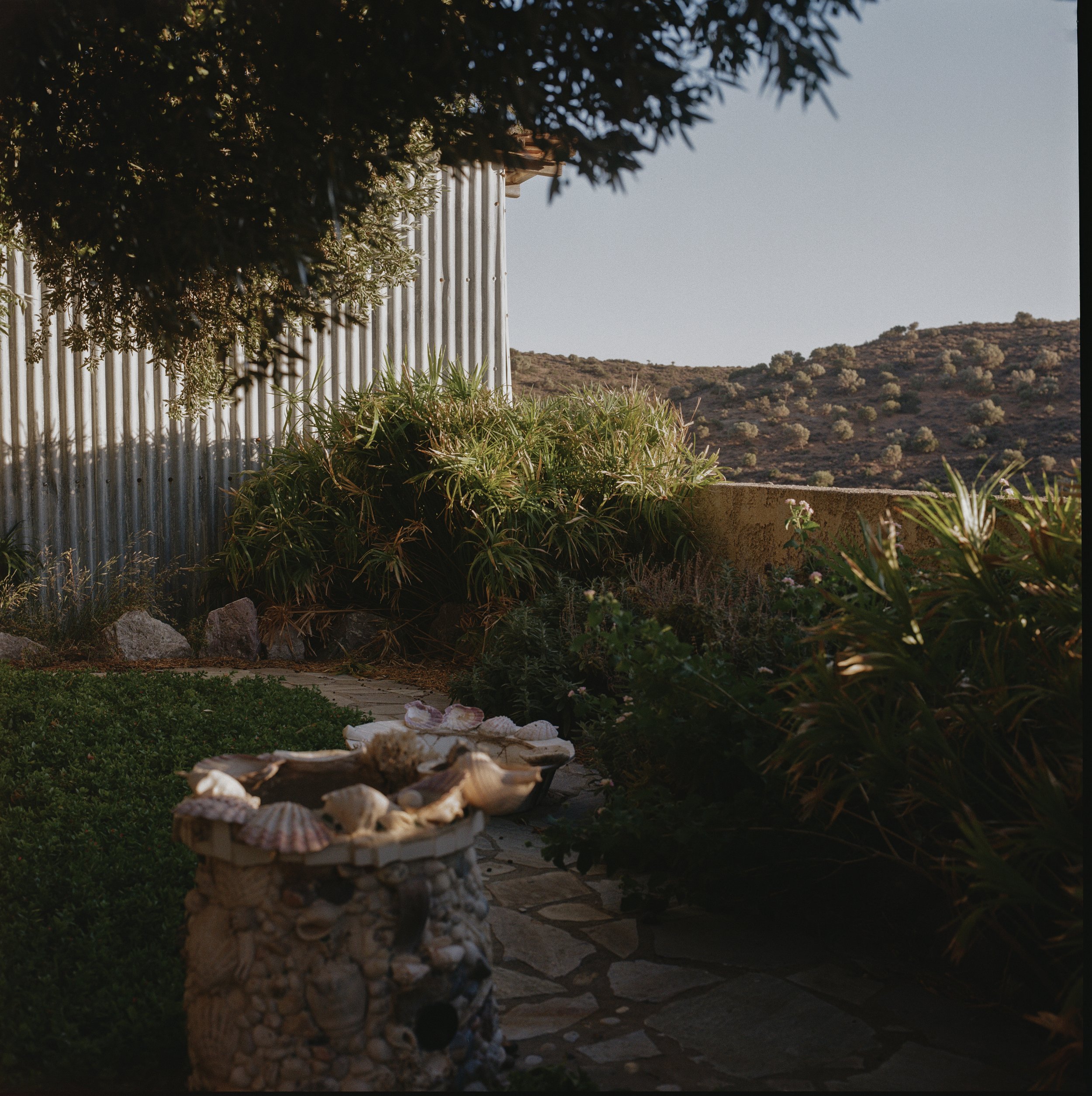
As swallows would arrive in the middle of summer, bird-baths were constructed and assembled from Cretan amphora, with shells, tiles, and glass fragments dressing the body – only the remnants of the handles reminiscent of the original construction.
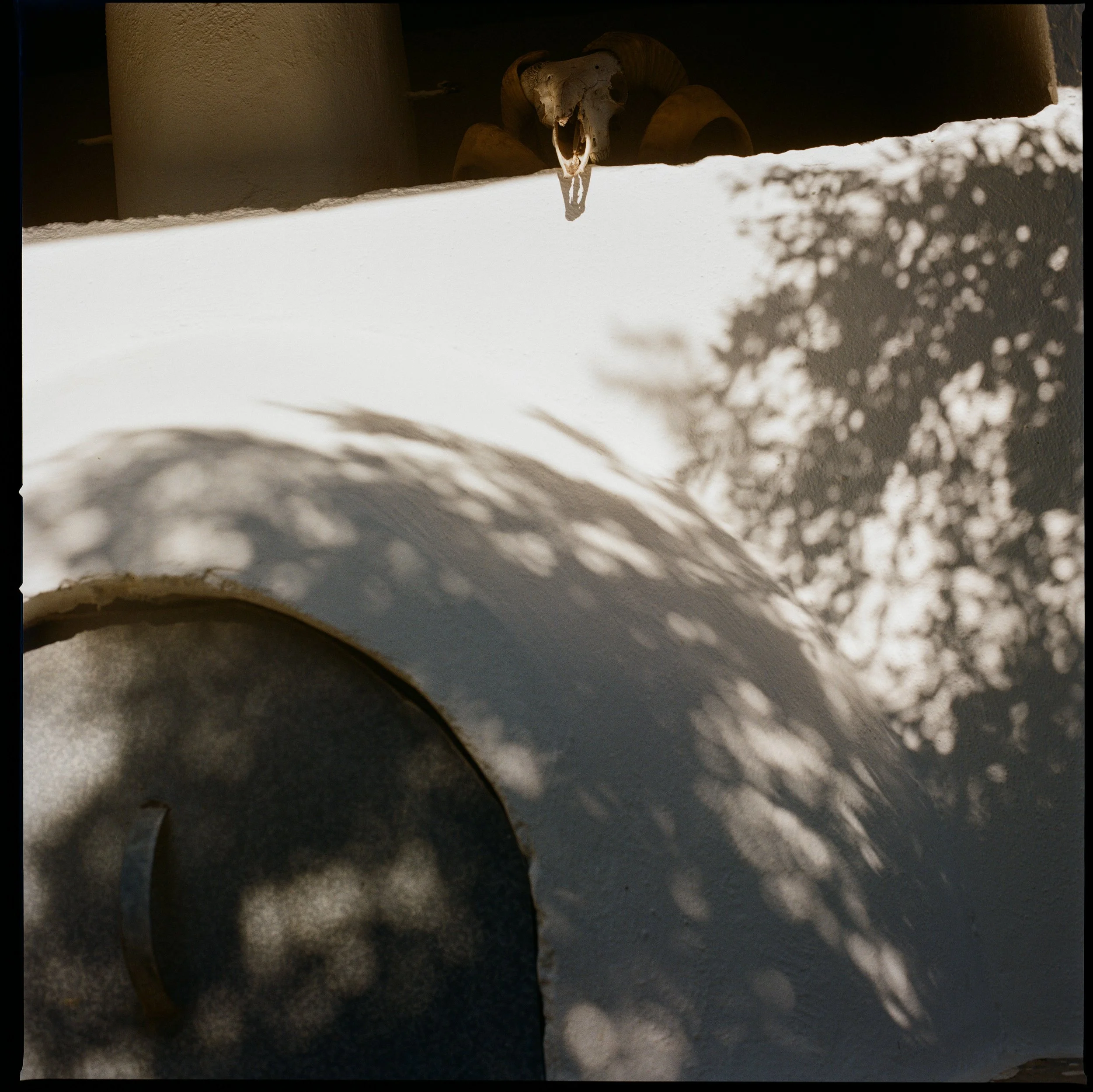
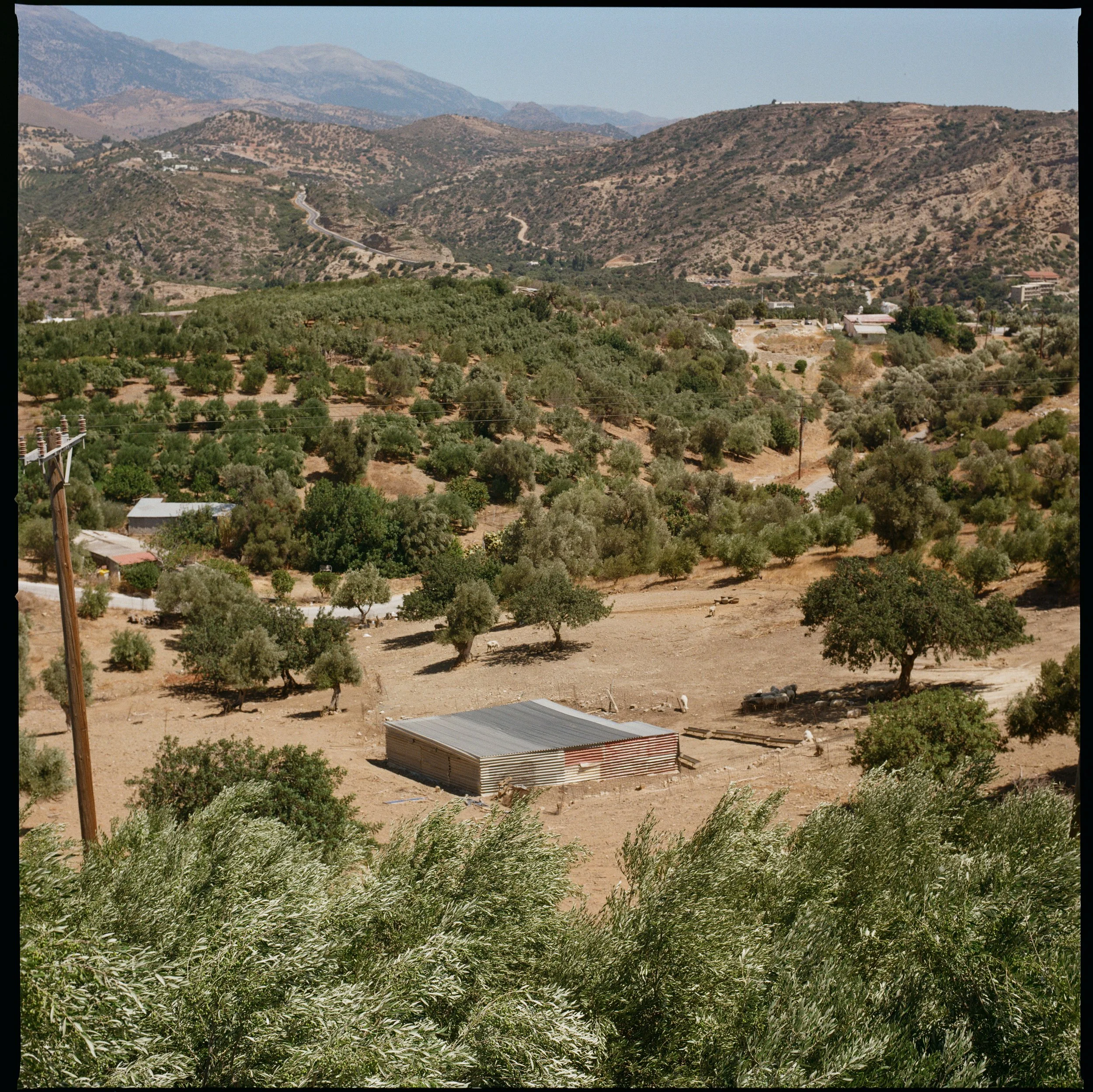
A goat shed found adjacent to Whitten Acres, mirrors the outdoor studio typology built for Jack. Mary would recall the time when a young sheep got his horns stuck within the fence. Jack grabbed his horns, and twisted his head to forcefully release him. The kri-kri, a species native to Crete, represents the untamed wild goat — appearing in titles of Whitten’s sculptures. Within the home, the skulls hone a framing of the outdoor hearth and the studio shed, symbolic omens paralyzed in bone.
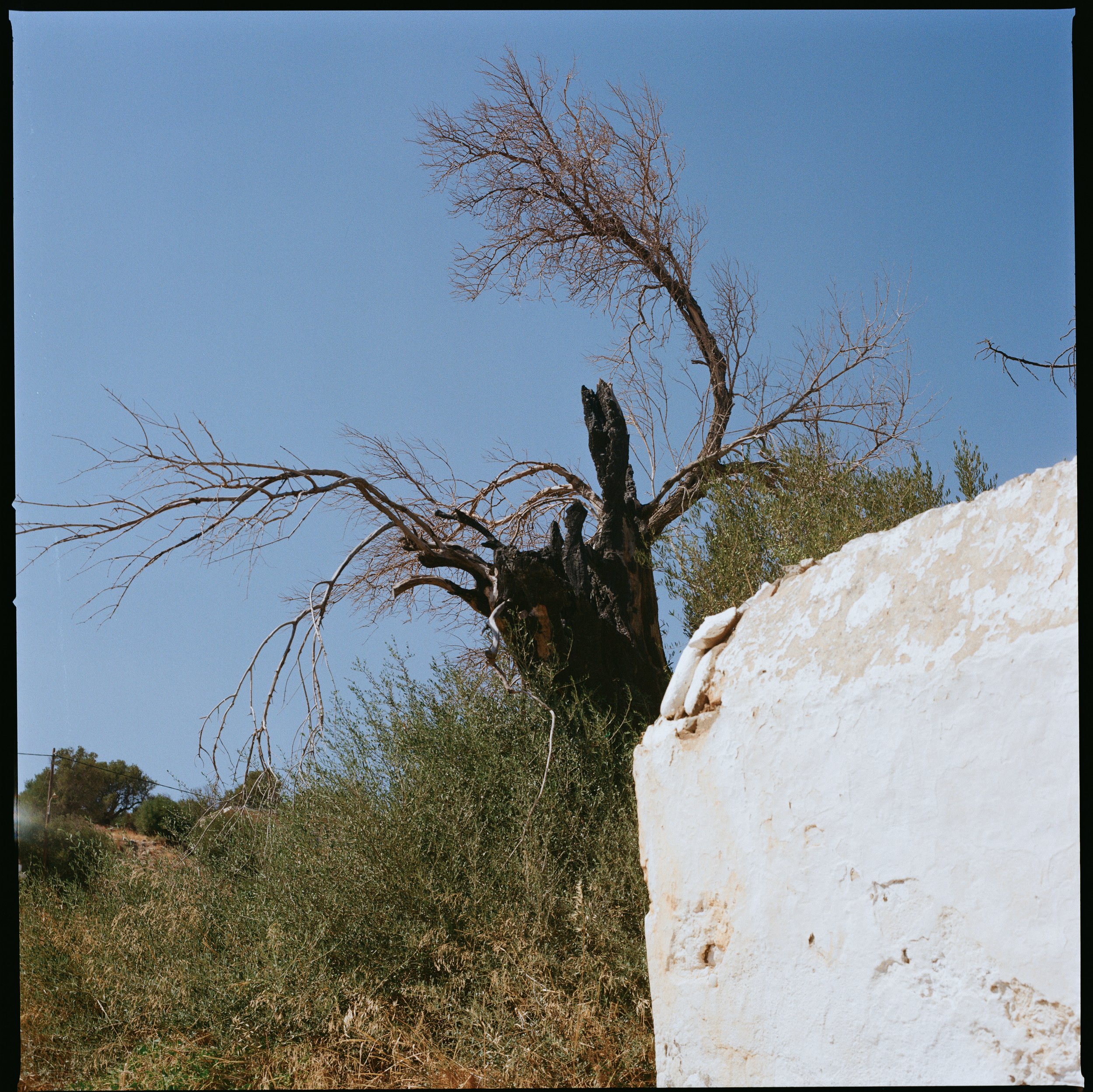
The understanding of a human’s inconsequential relationship to nature is made visible through the burnt olive trees that frame the cemetery of Agia Galini – their wild formations paralyzed in an expansive gesture. Sites of holy value encompassed the life of Jack Whitten and his wife, Mary. A visit to the Monastery of Saint Catherine in Sinai, on Christmas Eve, would yield a proximity to the burning bush, and the effect of mosaic tesserae candlelit that would come to influence years of his expressive register. Mary Whitten emphasized the beauty of a handmade ladder made by the monks of raw wood, seen in the environment of grandeur and holy prestige in Sinai. Articulated by the mosaic icons of saints, I questioned the depth of how this autonomous gesture had affected them. It recalled that initial image of a waterfall in Bessemer, Alabama, that became the origin of painting for Whitten: with the knowledge that water transference performs a continual union with the sea – even if one of distant proximity, the Libyan Sea. There remained a targeted momentum of confrontation with the cycle of grieving and rebirth, a tending to the land and understanding of its limits. It is as if the mantinadas, the songs of wooing, that existed on the island still encompass the life of Jack Whitten and his family – continuously written. The oracular value of the first dream remains.
Mary had sung for me a few solitary verses:
“Your eyes are of the sea, wind’s force does not subdue, joy of the sailor who will find a harbour within them…”
Captions – Skulls of goats frame the central outdoor hearth. Cretan associations with the Kri-Kri bear a certain symbolism of the ‘untamed’ and celebrated animal. The skulls would also be incorporated within the Queens studio of the late artist; View of the neighboring goat shed, in conversation with the materiality used for the outdoor studio (converted shed) of artist Jack Whitten; Wild olive was used as a gate threshold for the adjacent fields encompassing Whitten Acres. The totemic, carved poles are sculpted by Jack Whitten; Burnt olive trees frame the cemetery of Agia Galini – their wild formations paralyzed in an expansive gesture. © Yannis Drakoulidis for Athens Design Forum
We extend our gratitude to Mary Whitten and Mirsini Amidon of The Jack Whitten Estate, supported by Adrienne Chau of Hauser & Wirth and Michael Plunkett. Interviews conducted in Fall 2026 with Yiannis Kanaris, Nikos Haritakis, Yiannis Troullinos, Ioanna and Jan Verheul, Emma Meurs, and Omiros Verheul proved invaluable for the creation of this feature.
Archival photographs courtesy of The Jack Whitten Estate, reproduced with permission.
Original research and text © Katerina Papanikolopoulos for Athens Design Forum
Photography of Whitten Acres and Agia Galini, Fall 2026. © Yannis Drakoulidis for Athens Design Forum
Creative Direction: MÁTI GREY
This feature builds upon previous collaborations with Museo Carlo Mollino, the Estate of JB Blunk, and the Alekos Fassianos Estate.
The Family Album.
1971-87 / Agia Galini
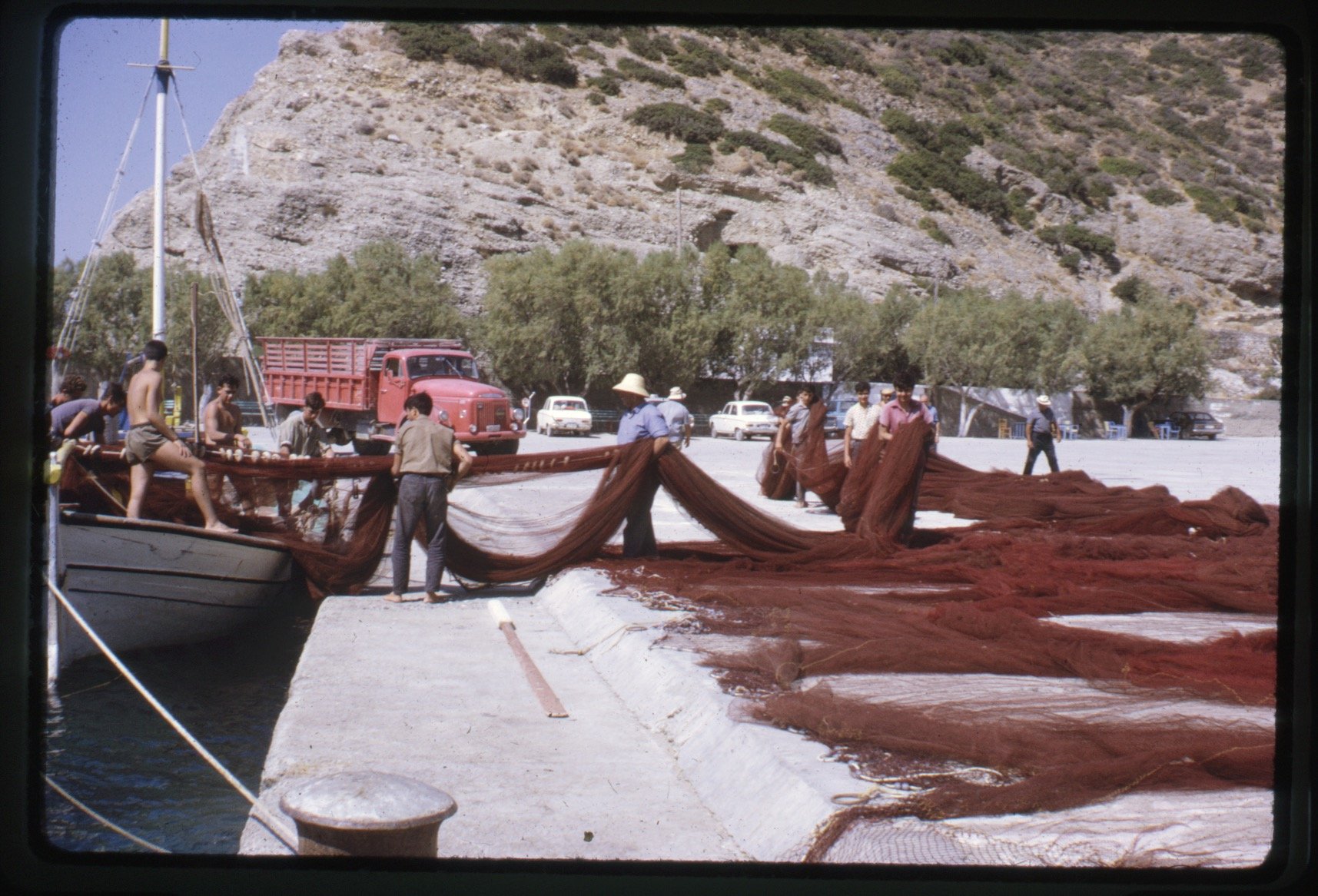
Fishermen with their nets at the harbour (1971). Photograph by Jack Whitten.
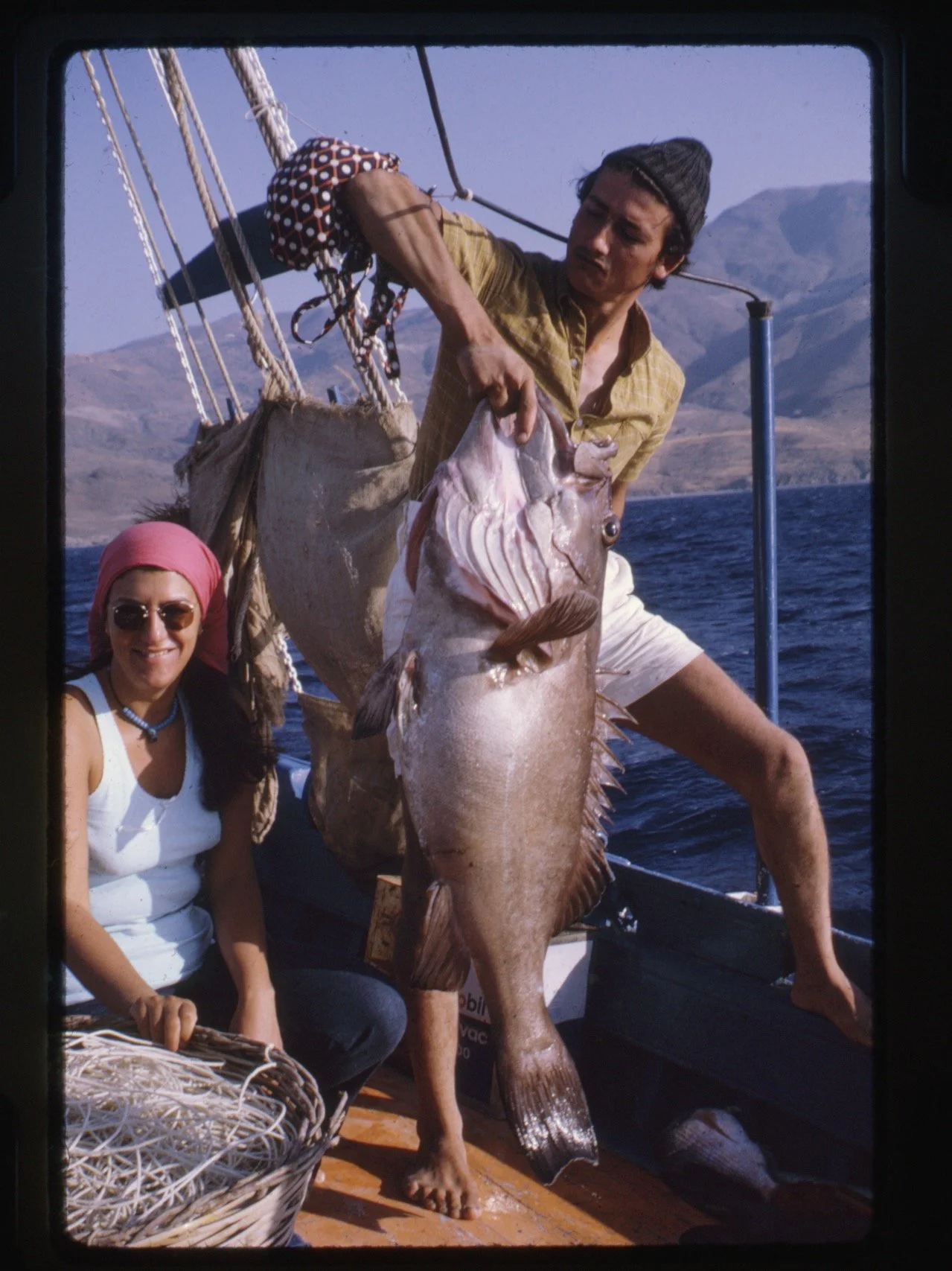
Mary Whitten and Captain Yiannis Kanaris (1971). Photograph by Jack Whitten.
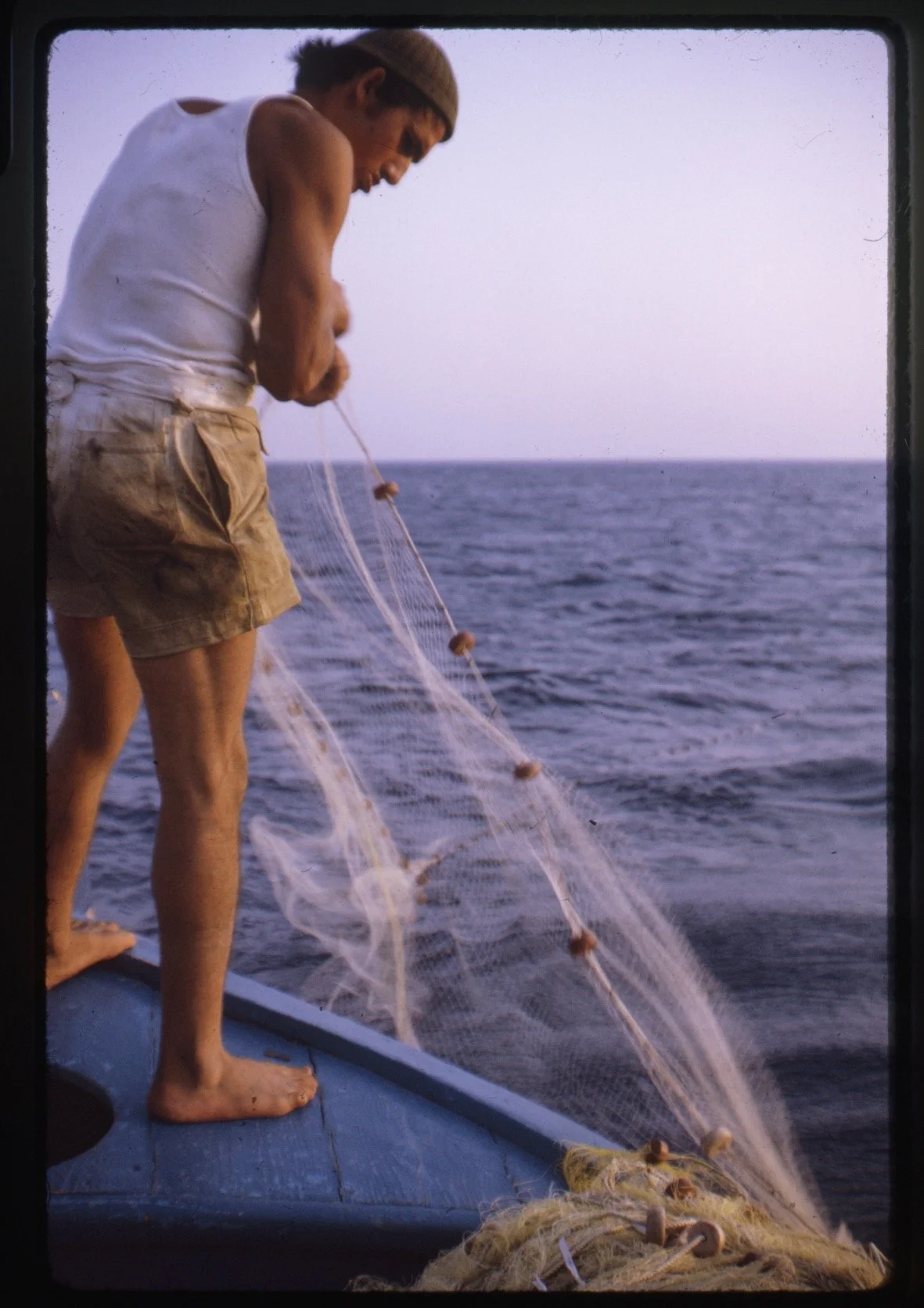
Captain Yiannis Kanaris bringing in his nets (1971). Photograph by Jack Whitten.
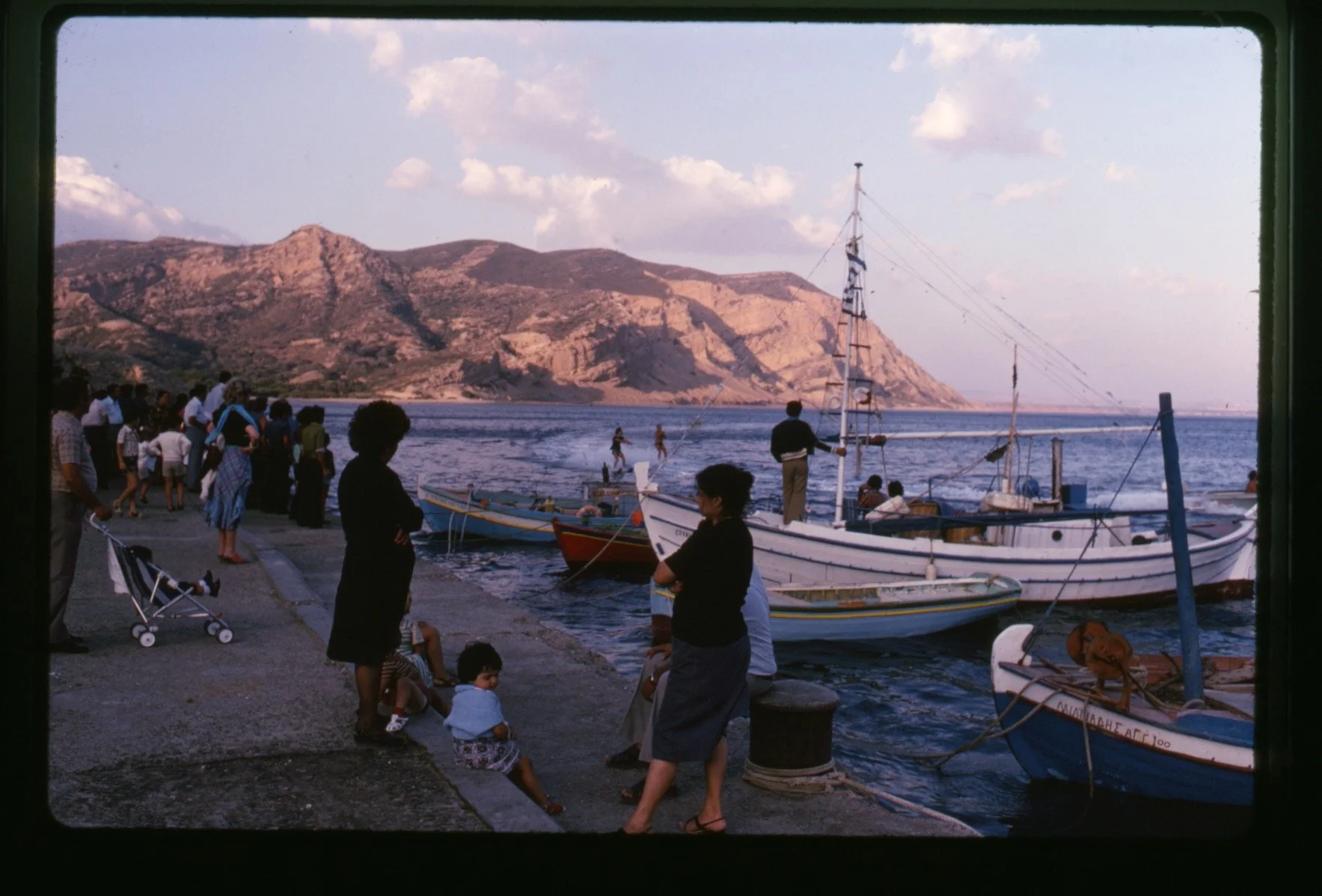
Harbour (1977). Photograph by Jack Whitten.
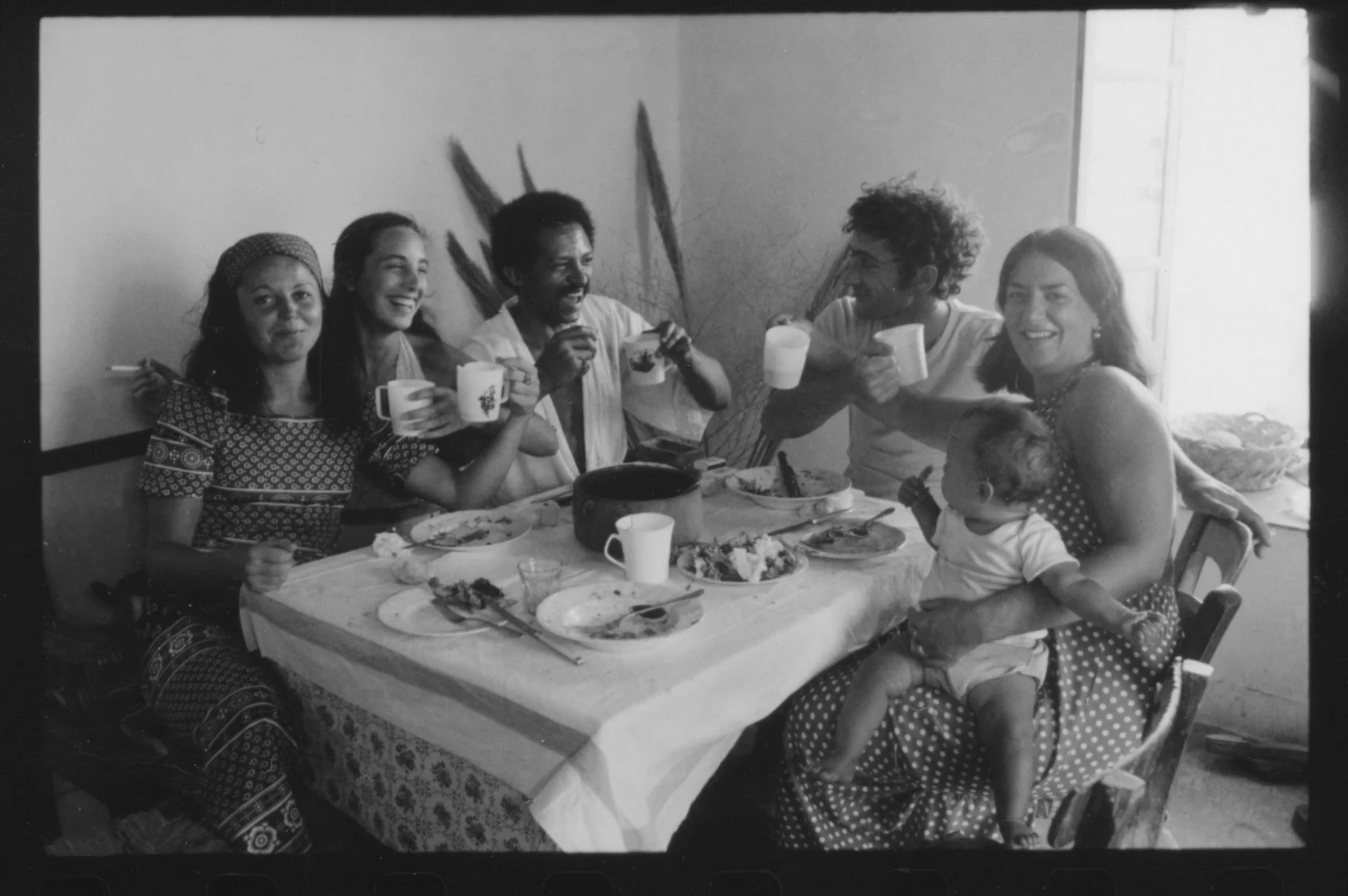
Jack Whitten, Mary Whitten, and Mirsini, with Rhoda Urman seated beside Jack (1975). Photograph by Cris Gianakos.
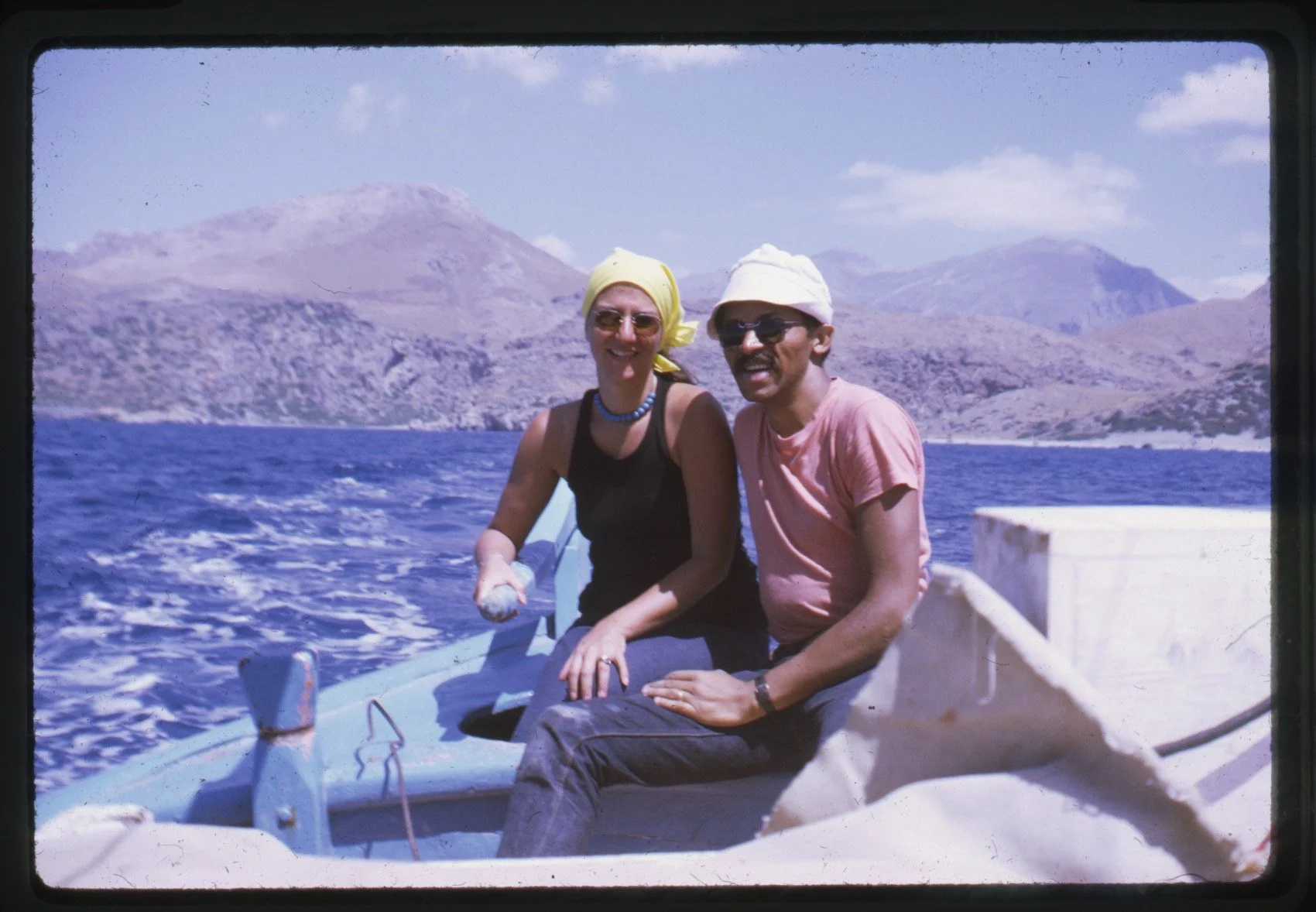
Mary and Jack Whitten (1971). Photographer unknown.
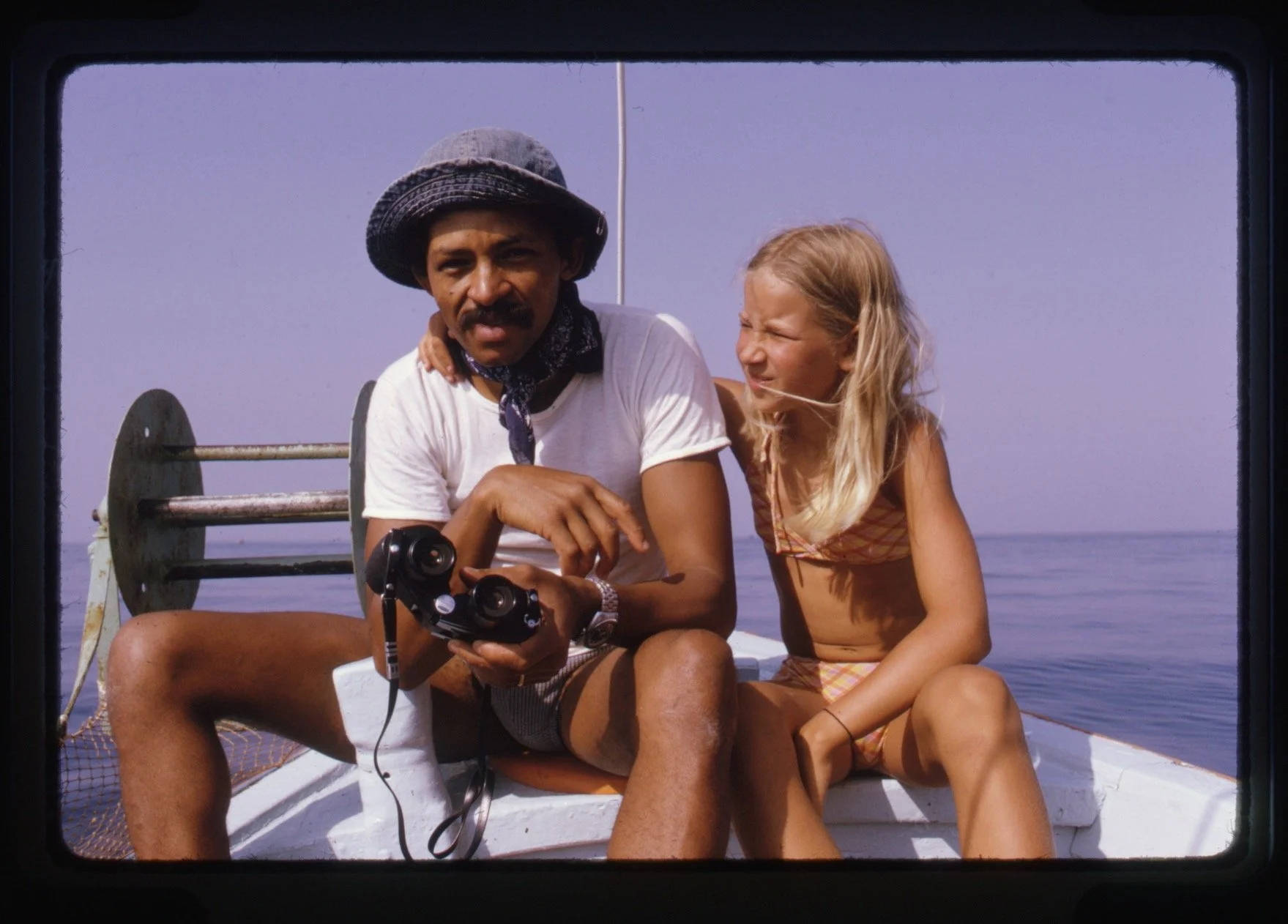
Jack Whitten with Rhondi (1973). Photographer unknown.
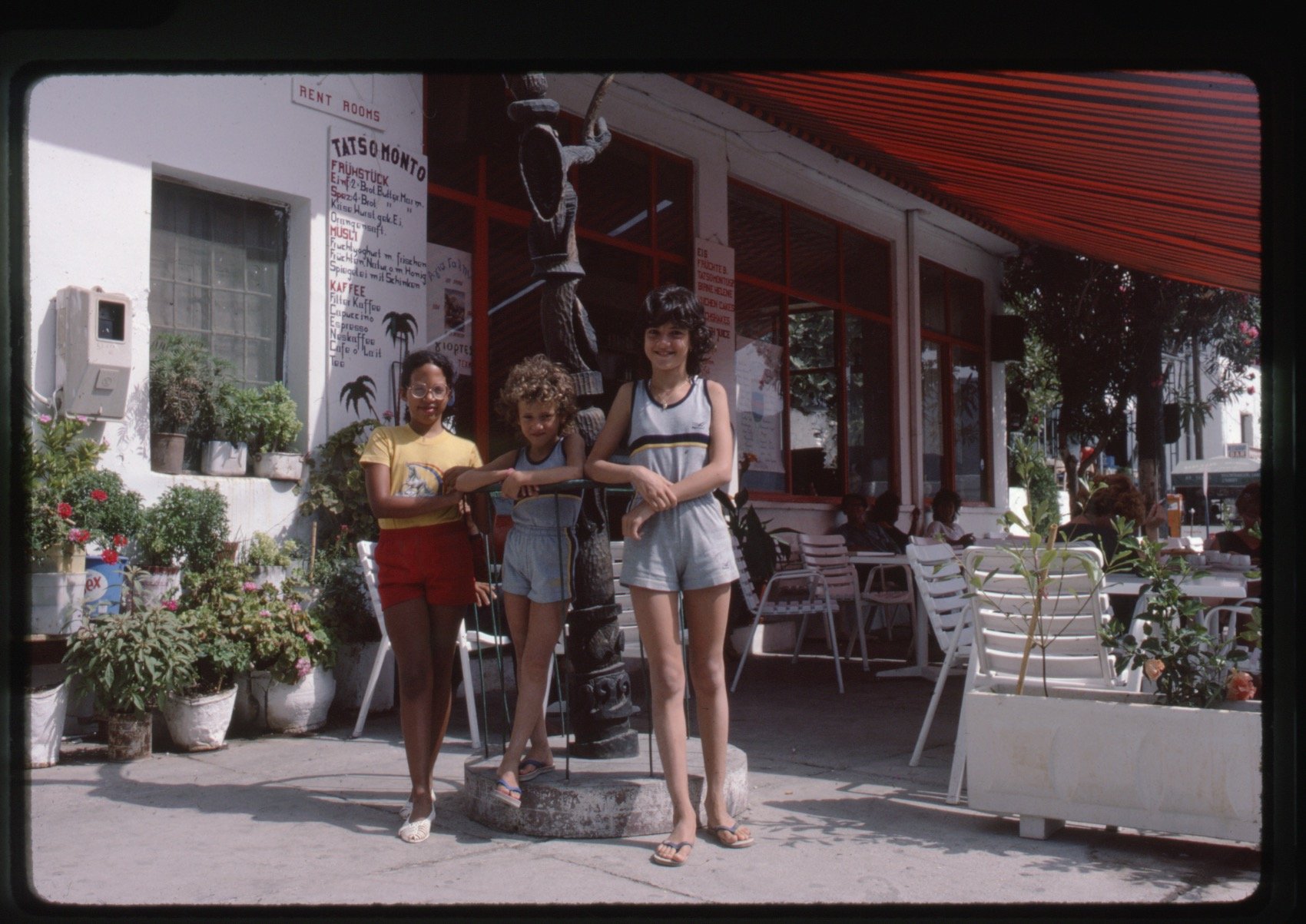
Mirsini with the sisters Zefi and Irini; Jack Whitten’s totem is visible in the harbour (1984). Photographer unknown.
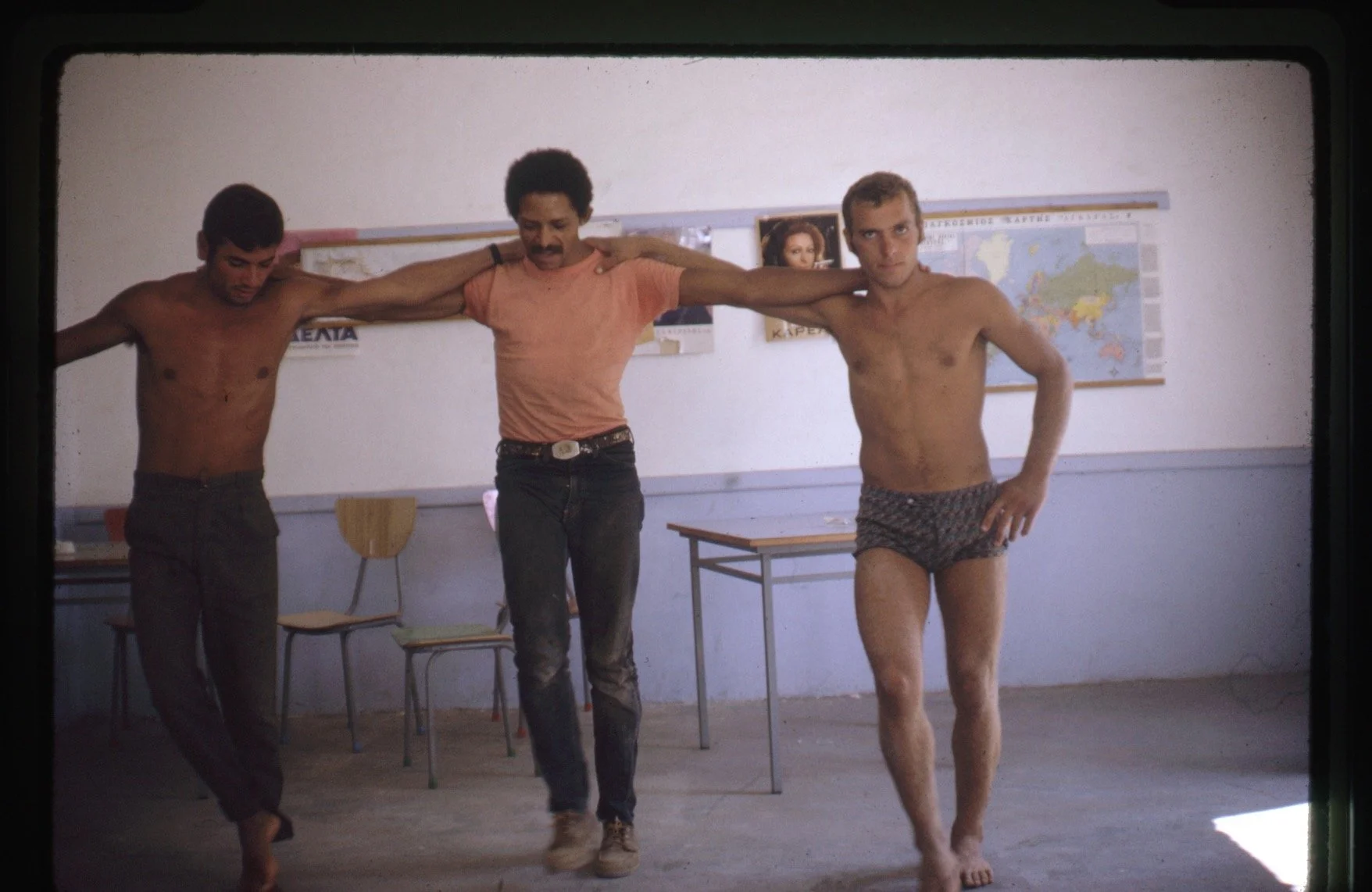
Jack Whitten (centre) dancing the siganos or zeibekiko (1971). Photographer unknown.
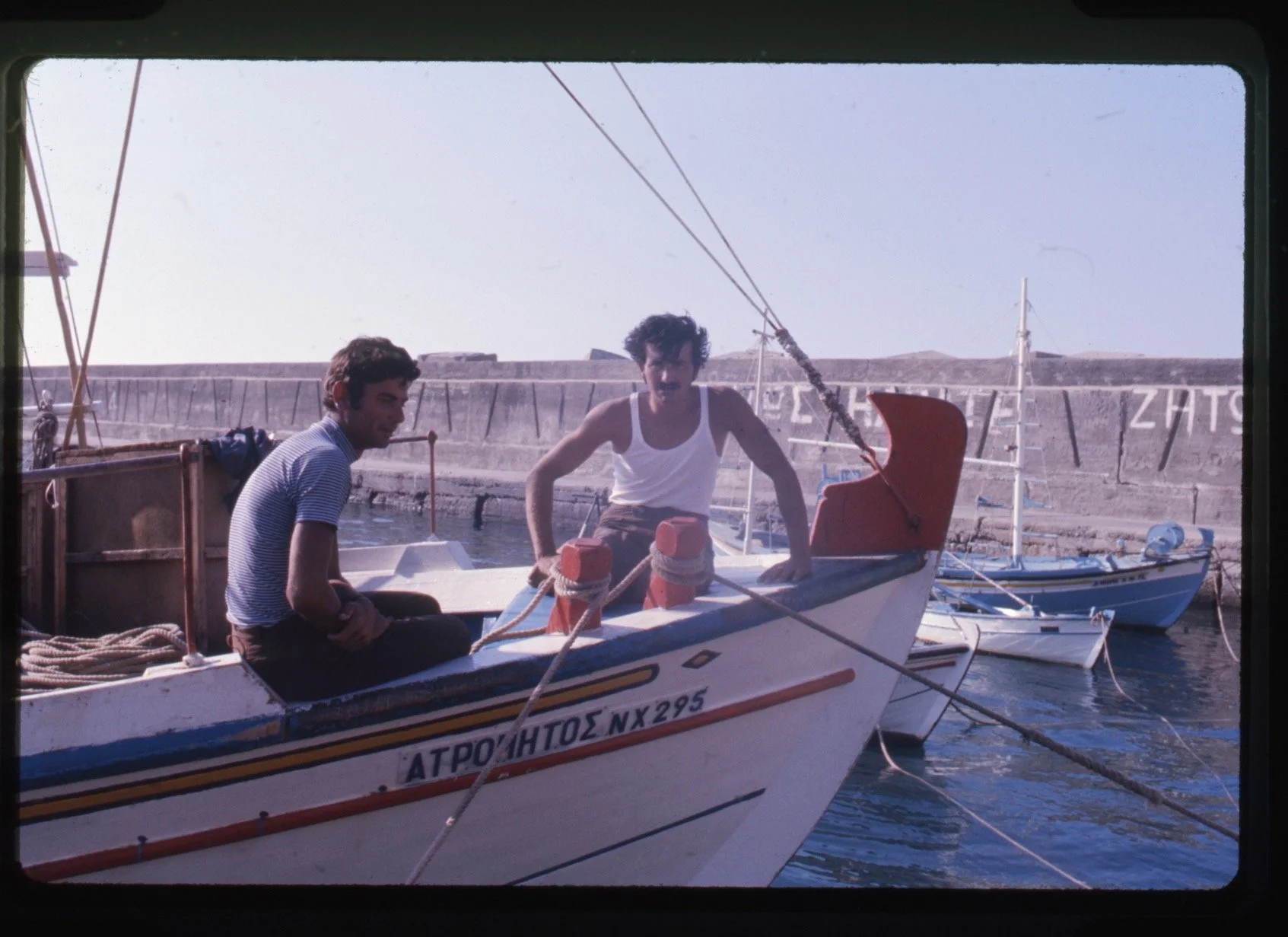
Portrait of Yiannis Kanaris, pictured on the right (1975). Photograph by Jack Whitten.
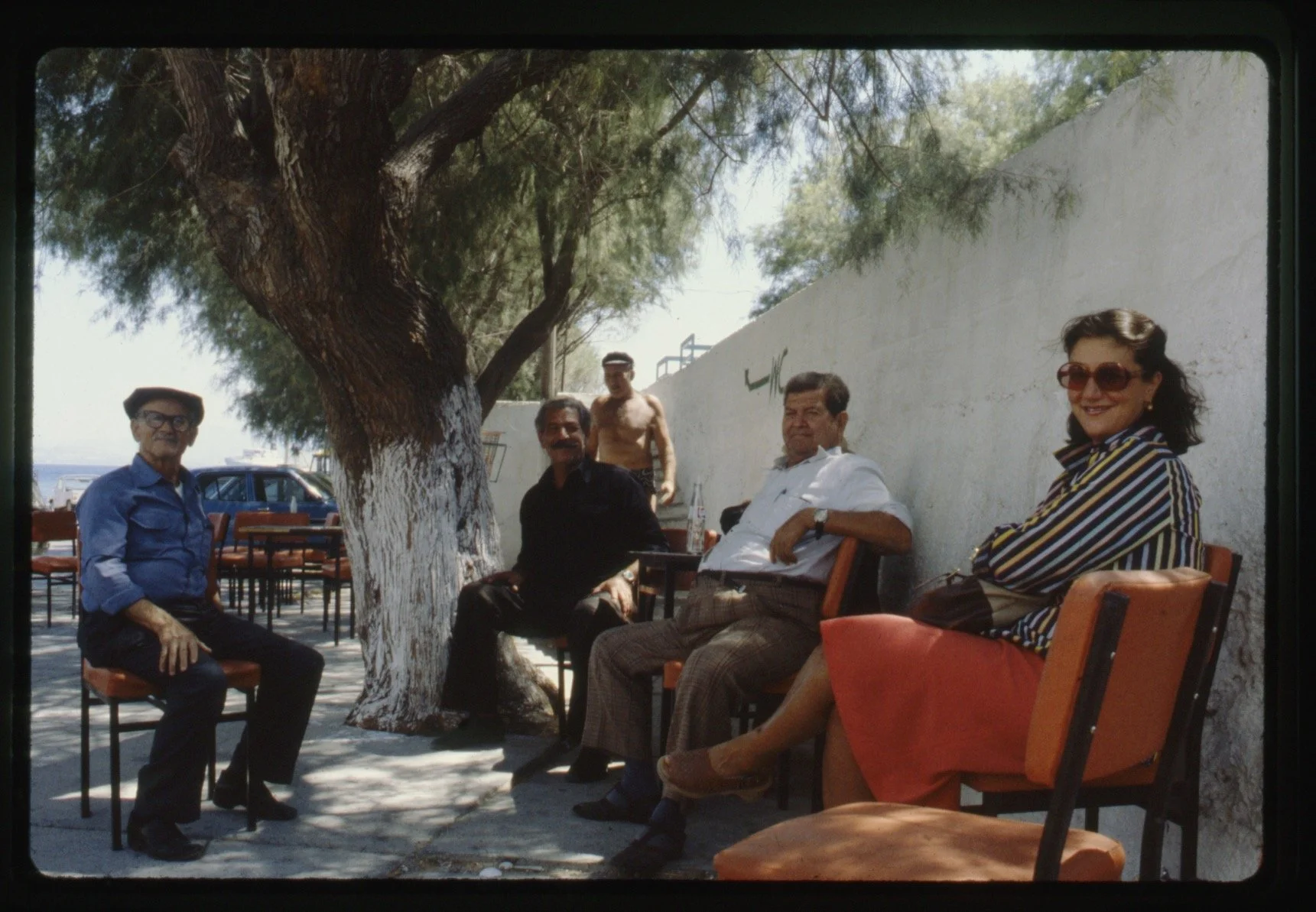
Mary Whitten with friends along the harbour (1979). Photograph by Jack Whitten.
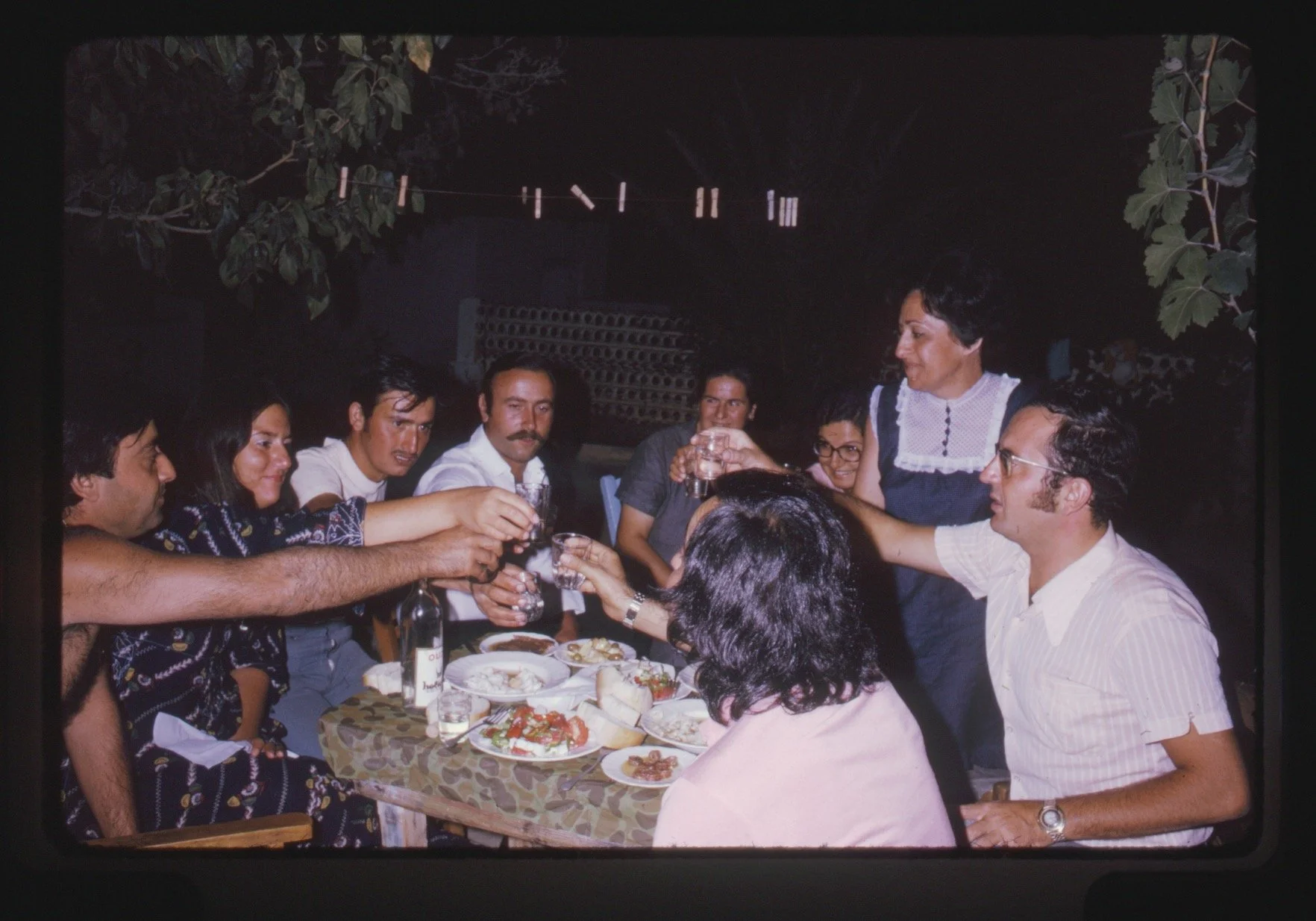
Gathering with Mary Whitten and Captain Yiannis Kanaris (1973). Photograph by Jack Whitten.
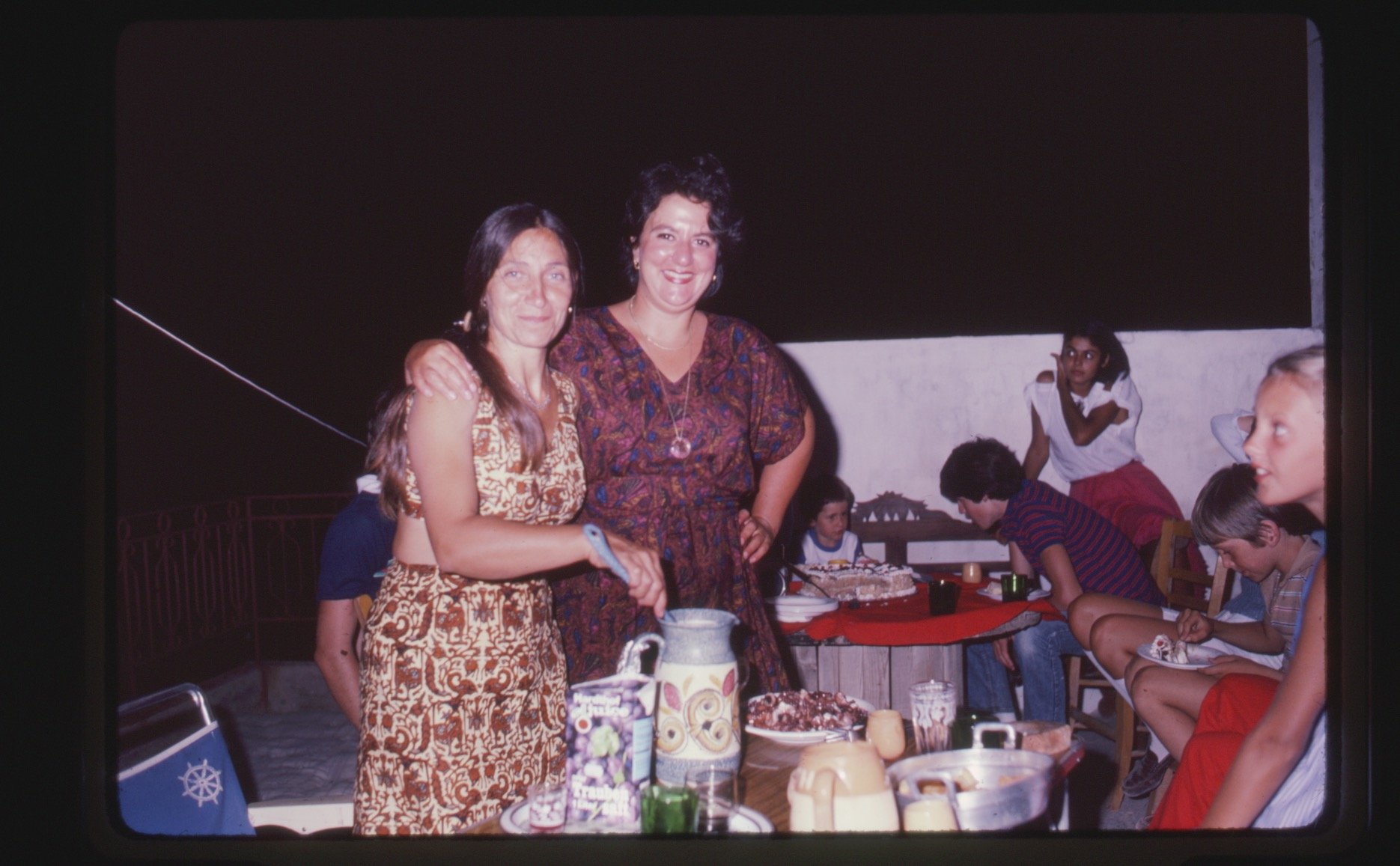
Ioanna, whose son now owns the house, with Mary Whitten (1983). Photograph by Jack Whitten.
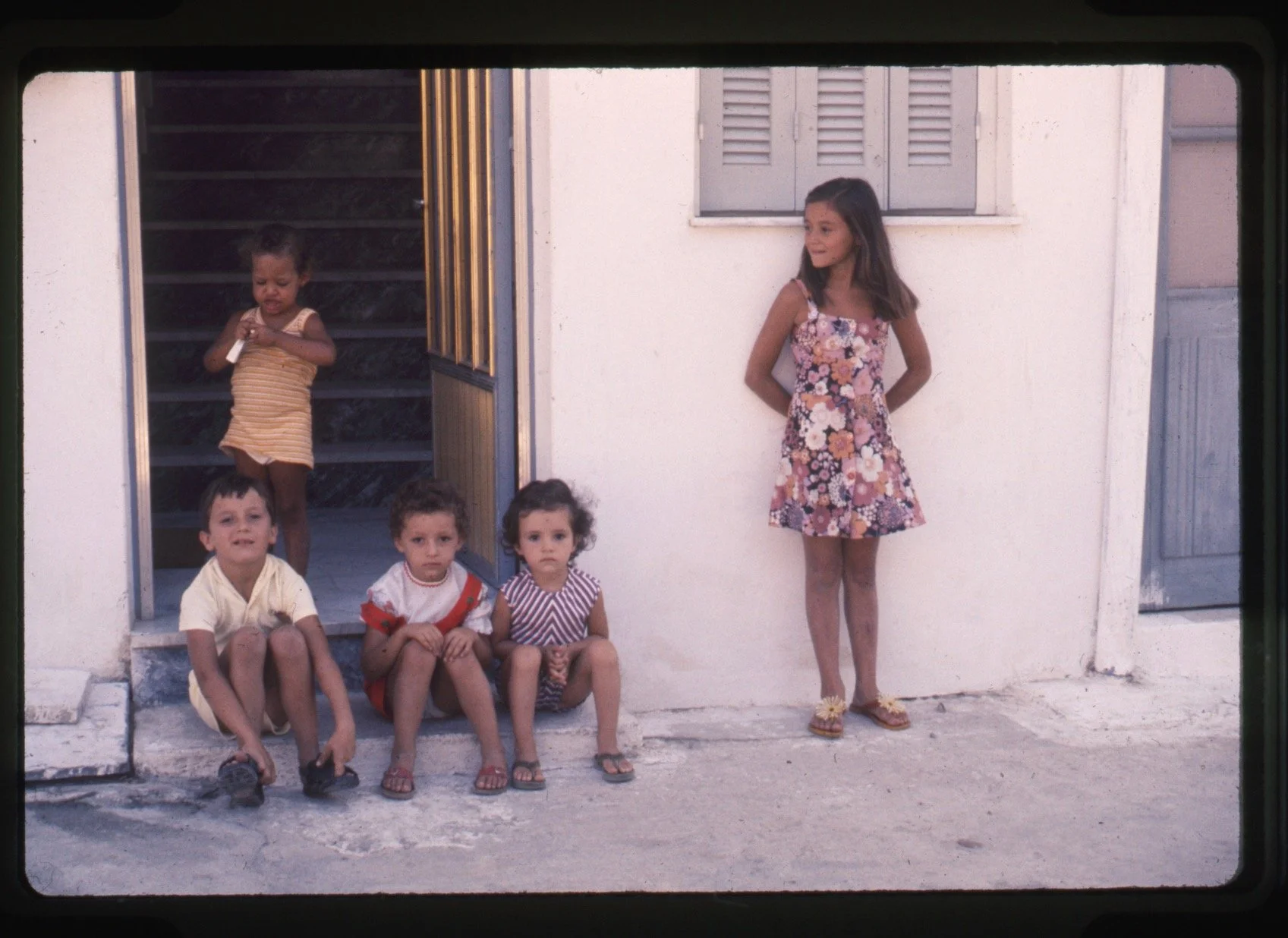
Mirsini with children from the village (1975). Photograph by Jack Whitten.
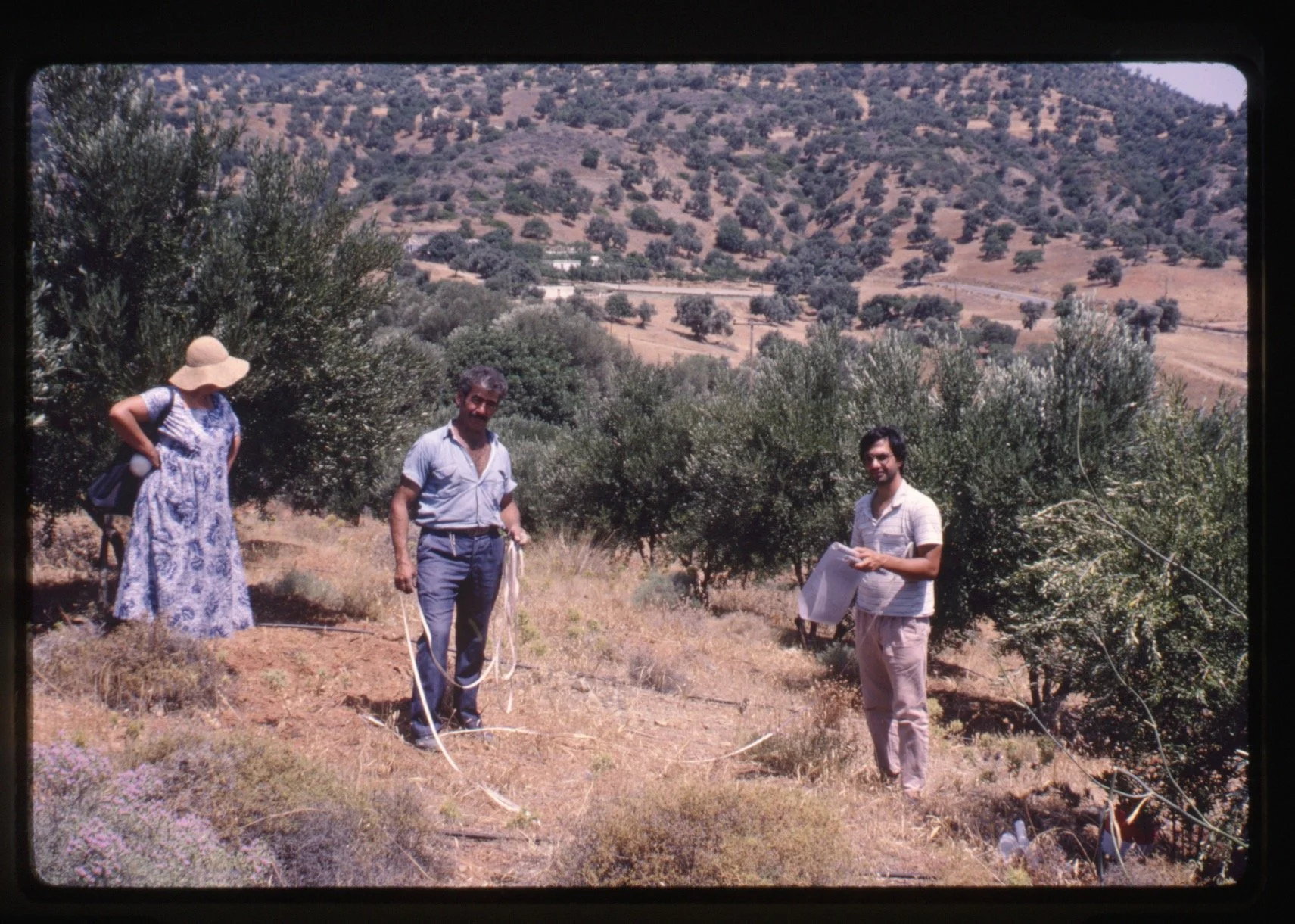
Mary Whitten with master builder Yiannis Zeakis, before the construction of Whitten Acres (1987). Photograph by Jack Whitten.
-
To organize a stay within Whitten Acres, kindly write to us here.
-
Born in Bessemer, Alabama in 1939, Jack Whitten is celebrated for his innovative processes of applying paint to the surface of his canvases and transfiguring their material terrains. Although Whitten initially aligned with the New York circle of abstract expressionists active in the 1960s, his work gradually distanced from the movement’s aesthetic philosophy and formal concerns, focusing more intensely on the experimental aspects of process and technique that came to define his practice.
The subtle visual tempos and formal techniques embedded in Whitten’s work speak to the varied contexts of his early life. After a brief period studying medicine at the Tuskegee Institute in Alabama in the late 1950s, Whitten pivoted his attention to art, first attending Southern University in Baton Rouge before moving to New York and enrolling at The Cooper Union for the Advancement of Science and Art in 1960, where he completed the institution’s five-year certificate program.
In the 1970s, Whitten’s experiments with the materiality of paint reached a climax—removing a thick slab of acrylic paint from its support, he realized that the medium could be coaxed into the form of an independent object. Whitten used this mode of experimentation to challenge pre-existing notions of dimensionality in painting, repeatedly layering slices of acrylic ribbon in uneven fields of wet paint to mimic the application of mosaic tesserae to wet masonry. Over the course of a six-decade career, Whitten’s work bridged gestural abstraction and process art, arriving at a nuanced language of painting that expanded the possibilities of the medium.
Courtesy Hauser & Wirth
-
With a former training in dance and performance, Papanikolopoulos studied the intersection of Art History & Comparative Literature at the University of California, Los Angeles. She received her MA from the Architectural Association (History and Critical Thinking in Architecture). Prior to this, Papanikolopoulos builds on engagements with Blum & Poe, Autre Magazine, Assortment Agency, and The Hammer Museum.
-
© Athens Design Forum. All rights reserved. No part of this feature, including its text and images, may be reproduced, distributed, or otherwise used without prior written permission from the respective copyright holders.