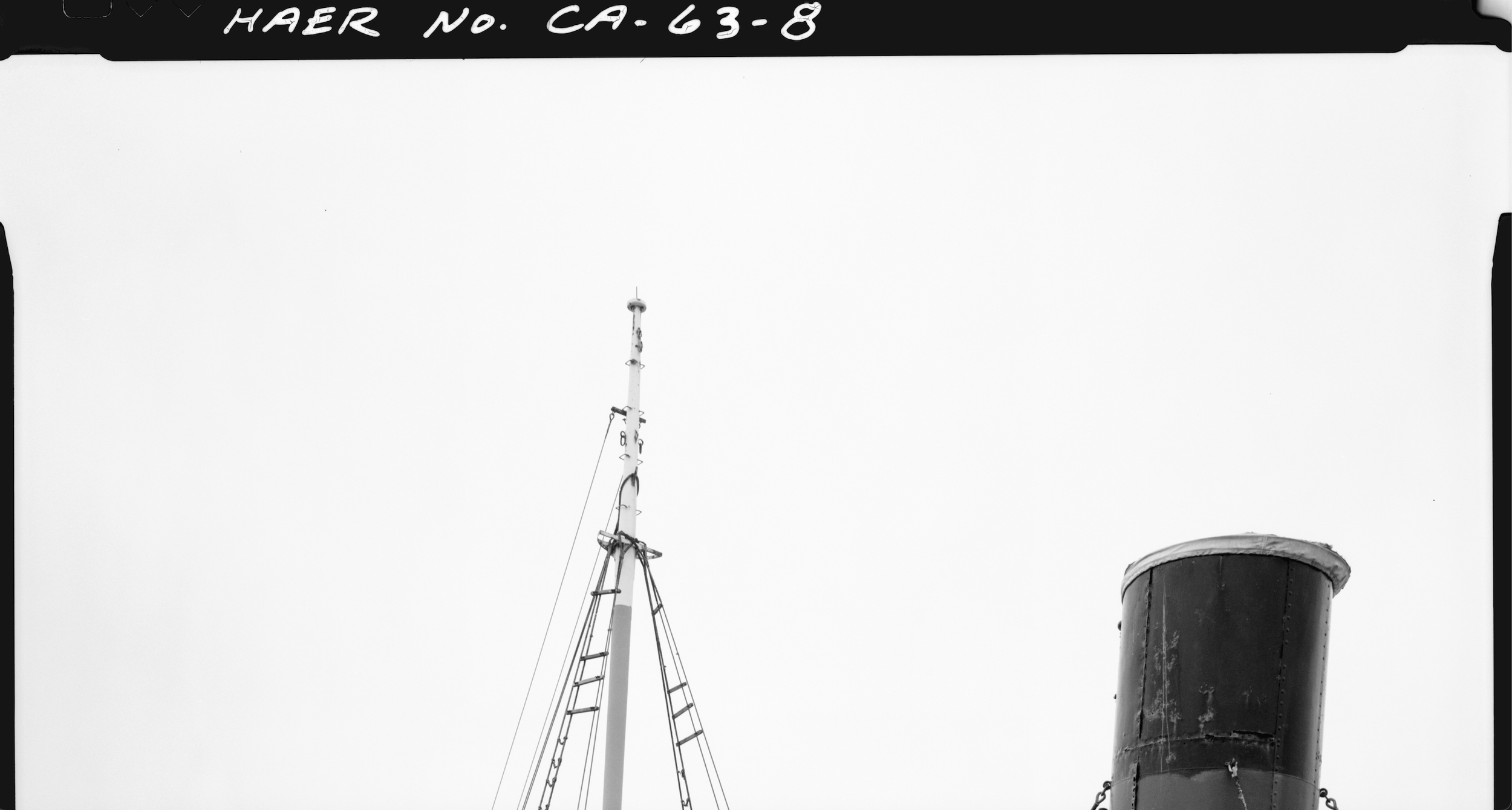
JET LOWE.
“Drive out the imaginary and it returns at a gallop”
— Michel Butor from Inventory: Essays (1969)
Incantations of machinery, stilled in a photographic frame, summon an abstraction made sensible to the human eye. Produced within the governmental frameworks of the Historic American Buildings Survey (HABS) and the Historic American Engineering Record (HAER), Jet Lowe's photographs continually exceed the documentary mandate from which they emerge. Critic Michel Butor’s decisive statement “drive out the imaginary and it returns at a gallop” defines the longevity of a photographer who, for decades, traveled the great and unknown landscapes of the United States, granting a percussive fervor to industrial representation and the anatomy of buildings influenced by vast regional differentiation and cultural multiplicity.
In the never-drying façade of an Alaskan Russian Orthodox Church in Kenai Peninsula Borough, the interior details foregrounded by Lowe, such as the Russian Icons and a detail of the interior dome, become records of a community’s devotion and complex history of colonialism that manifests in built form. A journalistic integrity met with artistic implementation encompasses the aptitudes of his encounter – signaled through a methodology of experimentation that was as communal as it was singular.
A conversation with Jet Lowe, held in the spring of 2026, reveals the latent narratives embedded within industrial, domestic, and spiritual environments, granting renewed criticality to archives initially conceived as instruments of preservation. Through questions of angular perception, aerial vision, isolation, scale, and the material specificity of photography, the interview considers how the camera transforms the terms of the survey itself. As Lowe reflects: “Most of what I photographed no longer exists. I wasn't simply photographing industry—I was photographing its disappearance.”
<> Photographs courtesy of the Library of Congress, Prints and Photographs Division, Historic American Buildings Survey (HABS) and Historic American Engineering Record (HAER). Photographs by Jet Lowe.
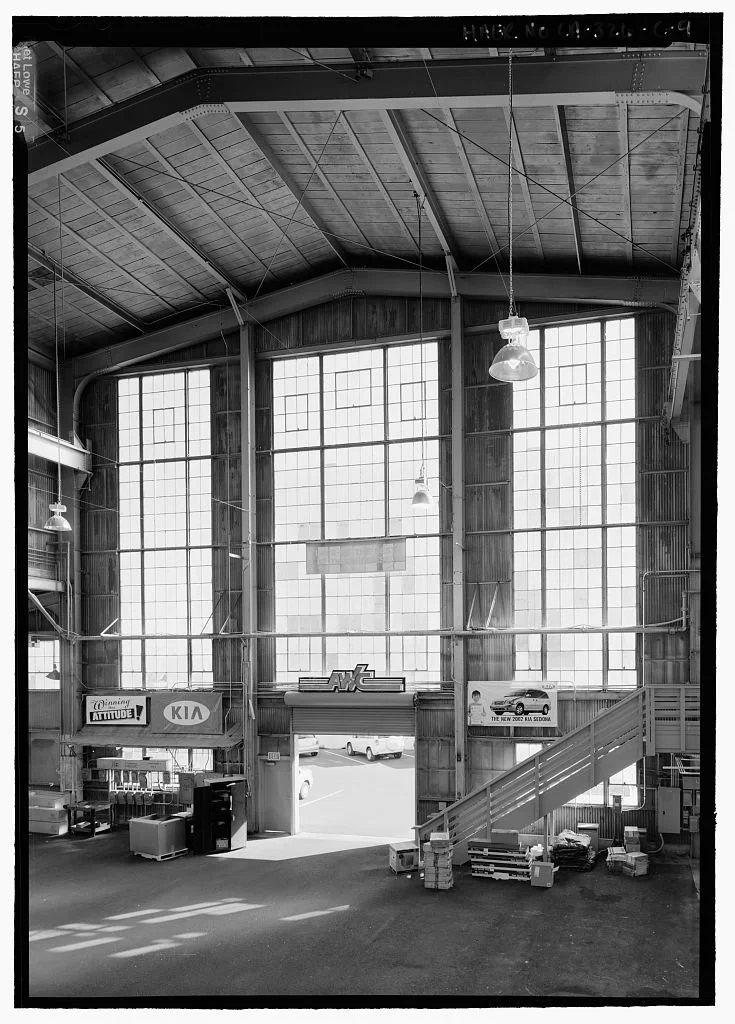
STRUCTURAL DETAIL, SOUTH INTERIOR WALL - Rosie the Riveter National Historical Park, Machine Shop, 1311 Canal Boulevard, Richmond, CA
– How does photography negotiate the tension between permanence established in the archive and the disappearance of the site itself?
Photography records a place, but it also records a way of understanding that place. Long after these industries disappear, the photographs remain. That's really what the work has become for me. It isn't only a record of what was there, but of how we learned to see it. I think I came at the end of industrialization. Early in my career, I photographed the steel mills in Cleveland. Many of them were still operating, but they'd been functioning since before the First World War. They were already historic artifacts while they were still producing steel. Unlike Europe, they hadn't been bombed during the war, so those nineteenth-century technologies survived for decades. Most of what I photographed no longer exists.
I wasn't simply photographing industry—I was photographing its disappearance.
– Your work within the Watkins (Woolen) Mill in Missouri involved close collaboration with historians and architects. How did that dialogue shape the way you approached these sites?
That was virtually one of my first major projects. I got to work with a really nifty historian on that, and I should give a lot of credit to the historians and the architects with whom I worked. What's kind of fascinating about this is that often what was most visually interesting about some kind of artifact—in this case, I think this is a detail from a carding machine or a loom—is often the most technologically important aspect of it too.
– The machine is isolated from its surroundings, appearing staged, with a demeanor that nears a sculptural object. Was that created through the discreet use of floodlights?
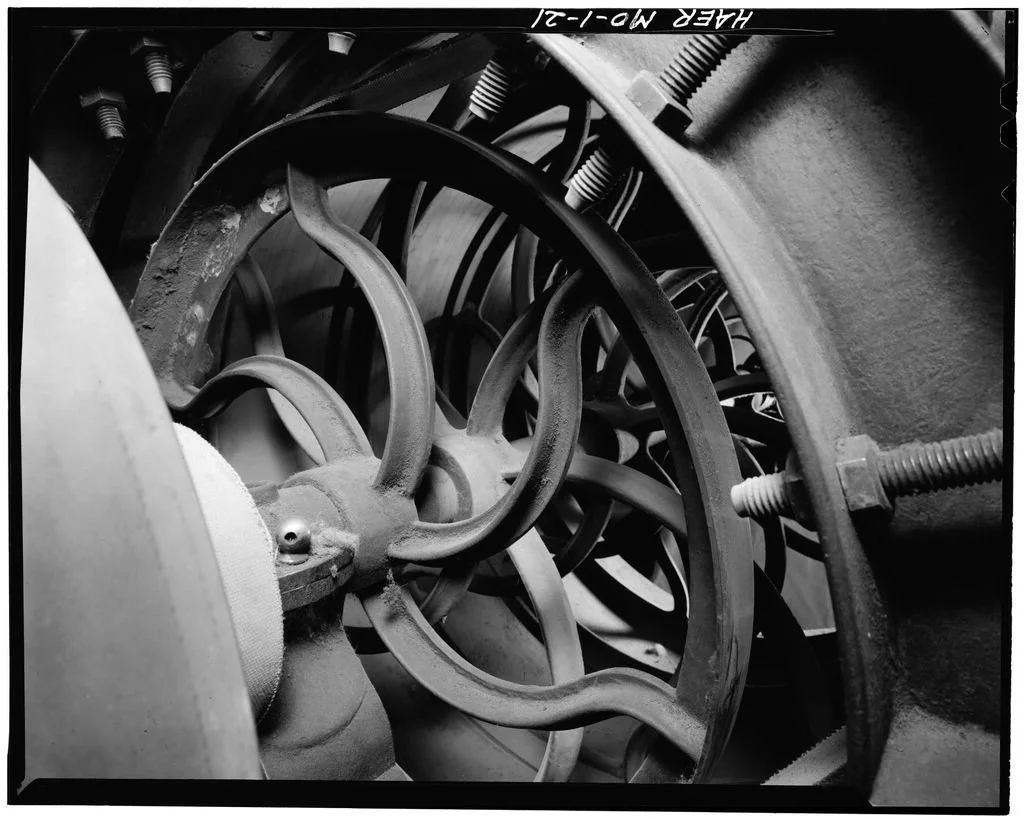
Watkins Mill, County Highway MM, Lawson, Ray County, MO
What's going on here, in a way, is that there’s no reason those spindles needed to be spiral-shaped like that, but I think part of the motivation behind that was to make the machinery a little more friendly to industrial workers who were just becoming accustomed to this kind of technology. So even when you look at some of the color pictures, there's even a little painting to make the machine look more organic and friendly to the human laborer.
But this particular mill manufactured blankets for the settlers proceeding west. This is somewhere near Kansas City—Lawson, Missouri, about an hour north of Kansas City—and the historian was quite excited by it because it was completely intact. It was in the kind of condition as if the workers had just walked out.
At the time, I was working on a fine arts degree in photography that I started back in the early ’70s. I have the dubious distinction of taking longer to get my Master of Fine Arts degree than anyone else in that program. Yet, it influenced the use of lighting, as I was making reference to Ansel Adams’s landscape photography.
– Can industrial photography be understood as a form of landscape photography?
Definitely.
– In many of your industrial photographs, human presence is felt through traces of use rather than through the representation of the body itself. Does the machinery itself become a kind of archive of labor?
I'd say it was more a matter of circumstance. The Cleveland series has people in it because the steel mills were still in operation. The documentation of the steel mills in Buffalo, New York, and Pennsylvania, however, took place after they had already shut down. By then, they had become industrial remnants. Another constraint was the large-format camera on a tripod. It was much harder to get close to the workers, so the emphasis naturally fell more on the machinery than on the anthropology of the workers.
– Your photographs were commissioned as historical surveys, yet they continually exceed documentation. Where, for you, does the survey end and interpretation begin?
I think that's a fair assessment. Just as the historian writing about a site brings a perspective on labour, capital, or technology, every photographer is a filter as well. Then you introduce the lenses, the camera, the film processing—those are additional filters that involve interpretation. It's really no different with modern digital cameras. Those filters still exist; they're simply applied through dials instead of chemicals.
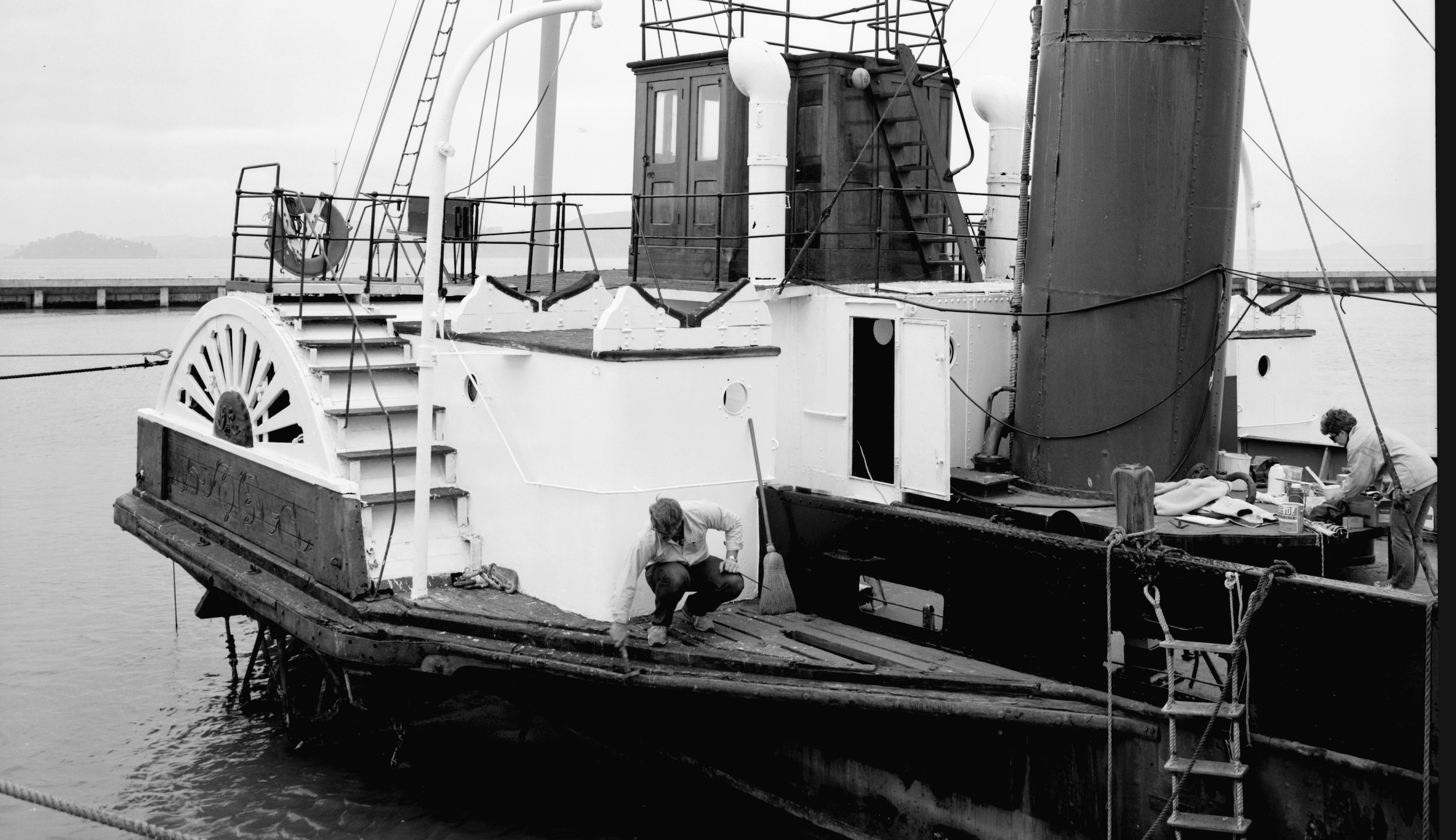
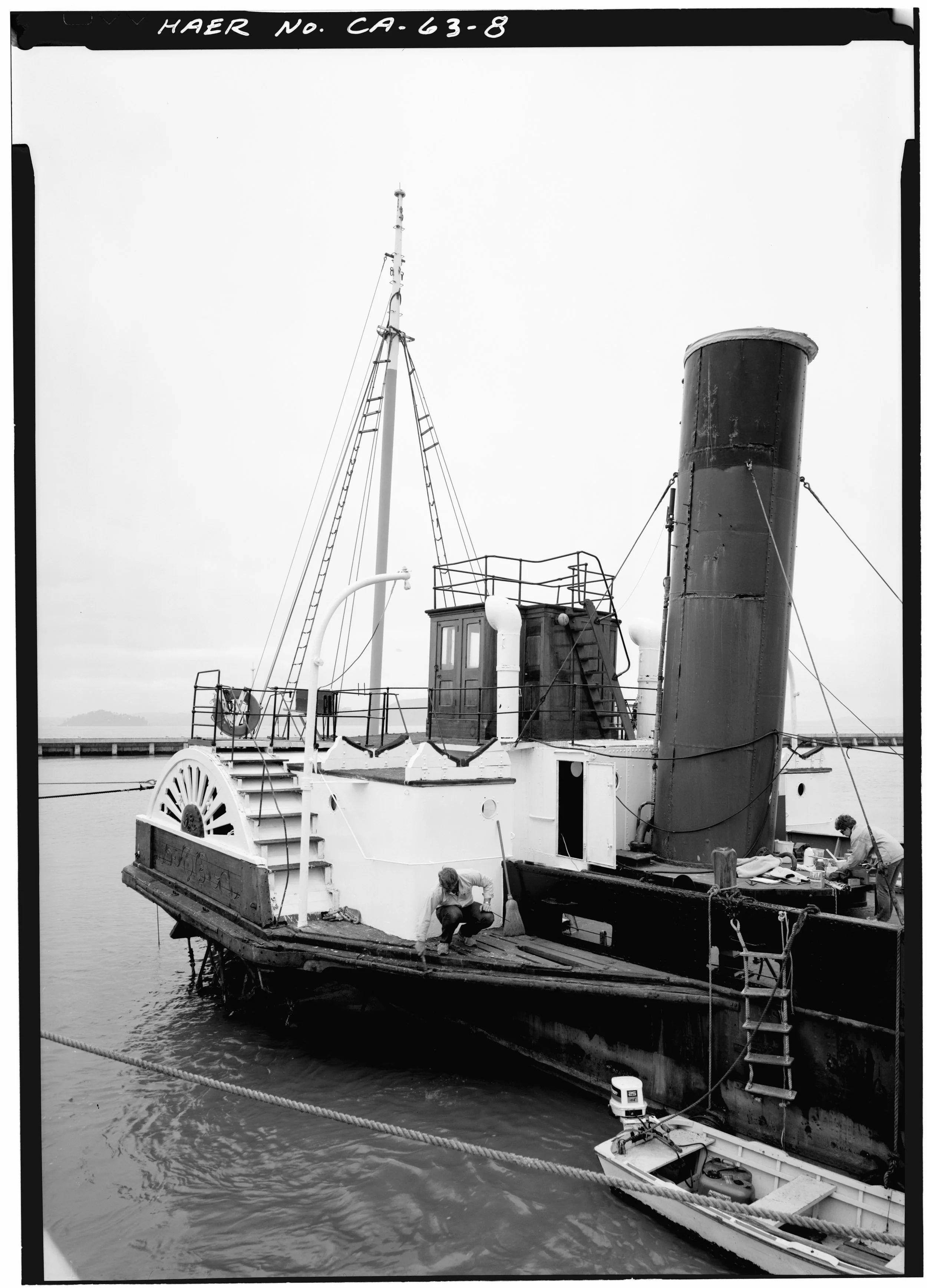
VIEW OF VESSEL, SHOWING PORT SIDE-PADDLE, SIDE LOCKER (USED FOR STORAGE DURING ATLANTIC CROSSING), MAINMAST, WHEELHOUSE AND STACK - Steam Tug “Eppleton Hall”, Hyde Street Pier, San Francisco, San Francisco County, CA
– Many of your photographs seem less concerned with the surface of a structure than with revealing its internal logic. The image almost becomes anatomical rather than descriptive.
Being involved with engineering photography, I loved the opportunity to become anatomical in terms of how something was built. Like a surveyor, we always zero the camera. The back of the camera has to be completely vertical. If the building has any irregularities, we want those irregularities to belong to the building—not to the camera.
Architectural photography is a discipline. It has fairly strict rules. But those rules also give you freedom. They give the photographs a certain formality and a conscious willfulness that's very different from casually taking a picture. With film we'd sometimes overexpose and underdevelop in order to compress the tonal range. Our eyes perceive a much wider range of light than photography can record. The craft is always trying to make the photograph resemble the way your eyes experienced the place.
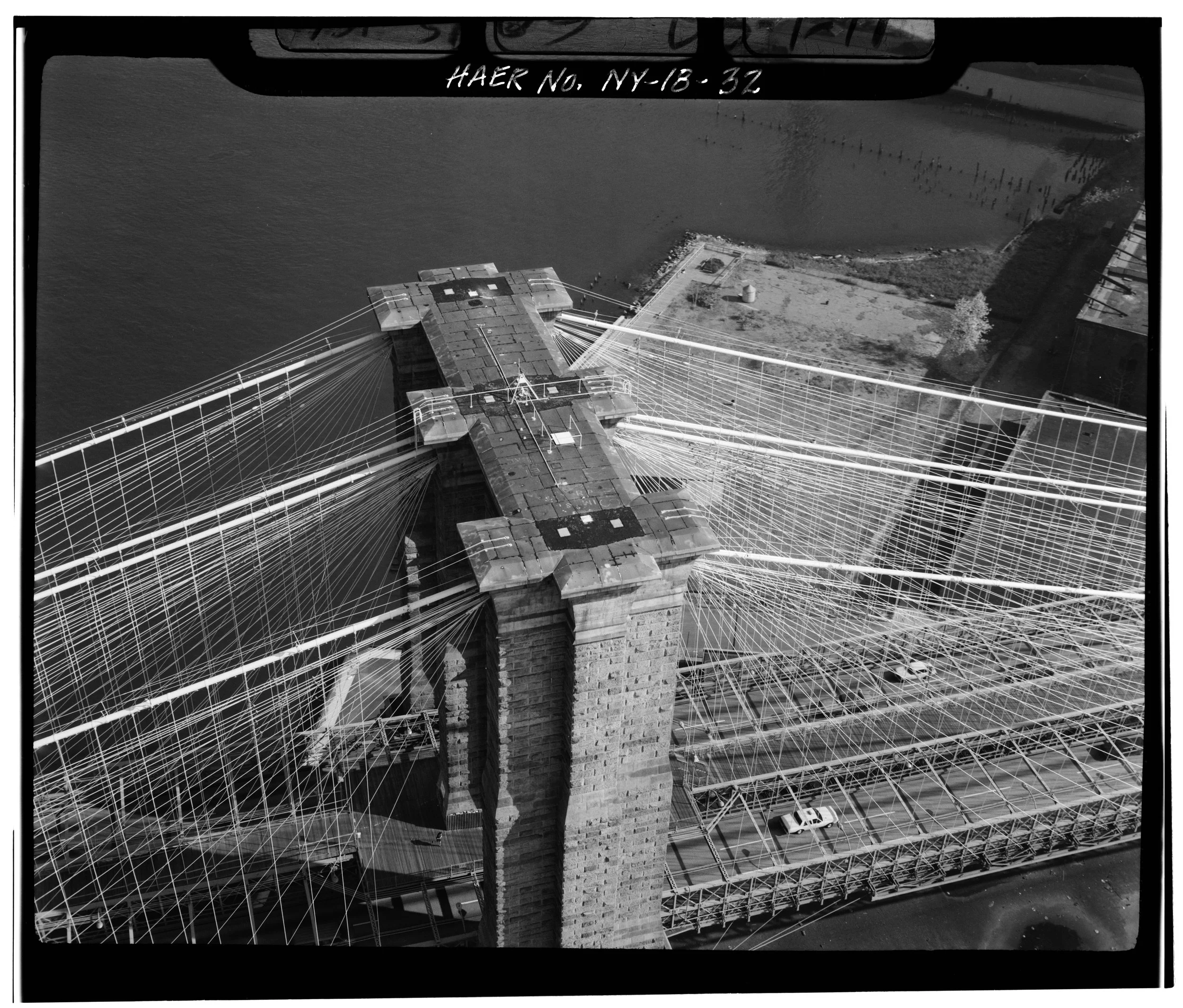
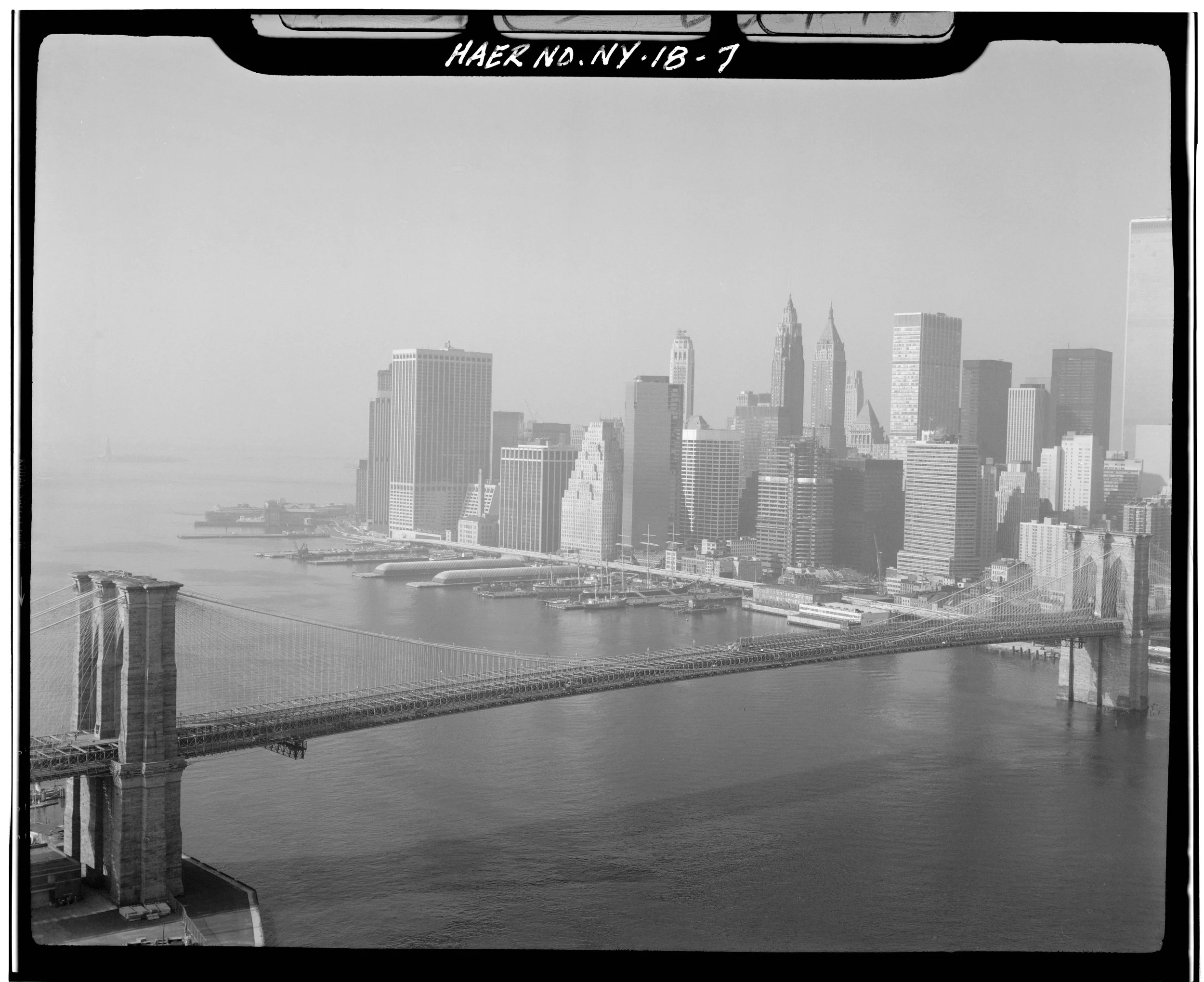
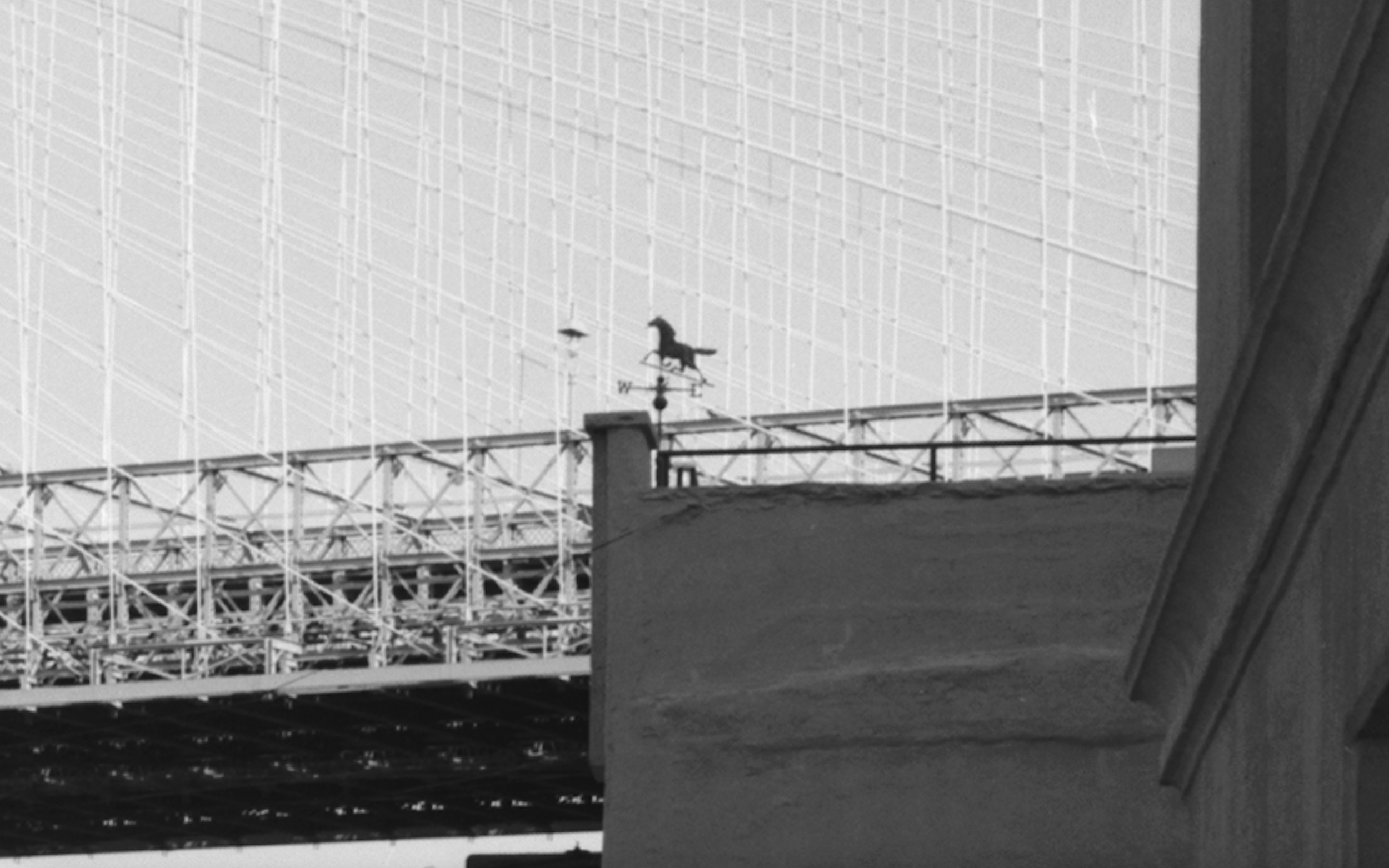
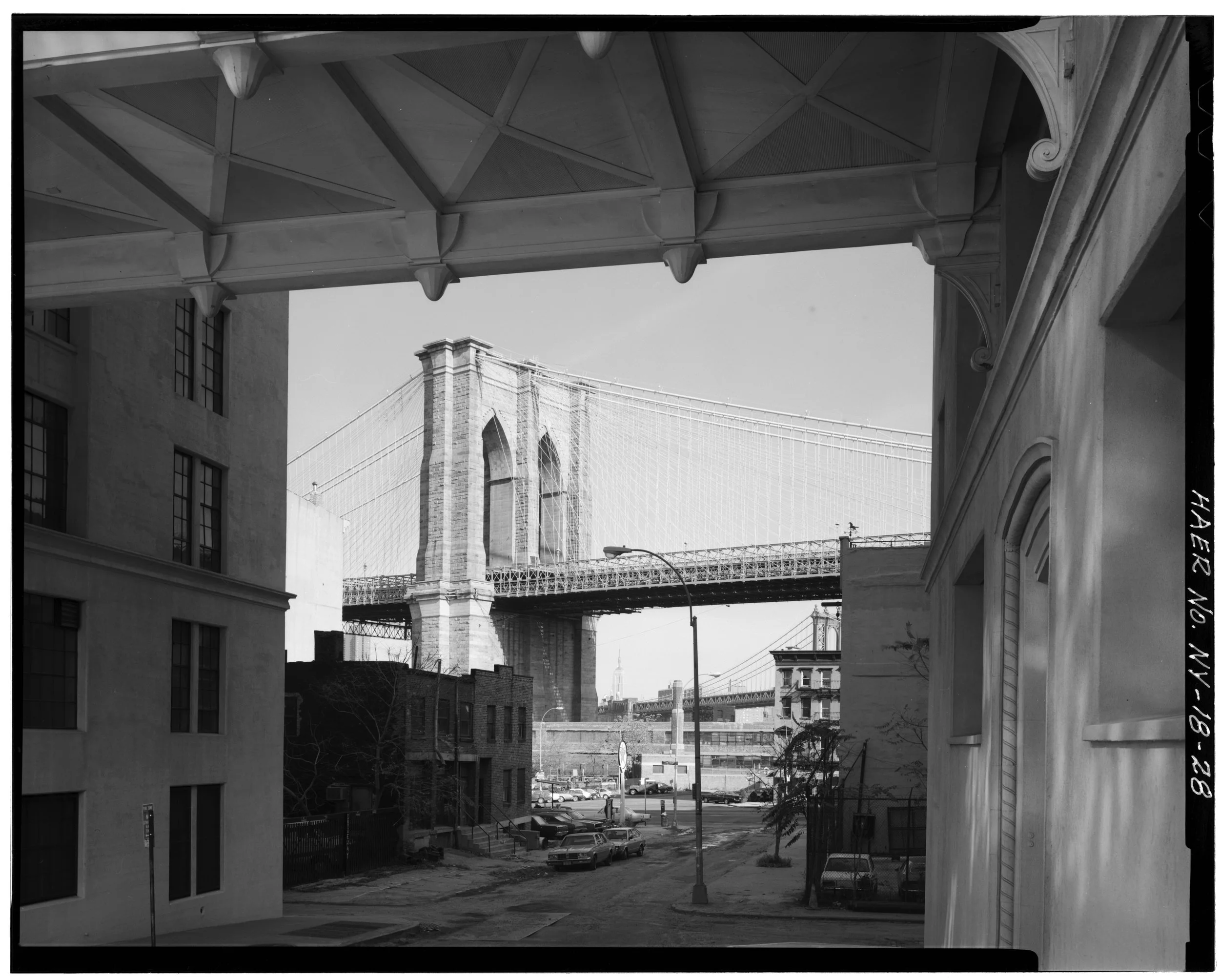
View looking NE at Brooklyn tower framed by Watchtower Building and underside of pedestrain bridge. 1982. Brooklyn Bridge, Spanning East River between Park Row, Manhattan and Sands Street, Brooklyn, New York County, NY
– Your aerial photographs seem to introduce another form of vision that is not granted to the human eye. What becomes visible from above that cannot be understood from the ground?
The camera was actually a World War II aerial camera. Photographing from a helicopter completely changed the experience. We were trying to reveal what made the bridge historically significant—the diagonal stays, the structure of the cables, the engineering that couldn't really be understood from the ground. It was my first aerial assignment, my first time photographing from a helicopter. Needless to say, it was quite exciting.
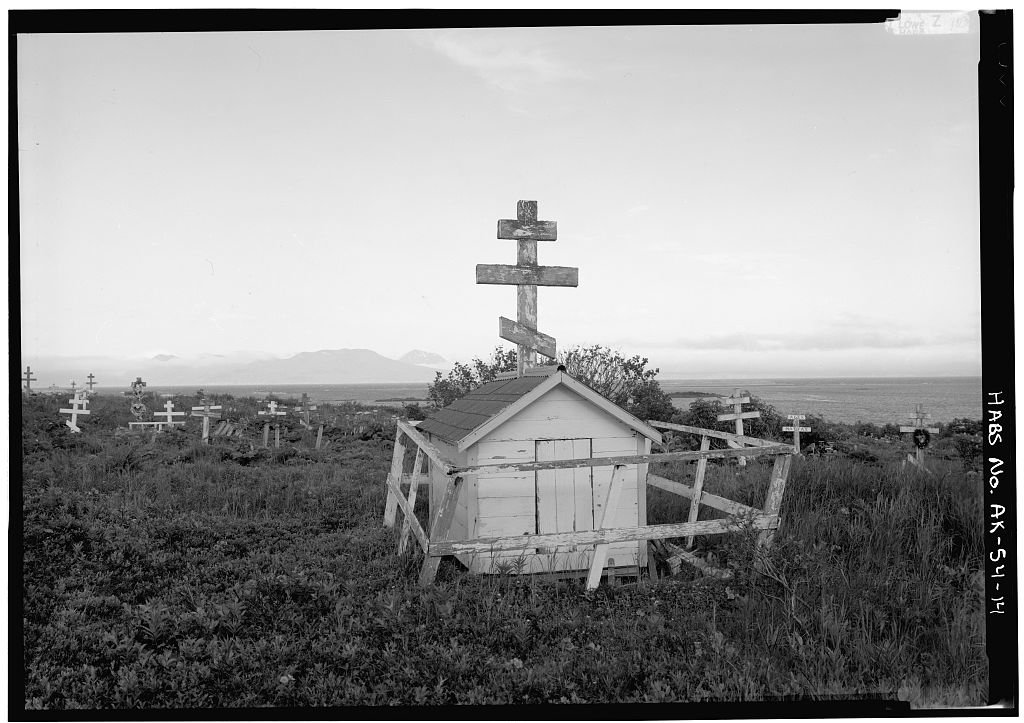
SHRINE MARKING SITE OF PREVIOUS CHURCH, NORTH SIDE OF PRESENT CHURCH - Protection of the Holy Theotokos Russian Orthodox Church, Kodiak Island, Akhiok, Kodiak Island Borough, AK
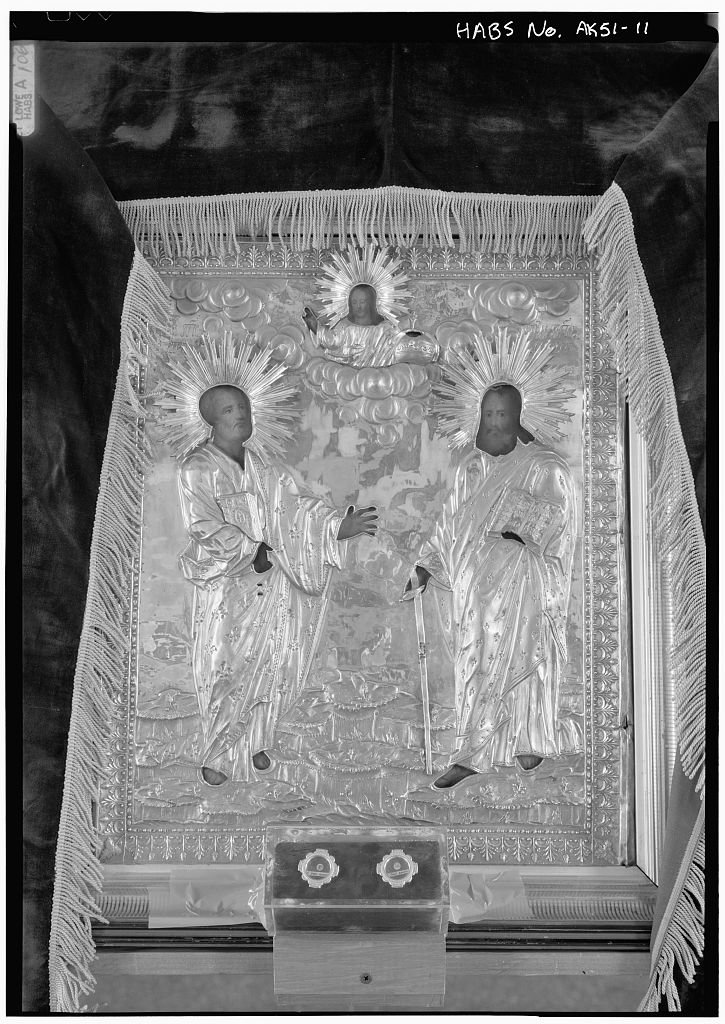
INTERIOR, NAVE, DETAIL OF ICON OF SS. PETER AND PAUL - Saints Peter & Paul Russian Orthodox Church, Church Street, Saint Paul, Aleutians West Census Area, AK
– The churches you photographed in Alaska, now documented within the Historic American Buildings Survey (HABS), offer a richly layered account of the Russian colonial encounter and its impact on local Kenaitze communities. Established in 1841, the Holy Assumption Orthodox Church in Kenai became a religious, educational, judicial, social, and public-health center, while its surviving icon collection includes eighteenth-century works, among them icons by the Native Aleut iconographer Gregori Petukhov. How did your collaboration with the historians documenting these churches and their histories shape your experience of the sites?
Those communities lived in an incredibly austere landscape. Almost nothing grows more than two or three feet because it's always wet and blowing. Then you step inside these churches, and they're filled with colour, icons, and ornament. The outside was always difficult to preserve because it never dries out enough for you to put a good coat of paint on it. One of the churches in Sitka, Alaska, had burned down and was rebuilt using HABS drawings. That's one of the remarkable things about the project.
The documentation doesn't simply preserve the building. Sometimes it becomes part of the building's future.
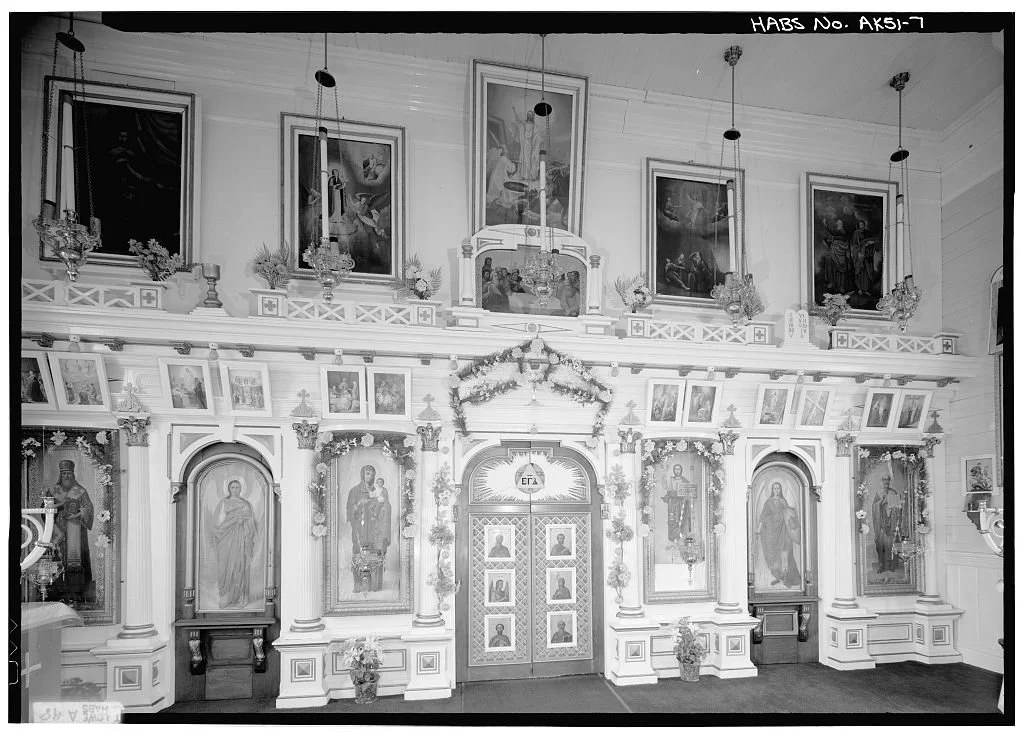
INTERIOR, DETAIL OF ICONSTASIS - Saints Peter & Paul Russian Orthodox Church, Church Street, Saint Paul, Aleutians West Census Area, AK
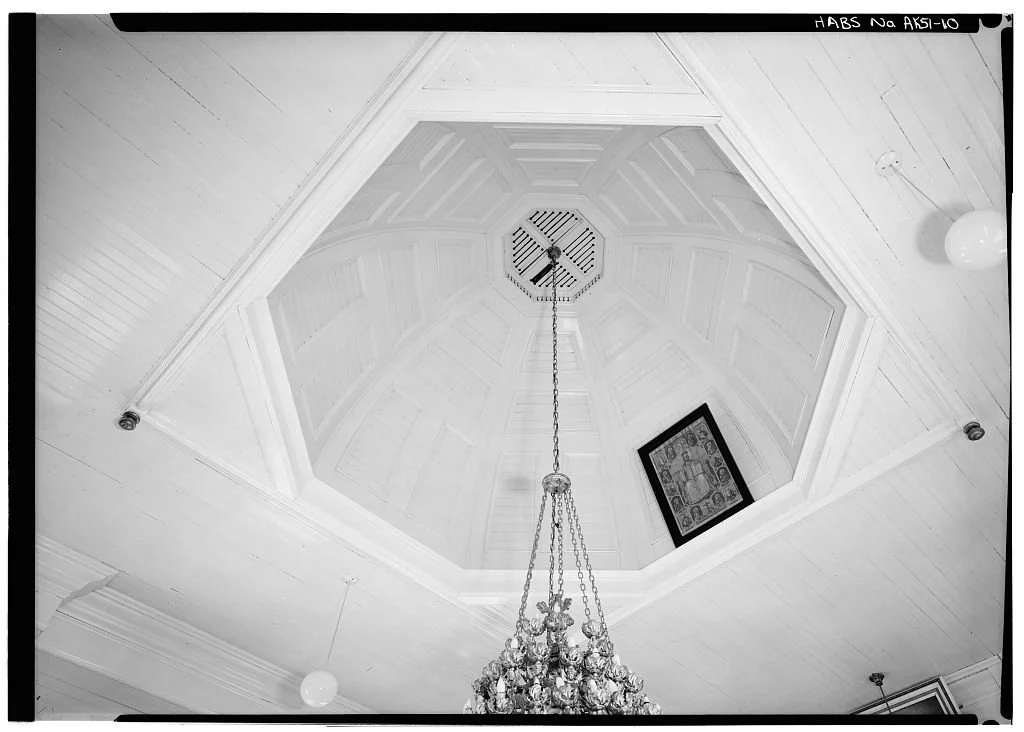
INTERIOR, NAVE, DETAIL OF DOME - Saints Peter & Paul Russian Orthodox Church, Church Street, Saint Paul, Aleutians West Census Area, AK
<>
Jet Lowe (born John T. Lowe III in 1946) is an American photographer best known for his extensive work documenting industrial, architectural, and engineering sites across the United States. He spent much of his career with the U.S. National Park Service, contributing to the Historic American Buildings Survey (HABS) and the Historic American Engineering Record (HAER), where he later served as supervisor of engineering photography until his retirement in 2013. Lowe is recognized for his use of large-format photography to create detailed visual records of historically significant and often endangered industrial sites. These images, preserved in the Library of Congress, form part of a comprehensive archive that includes architectural histories and measured drawings.