A CITIZEN’S INSCRIPTION OF KNOWLEDGE
To inscribe has evolved from a primal act. The definitions that govern what constitutes this act as a ‘graphic art’ produce their own echoes. These reverberations recall my first conversations with Katerina Papanagiotou at MNP, a visual design studio founded in 1998, alongside the publishing division of MNP Books. It would herald further questioning as to how and why exactly one begins gathering, before articulating their own conceptions. The body of Post-War graphic material she had amassed saw a gradual transition of the graphic field specific to Greece. Papanagiotou’s impact through MNP and MNP Books, in their restrained, eloquent utterances have defined a mass of contemporary discourse in the country. Collaborations with playwright and screenwriter Efthimis Filippou; the National Museum of Contemporary Art Athens; the Goethe Institute of Athens; and 2023 Eleusis European Capital of Culture hold a depth of orientation that are singular in perspective. Papanagiotou polemicizes the definitions attributed to the field of graphic design through a reading of extant material records – those of ZYGOS and SIMA – whose referential value exists in their continuous transference of knowledge. The limitations they were conceived from allow for a genealogy of intent that was never suspended. It is as Papanagiotou contends, a margin of conduct where “artists were actively engaged citizens, contributing to magazines and cultural movements, public discourse, and collective action”.
The following essay has been translated from the Greek by Kyriacos Karseras.
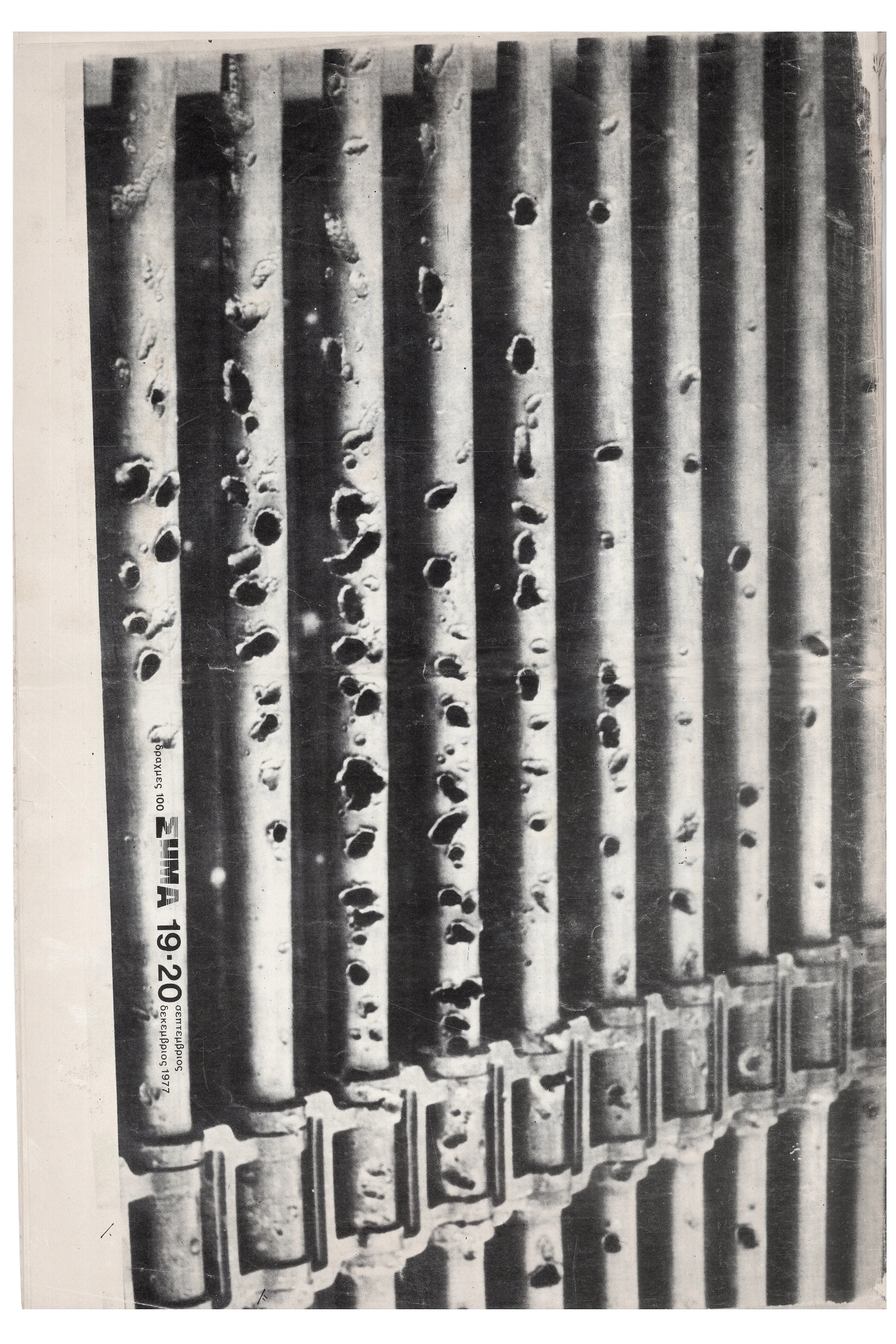
Sima, Issues 19–20 — September–December 1977
Maria Kotzamani
An Anti-Journalistic Presentation
A Letter to the Athens Design Forum. November 2026.
→KATERINA PAPANAGIOTOU.
I collect art magazines dating from the 1950s through to the 1980s. Within this period, I see a relationship between form, art, and visual communication that I feel is worth revisiting.
This was a time when graphic design had not yet been differentiated from artistic practice or fenced off from the broader artistic scene.
A magazine is a composite form in which the image, text, typography, and blank space all give rhythm to the reading experience. This approach somehow remains both contemporary and timeless.
Technical production constraints and printing limitations played a key role in shaping the final look of these publications. The high cost of the four-color process led to black-and-white letterpress printed magazines, often left unbound. In these same magazines, artworks were included as four-color inserts printed on different paper stock, sometimes of various sizes. In this way, each publication was transformed into a work of art that was singular and collectable.
In practice, what we ultimately hold in our hands today are objects that manifest materiality in a multitude of ways – ways resulting from different printing processes, papers, physical formats, and inserts. More than anything, these publications feel handcrafted. Techniques such as silkscreen and letterpress printing, unusual bindings, and experimentation with materials keep the compositions alive. They do not refute the digital age but rather investigate materiality. This serves as a reminder that design is, first and foremost, a conceptual and creative act.
In these magazines, one encounters a primal need for creation; artists transferring knowledge – drawn from painting and their engagement with materials, from printmaking and their understanding of the image as a means of cultural expression – into graphic design.
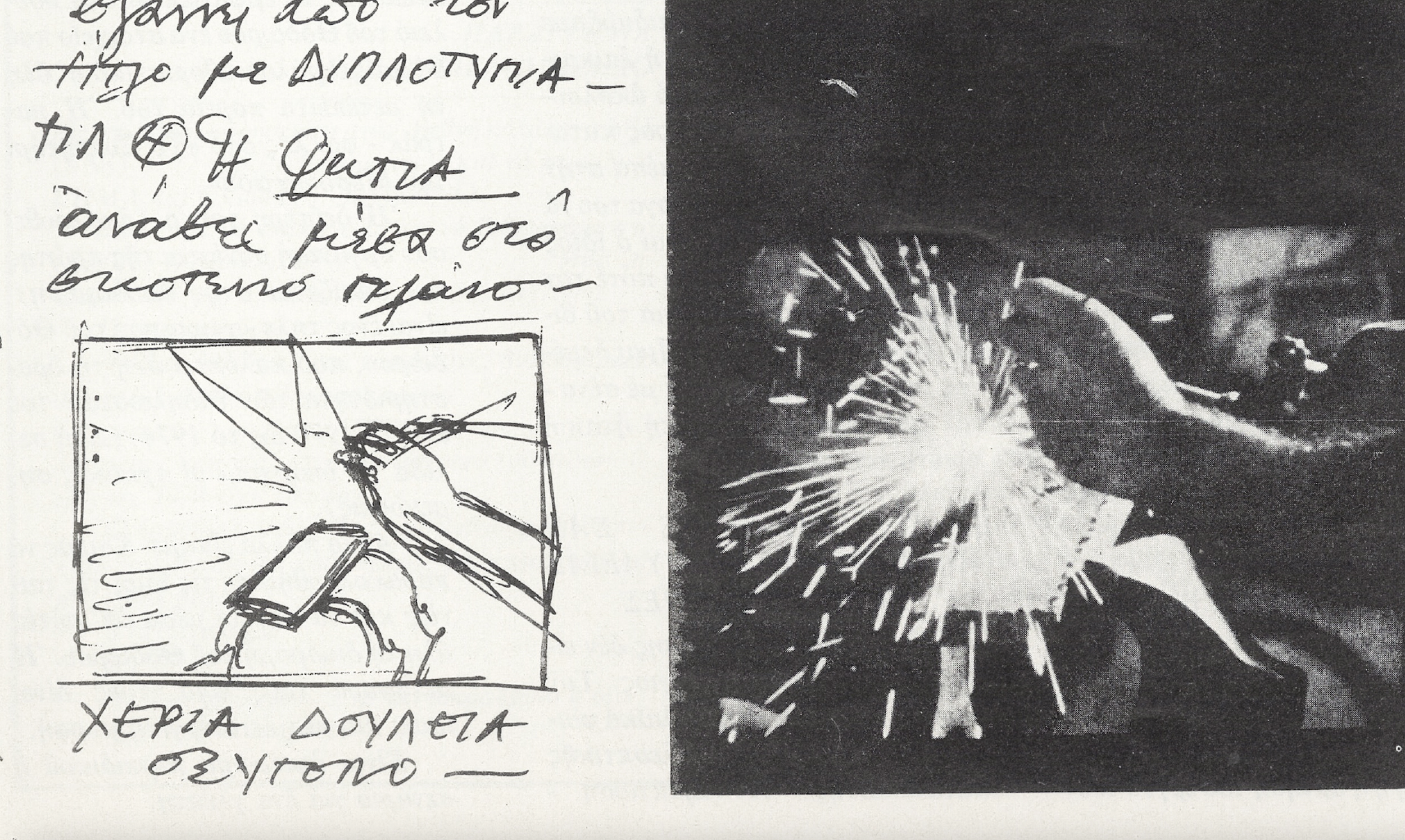
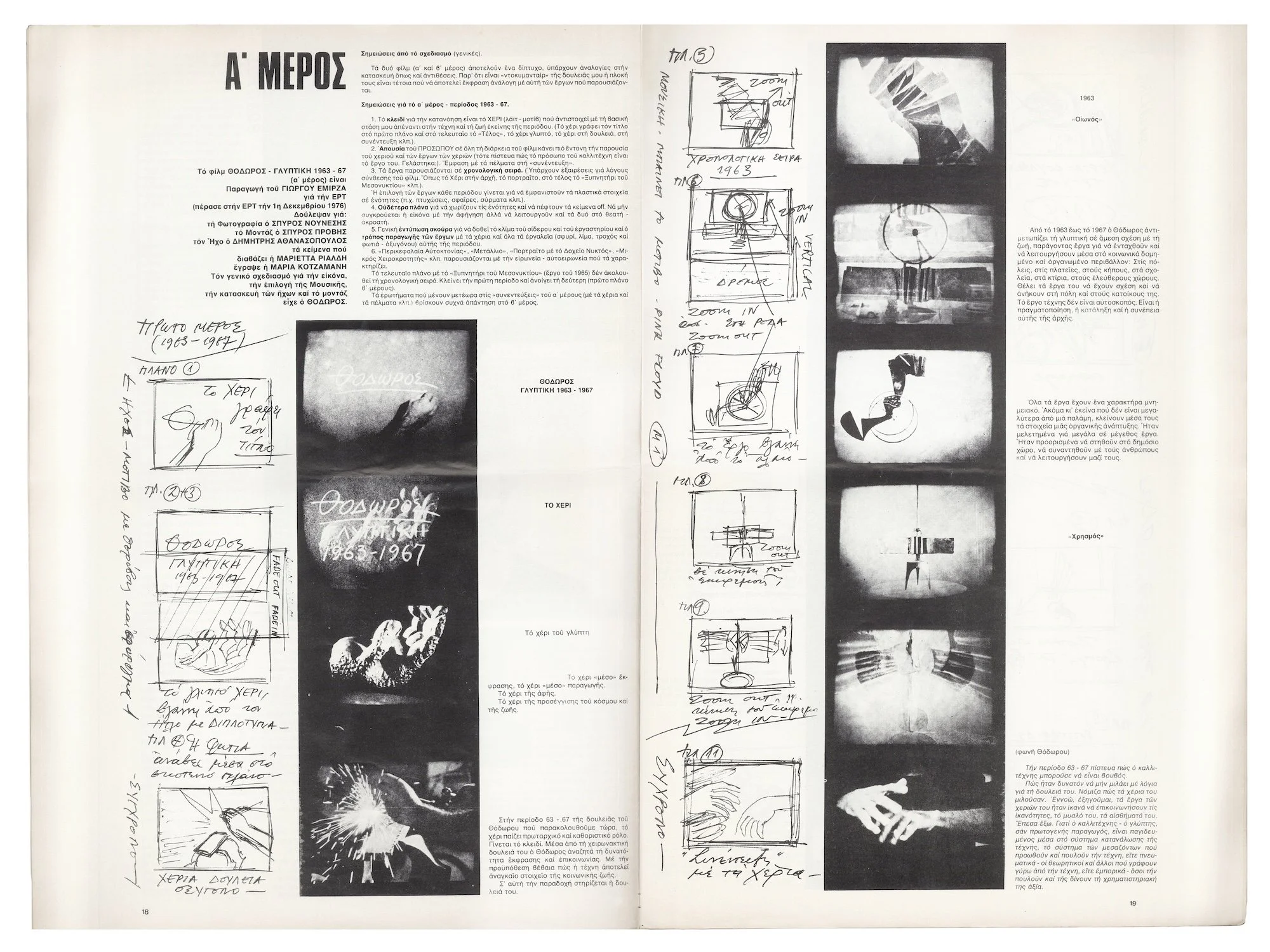
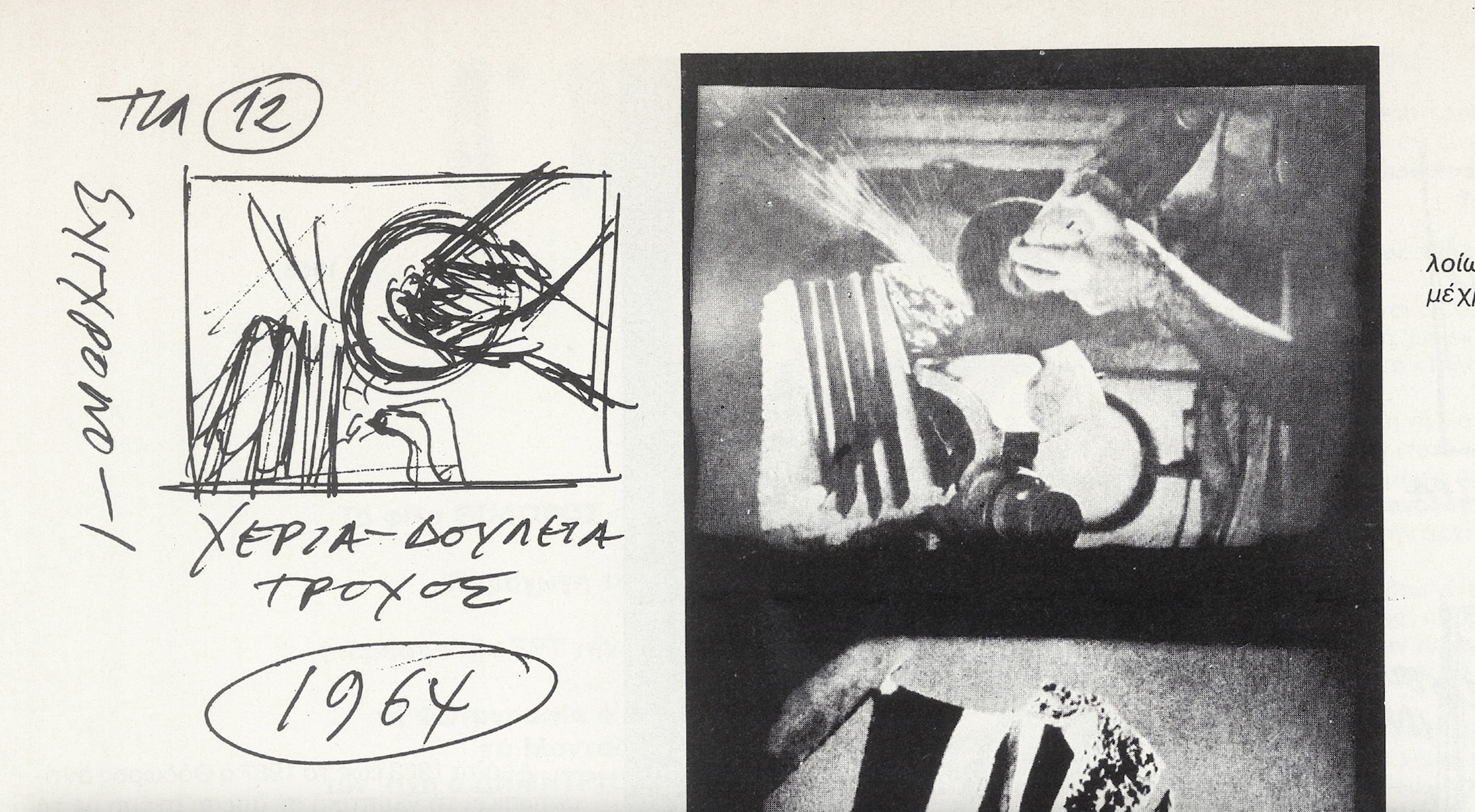
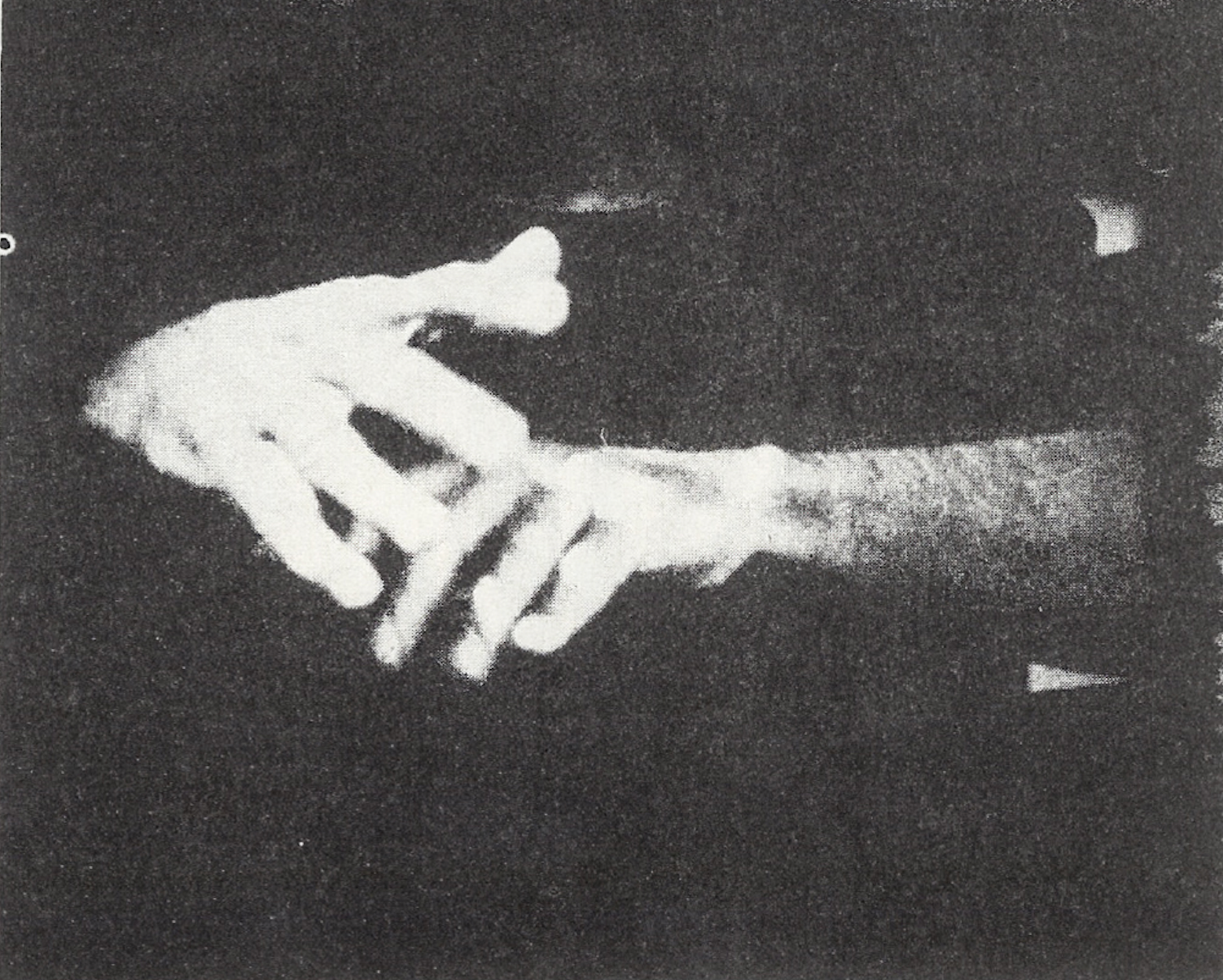
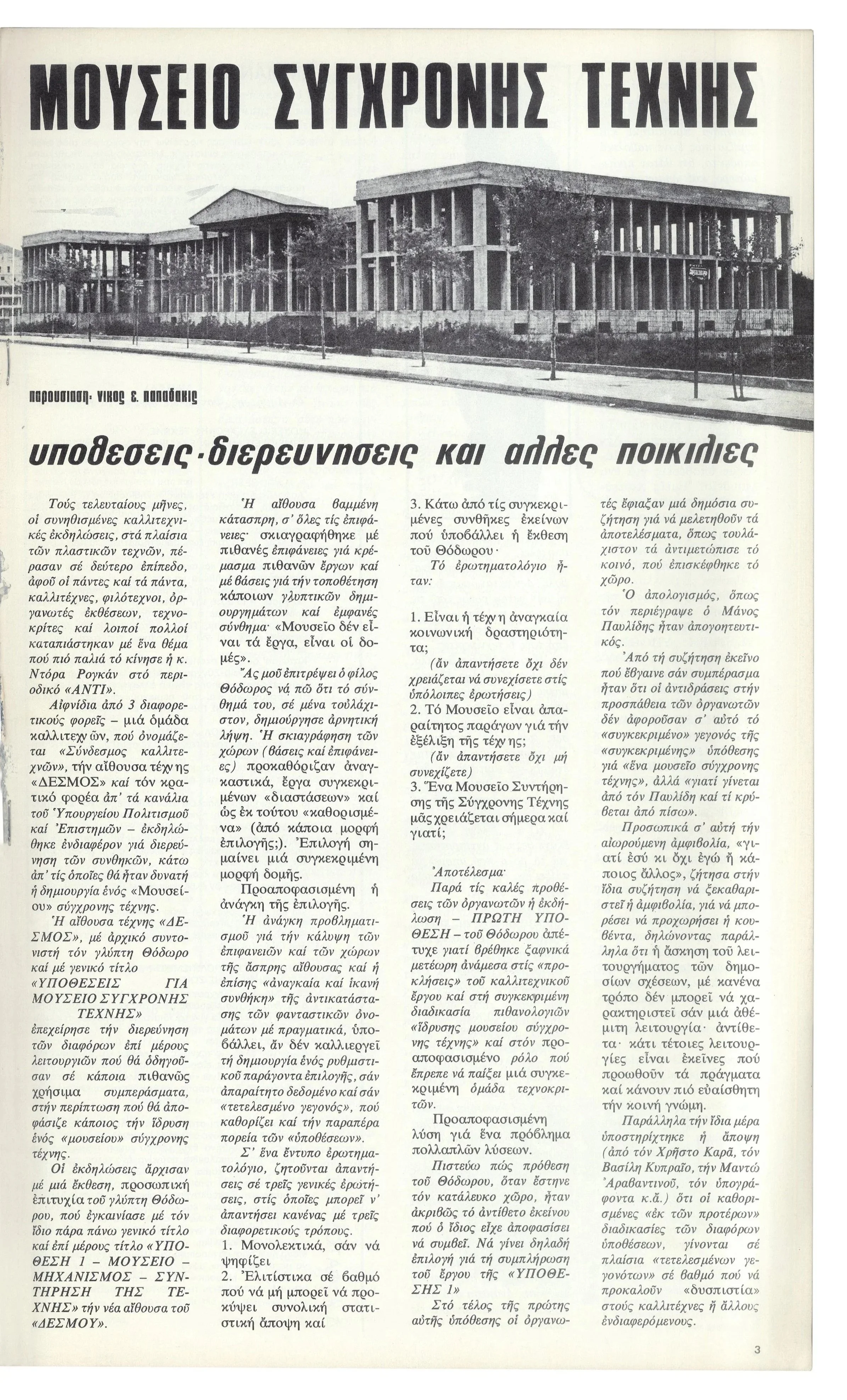
Theodoros.
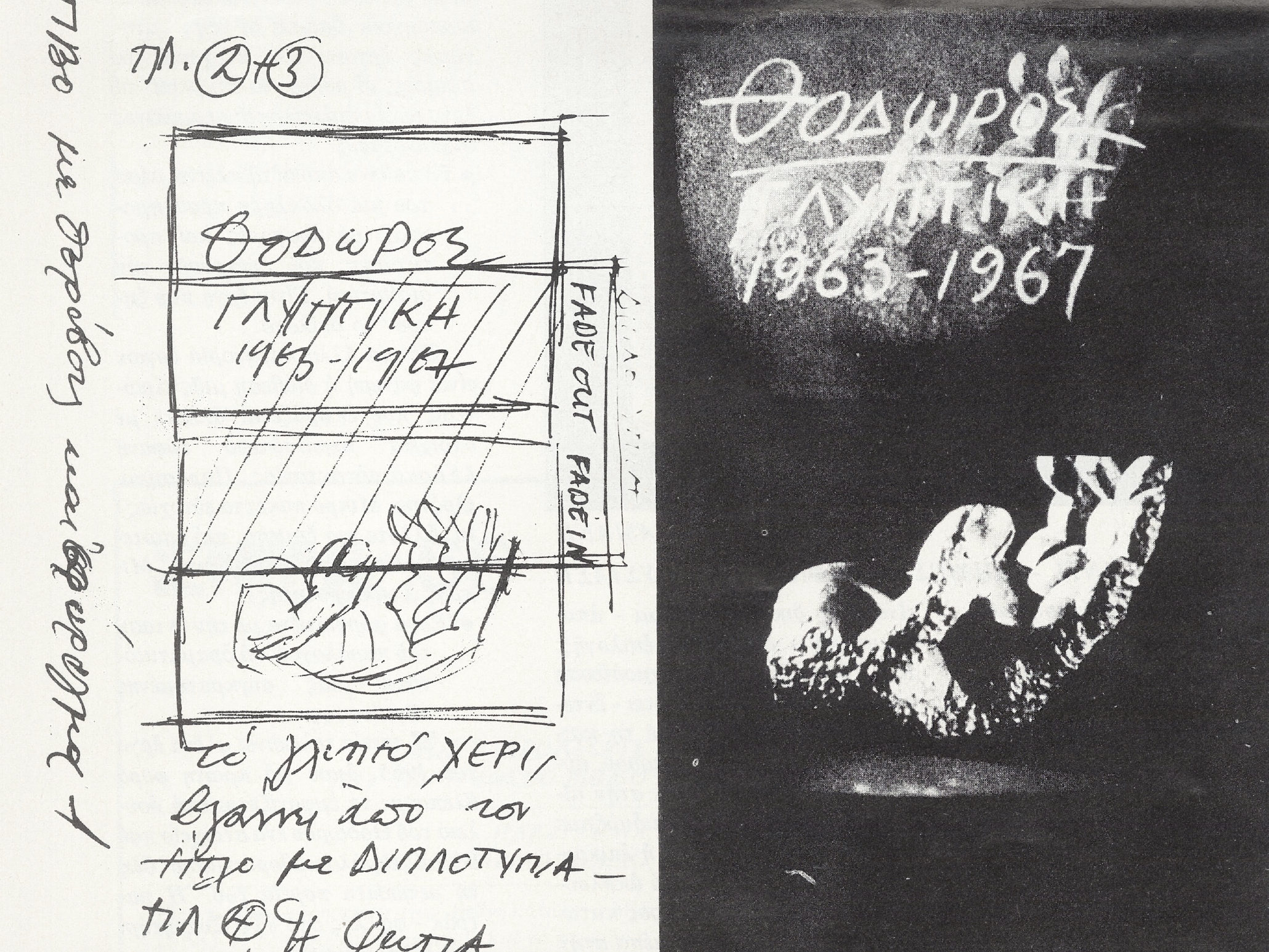
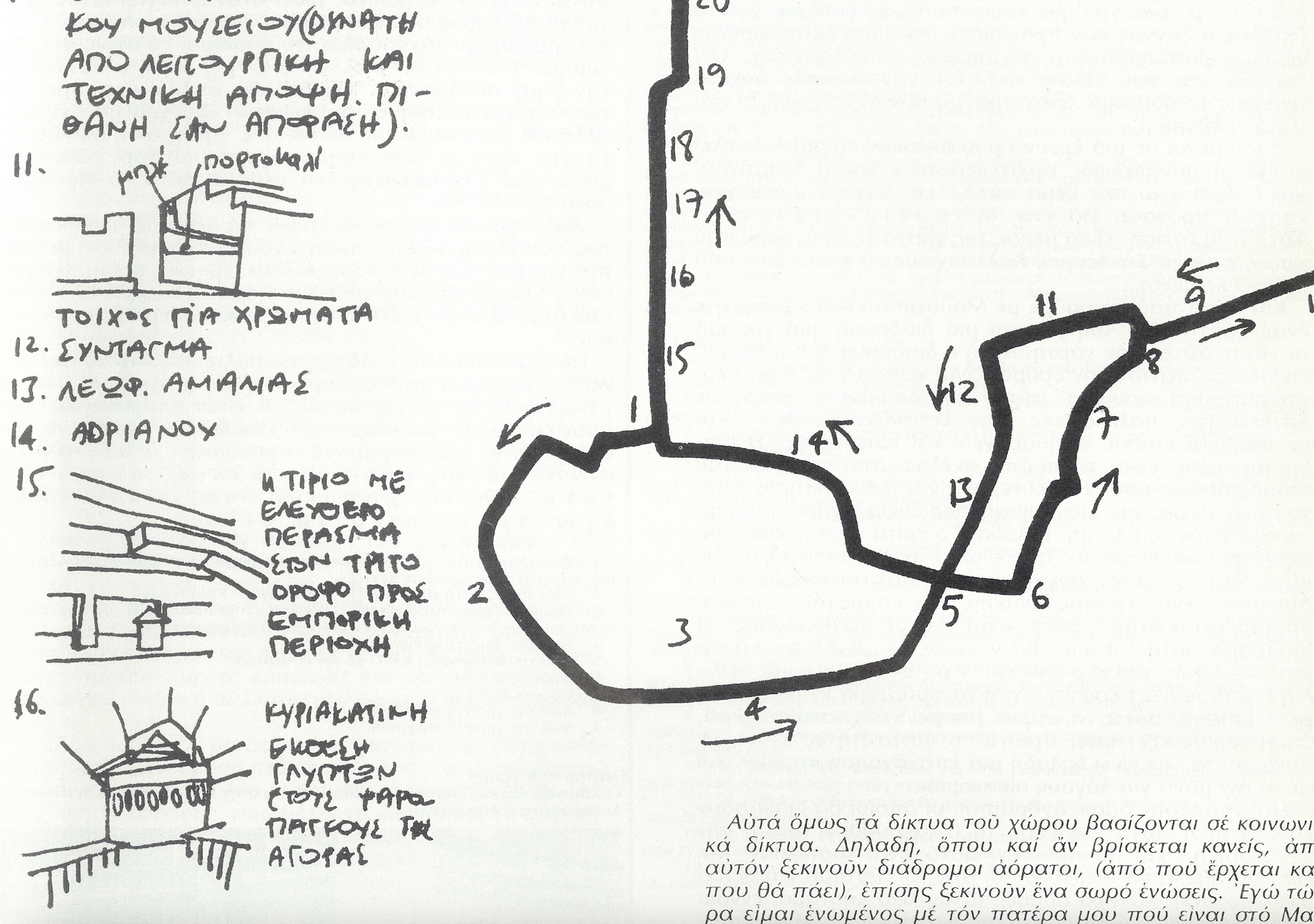
A Brief Code of Communication, Storyboard published in Sima, Issue 19-20. September–December 1977
The film Theodoros — Sculpture, 1963–67.
Part I, produced by Giorgos Emirzas for the Hellenic Broadcasting Corporation (ERT). (view film)
Storyboarding is a kind of notation employed before an image is set in motion. This process is a work of graphic design created by the artist – a space for thinking things through before the overarching work is brought to completion. These illustrations take on a value of their own, giving us an insight into the artist’s design perspectives while also providing us with alternative readings of their work.
Through graphic design, we can uncover the history of societies in search of their contemporary identities, and we can observe typography, photography, illustration, and compositional arrangement functioning together as one unified visual language.
But it was the content of these magazines that served as their true essence and raison d’être. During the time in question, artists formed part of broader efforts seeking to forge new political and cultural scenes. The magazines of this period – particularly up until 1980 – served as forums in which artists, intellectuals, and political ideas all crossed paths. They were an active arena for the construction of novel social realities, thus turning the magazine format into a space for public intervention. Before artistic autonomy carved out a space of its own, artists were actively engaged citizens, contributing to magazines and cultural movements, public discourse, and collective action.
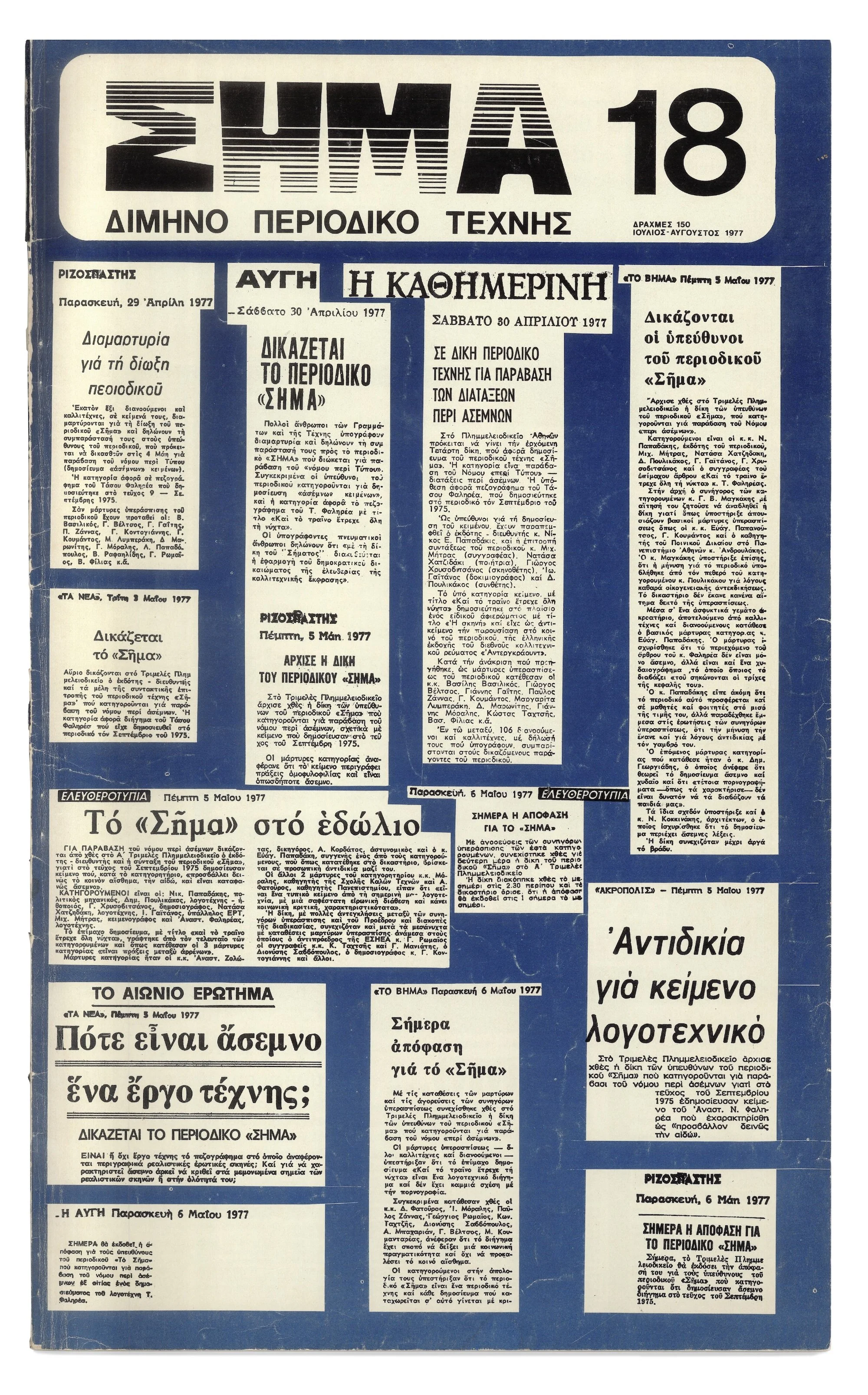
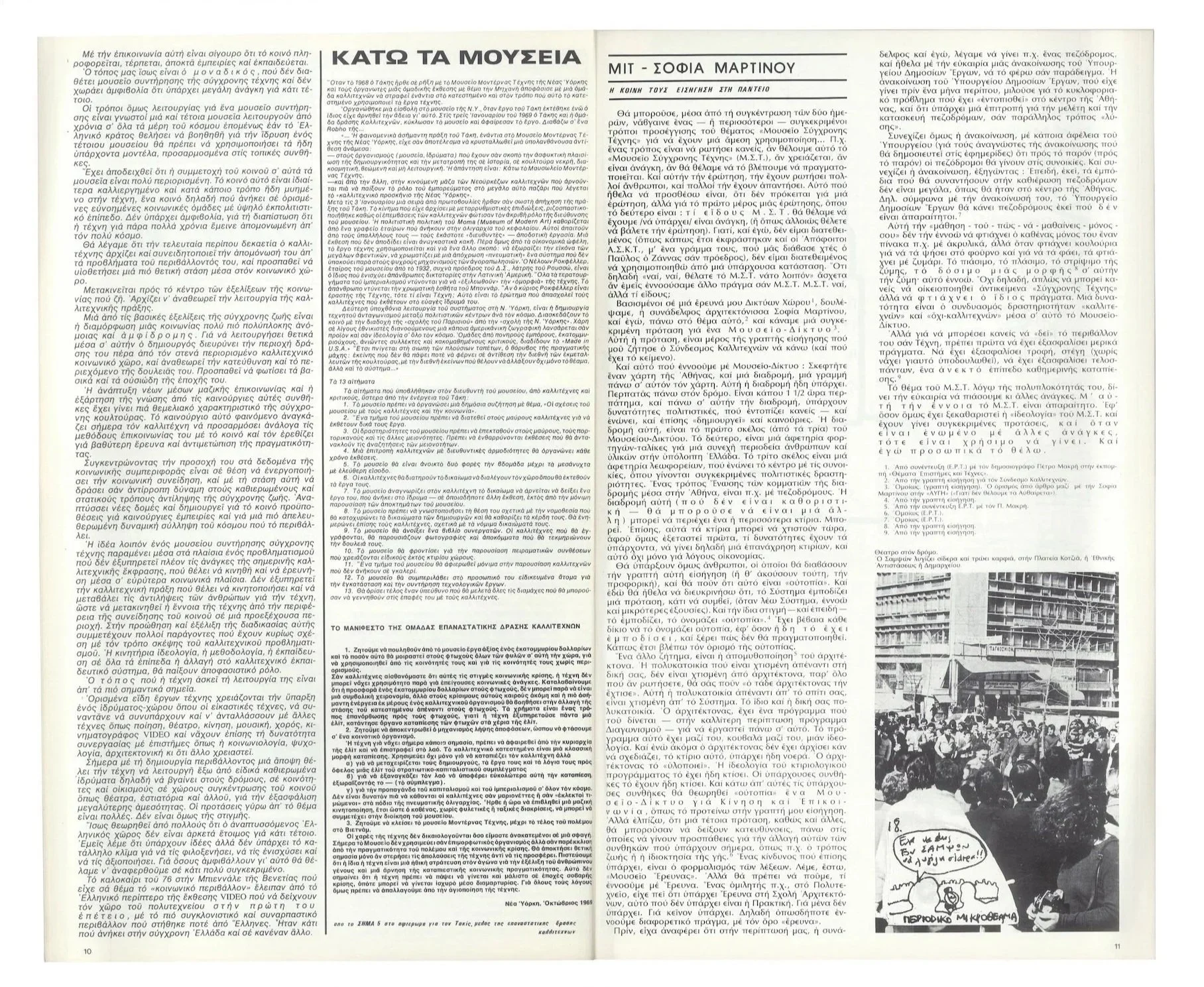
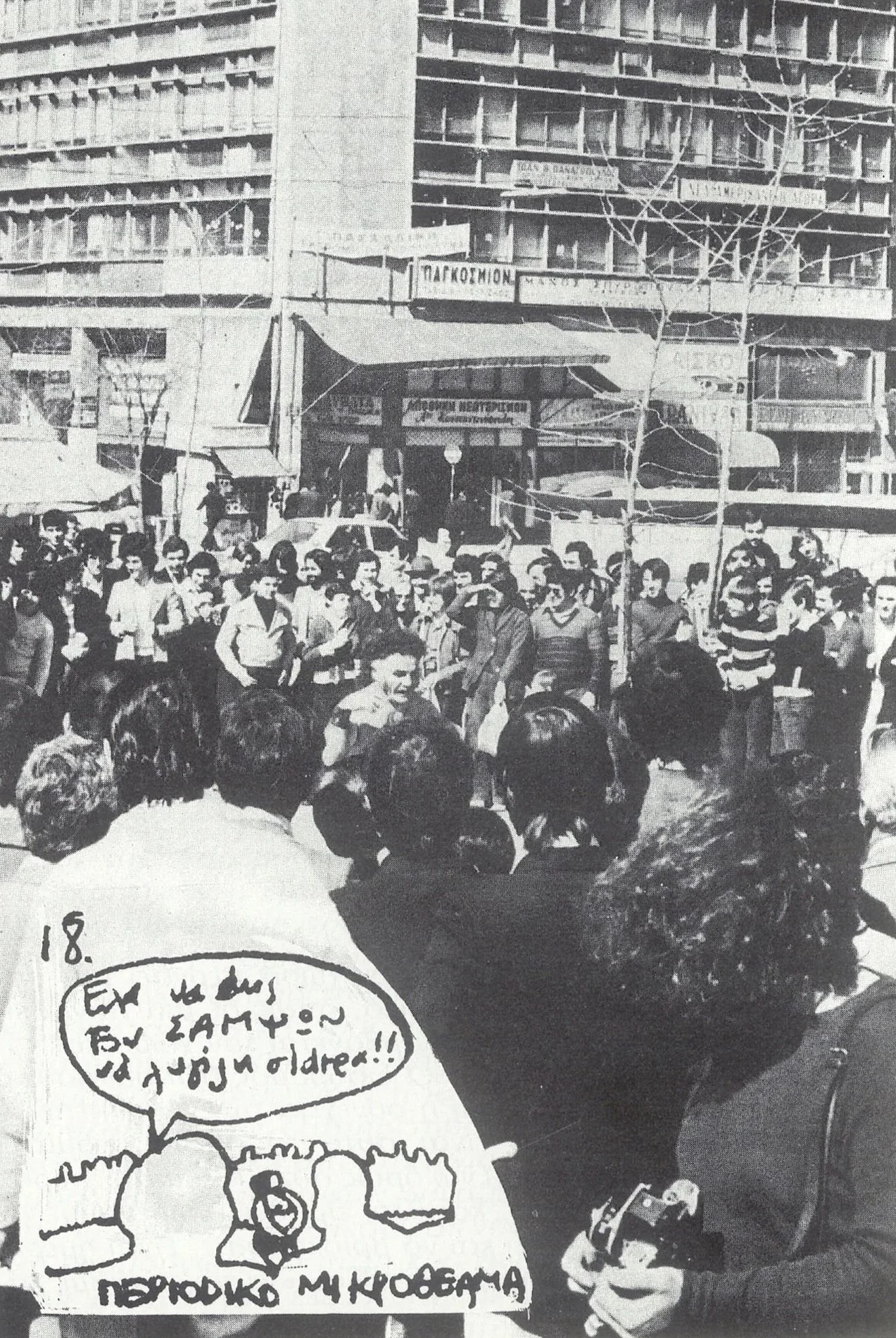
Sima, Issue 18 — July–August 1977
MIT–Sophia Martinou
Their joint presentation at Panteion University.
(The same subject appears in Anti, Issue 72, May 1977)
Looking back on the archives of past decades is always fascinating. It is not just the aesthetic and formal choices that appeal – I am also drawn to the singular ways of thinking that spring from each specific political and cultural moment. Throughout the years I have spent working in arts and culture, I always felt a shift was needed in design – from a process focused on the exploration of form to one driven by narrative and research; that is, towards design as a cultural standpoint. Each time I return to an archive, it is as if I discover it anew. It helps me redefine an understanding of design and to remember its roots, but also to recognise a quality that arises from its close connection to the fine arts: compositional freedom. Investigations of form driven by deeper cultural intent.
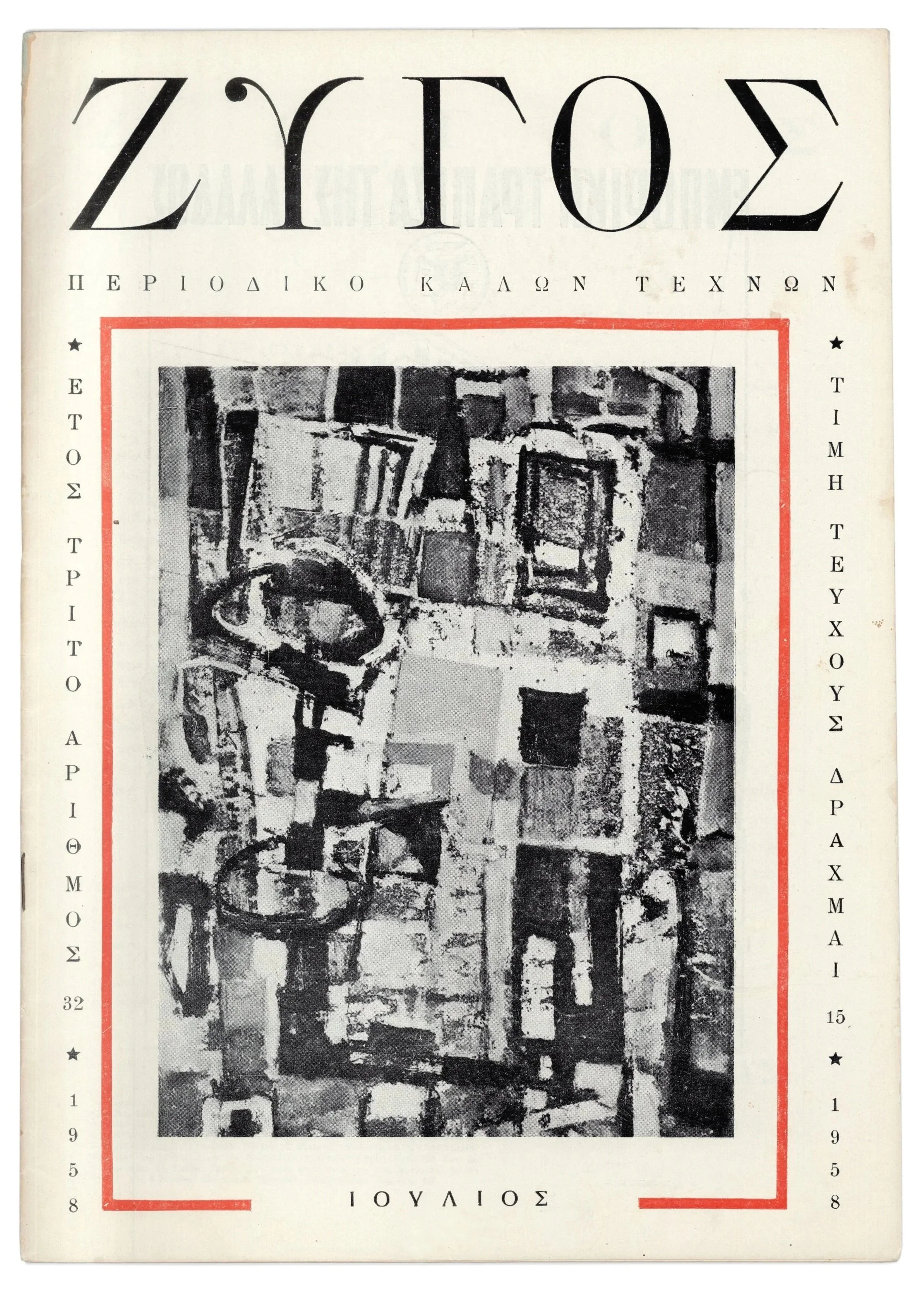
Zygos, Issue 32 — July 1958
School and Art, by Panos Valsamakis
“The magazines of this period – particularly up until 1980 – served as forums in which artists, intellectuals, and political ideas all crossed paths. They were an active arena for the construction of novel social realities, thus turning the magazine format into a space for public intervention.”
Theodoros.
A Brief Code of Communication, Storyboard published in Sima, Issue 19-20 — September–December 1977
The film Theodoros — Sculpture, 1963–67.
Part I, produced by Giorgos Emirzas for the Hellenic Broadcasting Corporation (ERT).
Sima, Issue 18 — July–August 1977
MIT–Sophia Martinou
Their joint presentation at Panteion University.
(The same subject appears in Anti, Issue 72, May 1977)
Zygos, Issue 32 — July 1958
School and Art, by P. Valsamakis
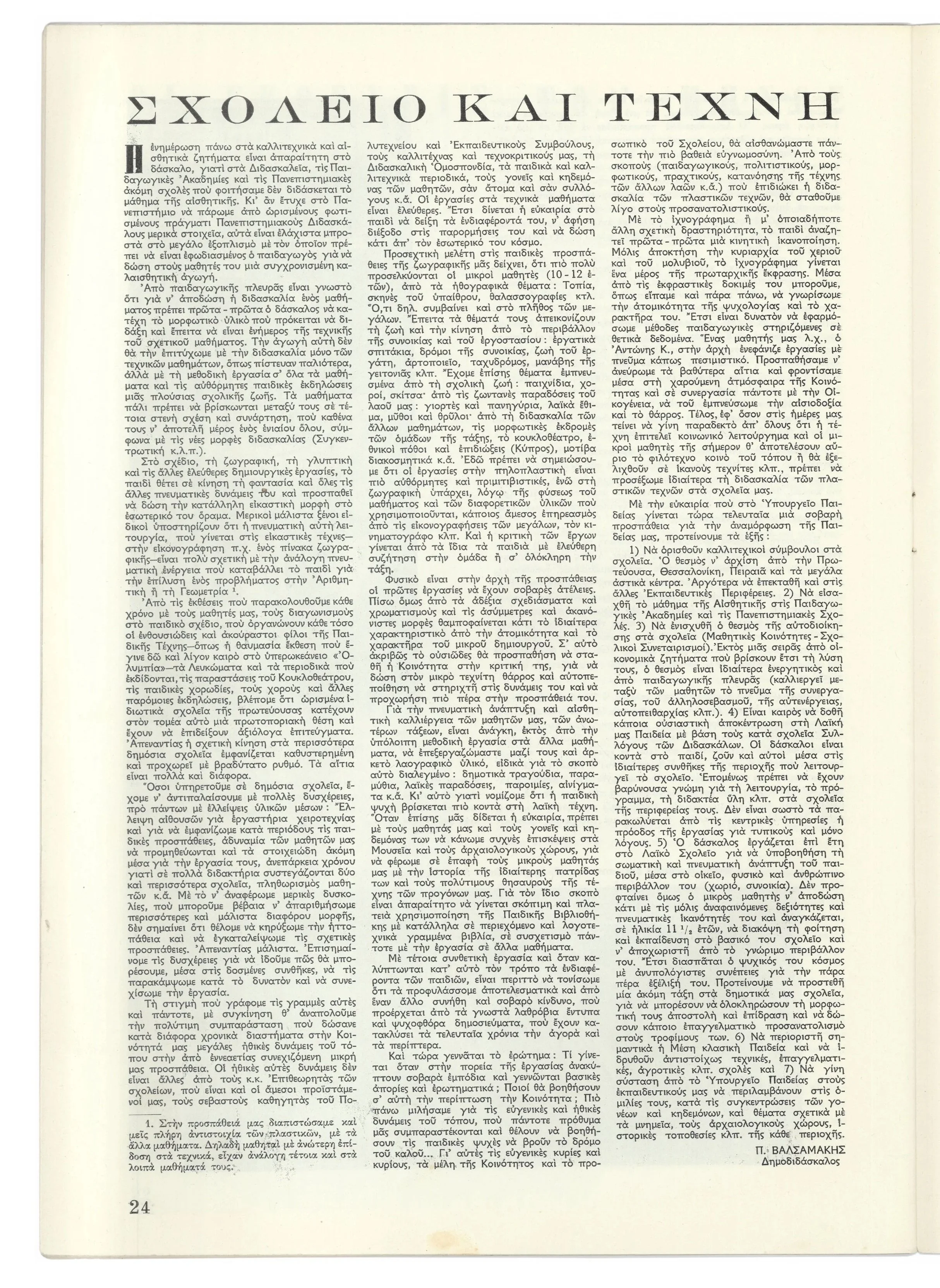
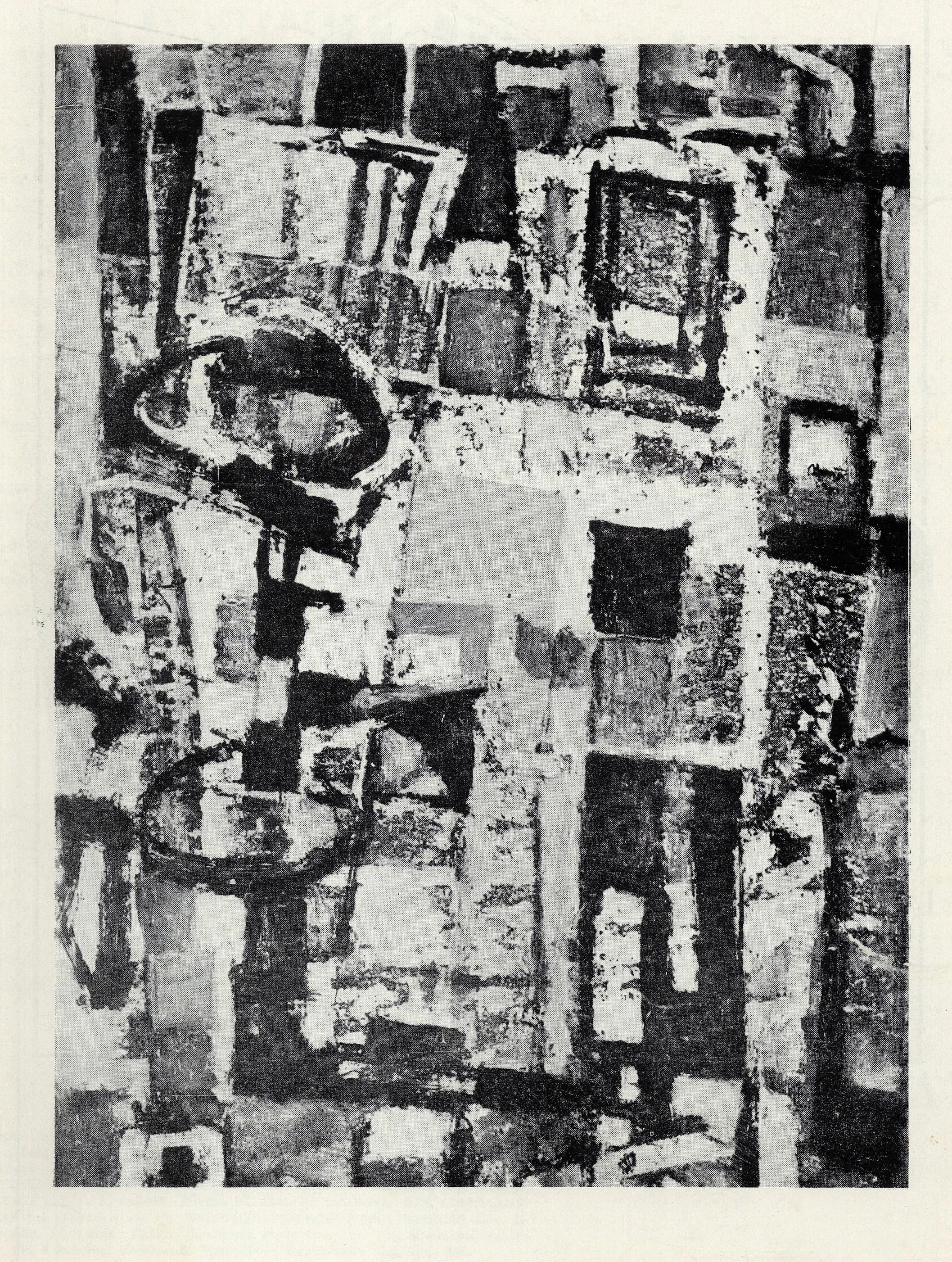
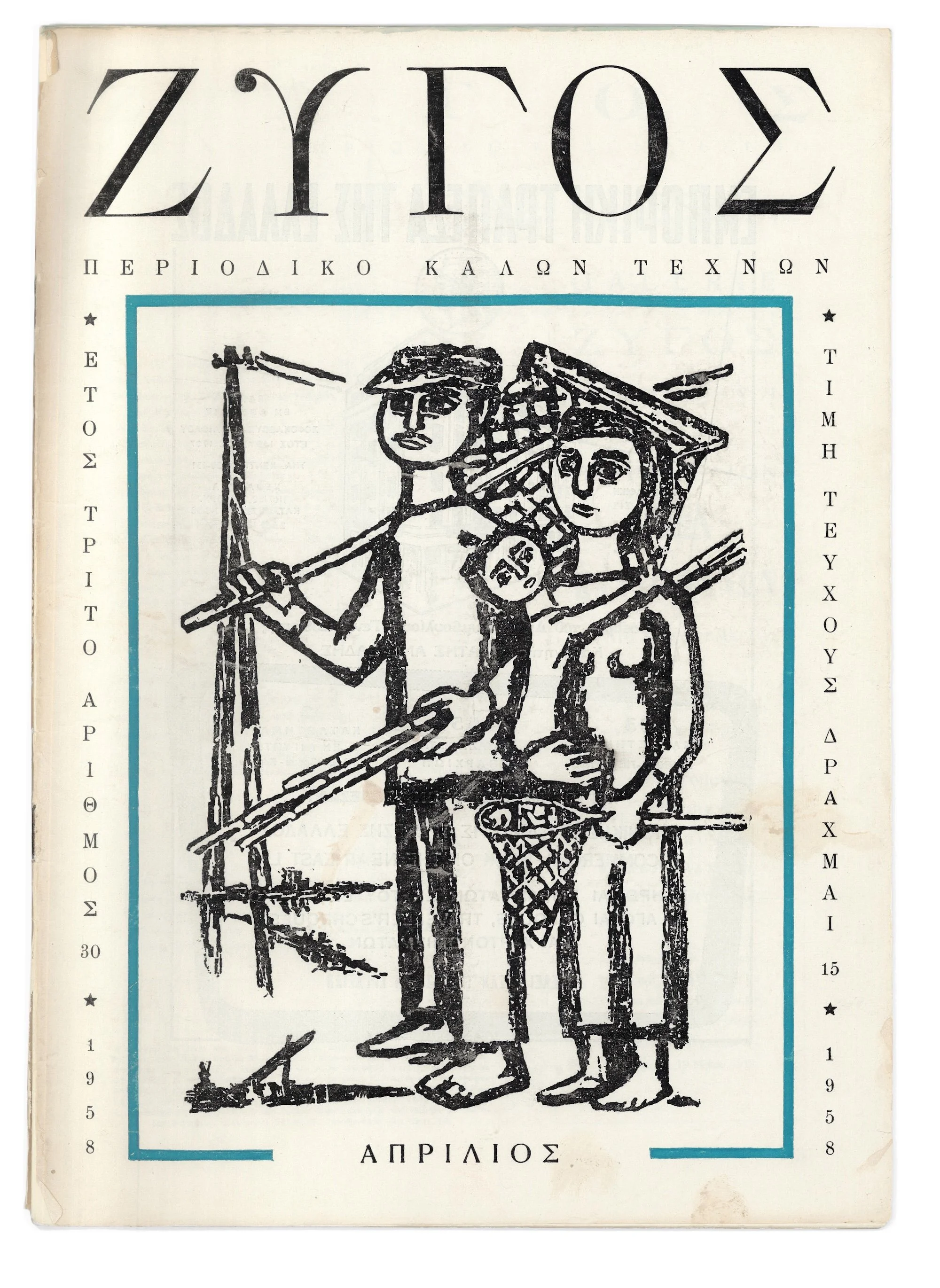
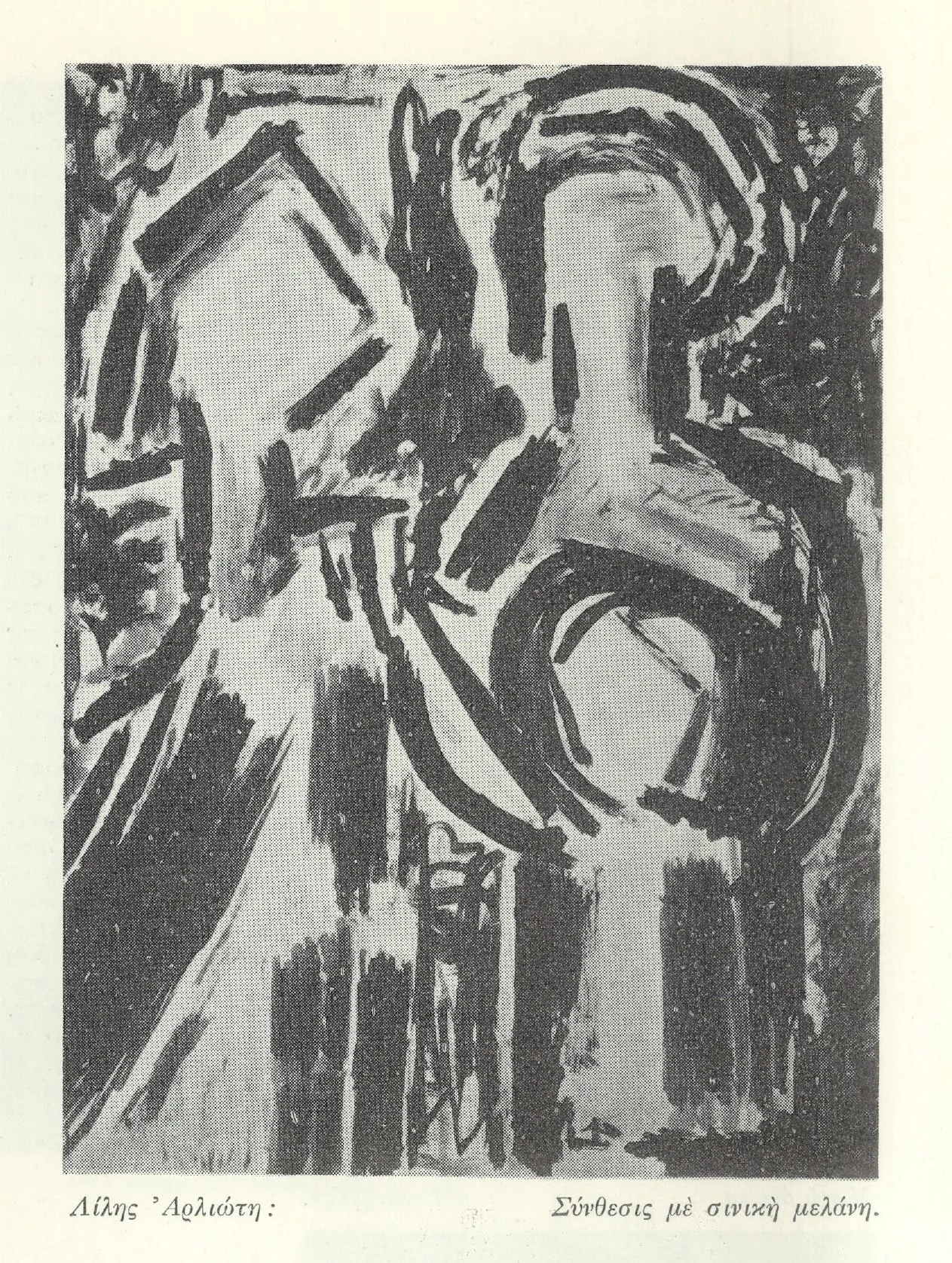
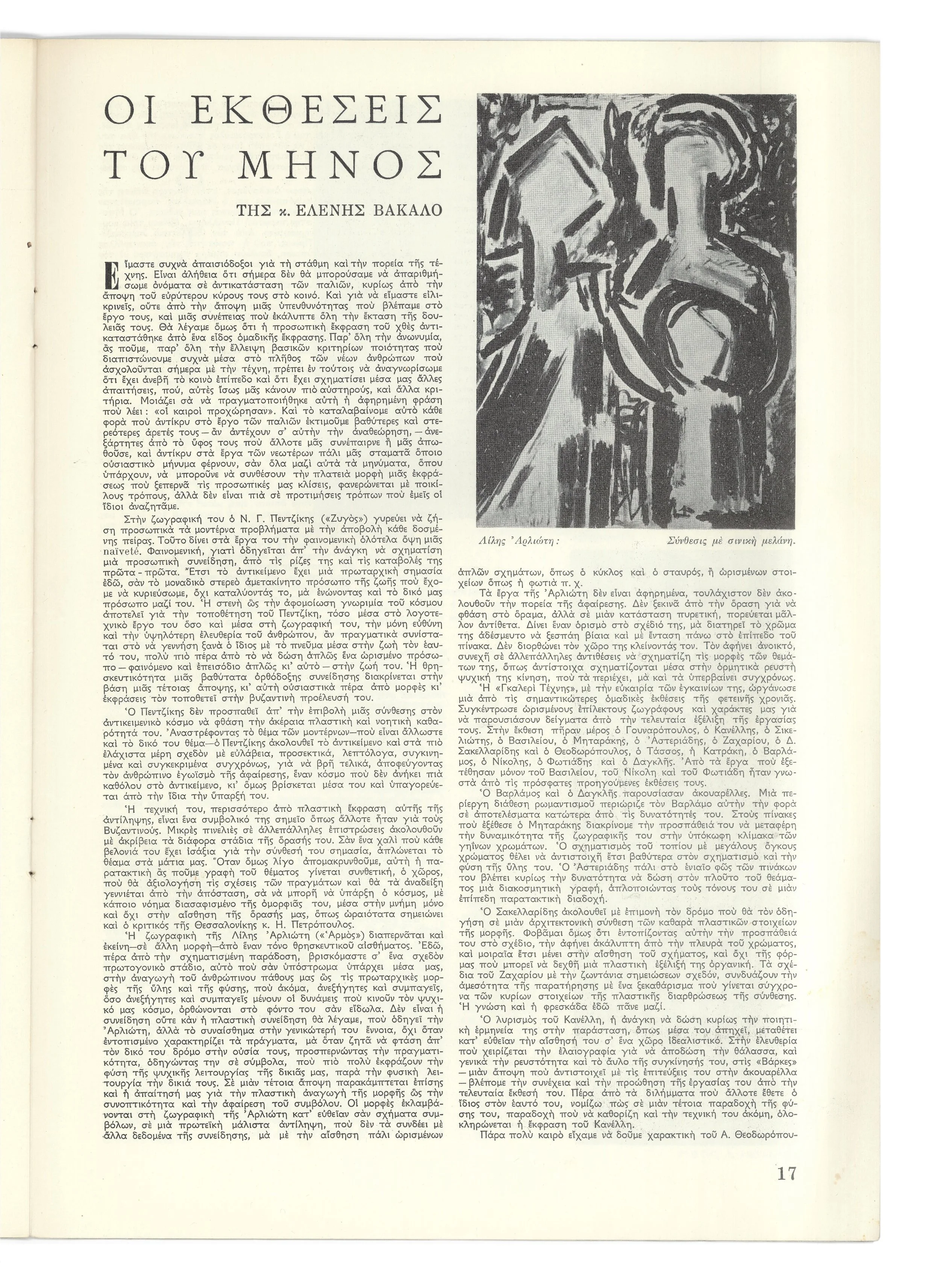
Zygos, Issue 30 — April 1958
Exhibitions of the Month, by Eleni Vakalo
-
MNP Books is an independent cultural platform rooted in contemporary thought, dialogue, and artistic expression. It is a natural extension of the creative and curatorial practice of Katerina Papanagiotou, Creative Director of MNP Athens and educator in the field of Visual Communication, and is shaped by a consistent design approach in which typography, photography, and concept inform and define the creative process.
-
With a former training in dance and performance, Papanikolopoulos studied the intersection of Art History & Comparative Literature at the University of California, Los Angeles. She received her MA from the Architectural Association (History and Critical Thinking in Architecture). Prior to this, Papanikolopoulos builds on engagements with Blum & Poe, Autre Magazine, Assortment Agency, and The Hammer Museum.